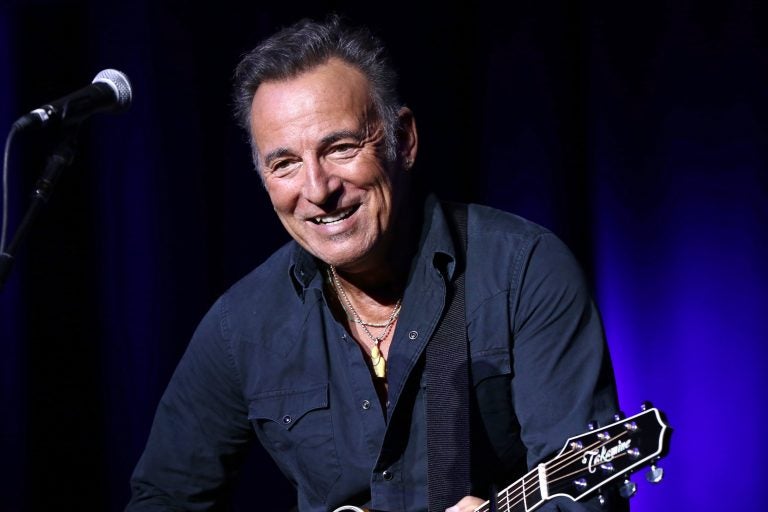
File photo: In this Nov. 10, 2015 file photo, Bruce Springsteen performs at the 9th Annual Stand Up For Heroes event in New York. (Photo by Greg Allen/Invision/AP, File)
I shared this interview with Peter Shapiro last night. I want to hold back my critical appraisal of Bruce Springsteen because I want to rewrite his script. He is not going back to Nebraska, but, Nebraska’s is coming to him in the embodiment of my Muse, Rena Easton. Nebraska is HER turf. I will loan out Rena to make the best Midwest movie – of all time!
You haven’t been to the Dark Side, until you walk through a cornfield with Irene Victoria Christiansen. Would Bruce male a great American James Bond? How about, an aging Private Detective in Lincoln, who has resigned himself to the truth, he never met ‘The One’ and had a ‘Great Adventure’.. When not tracking down husbands who cheat on their wives, Bruce sings at a Cowboy Bar, and dodges an occasional beer bottle thrown at his head, because, some folks know he’s from New Jersey’ and is not, authentic, not…..The Real Thing! When Bruce looked up from his antique desk, there sat his seal of authenticity. Be careful what you wish for……in Nebraska!
John Ptesco
President: Royal Rosamond Press
“I wondered how long it would take you to notice me. I’ve been sitting here for exactly 9 minutes and sixteen seconds.”
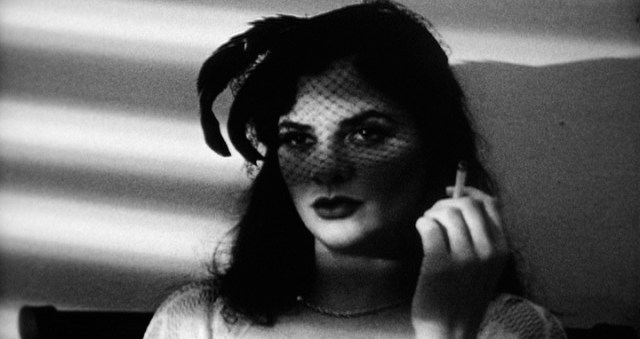
“Why didn’t you approach the desk, say something to me!”
“I’m shy. I am the reclusive widow of Sir Ian Easton. Perhaps you have heard of me? I need your help. Someone I knew forty years ago got too close. I need you to back him off. No rough stuff. Just give him a scare. He owns a newspaper and is getting nosy. I hired some goon, who grabbed him by the neck and body-slammed him, but, that just roused his curiosity even more! He wants to see how I’ve aged. As you can see, I haven’t. He must not know. He painted my portrait. I was his muse. You know the drill.
Really for the first time across the full stretch of an album, Nebraska brought Springsteen’s great mature theme into view: the confusion of public and private, the way the wider social world seeps into our personal lives. Never before had he turned out a suite of songs so thematically unified. Singing on the edge of his bed, Springsteen knew he had something good. But he also knew he had something different — too angular for Columbia Records, too quiet and darkly vulnerable for the E Street Band. And, anyway, he had a range of material, a promising but shaggy draft, much of it sitting oddly against the low-frequency landscape of barren heartland violence. He scribbled a light note, confident and uncertain and jokey, and sent the tape off to his manager, Jon Landau. Landau listened and felt concerned for Springsteen’s mental health — all this strange, bleak, unexpected material. Then he sent the lone copy of the tape back, rallied the band, and booked a studio at the Power Plant in Manhattan.
How ‘Nebraska’ changed Bruce Springsteen
It was the album of dark stories that came close to never seeing the light of day. Not only did the artist decline to tour in support of the record, he even refused to do interviews about it. But 42 years later, the long shadow of “Nebraska” remains imprinted on Bruce Springsteen’s career.
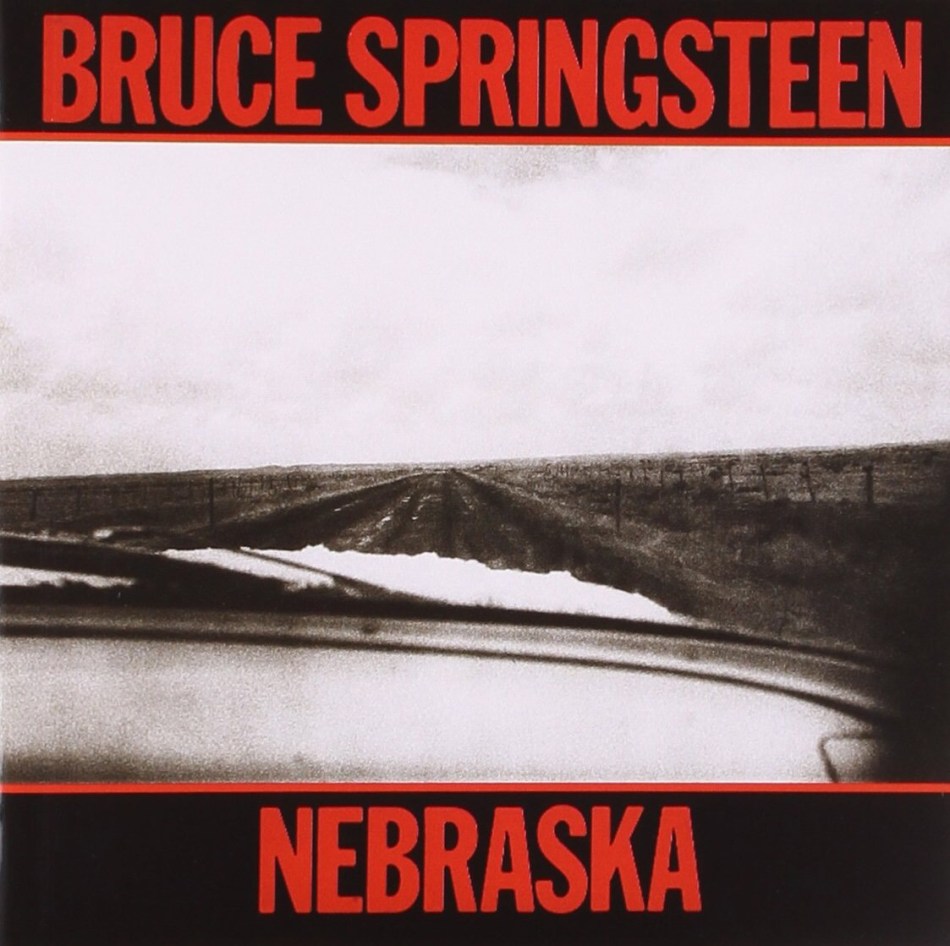
Bruce Springsteen is an excellent storyteller and Nebraska is a journey into the dark side of the human condition. This is not a record that immediately grabs you, but upon multiple listens it is one of my favourite Springsteen projects. In this record he embraces murder ballads, loneliness, grief and moral tests. Musically, he departs from the big E Street Band sound and takes the role of a traveling bard telling tales about the people surviving on the margins. This is a record that challenges you both musically and thematically, but also rewards you for the journey.
In 1982 Springsteen recorded a number of songs on a four track recorder to take into the studio and work on with the E Street Band. These were rough demos on acoustic guitar that Bruce assumed he would turn into rock anthems after some time in the studio. During what will be called “the Electric Nebraska Sessions” Bruce tried to make some rock versions of Nebraska tracks with the E Street Band. However, Bruce kept going back to the raw folk sound on the demos. Eventually, he would clean up the demos and keep that raw dark sound. It was not a total loss for the band though. Out of those Electric Nebraska Sessions, Bruce and the E Street Band recorded a handful of tracks that made it onto Born in the USA record in 1984. On one mythic day he and the E Street Band recorded roughly 15 tracks over a number of hours.
There are a number of amazing tracks on Nebraska that we can focus on and each one deserves an entire review in itself. For the sake of time, I am going to focus on three main tracks: the title track Nebraska, Atlantic City and Highway Patrolman. Each track speaks to themes explored on the record and will give you a good sense of the record itself. Bruce Springsteen produced the record and it sold quite well with widespread critical acclaim. However, I think this record suffers from the Delaware sized crater left by the Born in the USA record. After that record released in 1984 it was like the Mongols conquering villages and everything before it was burnt to the ground. Only later in Springsteen’s career did people go back to Nebraska and appreciate its lyrical artistry. To complicate people’s appreciation of Nebraska, Springsteen did not tour the record after its release. I am not sure how Springsteen accounts for this, but I assume the dark nature of his murder ballads did not fit the rock vibe he cultivates during his shows.
Speaking of murder ballads, the record opens with the title track Nebraska. This is a modern murder ballad about Charles Starkweather, a serial killer who killed eleven people, ten of those was with his girlfriend Caril Ann Fugate. Musically, the beautiful guitar and chimes on this track are in stark contrast to the brutality and cruelty depicted in the lyrics. This inherent conflict between the music and lyrics gives the record added interest and complexity. Moreover, this internal struggle within the tracks will appear throughout the record. This opening track is not only one of the best title tracks in music history, but sets the stage thematically for the rest of the record.
The song is a first person account of meeting Caril Ann and the killings, “I saw her standin’ on her front lawn just a twirlin’ her baton / Me and her went for a ride, sir … and 10 innocent people died.” The track continues to document Starkweather’s capture and eventual execution in the electric chair. Springsteen closes the track with “You want to know why I did what I did / Sir, I guess there’s just a meanness in this world.” On the one hand, this line hints at the senselessness of such brutal killings. In reality, there is no rational motive at all other than we live in a mean world. On the other hand, this final line hints at the pervasive doom that permeates the entire record.
Track two is probably the most well known track off the record, but you may not have known it was originally a Bruce Springsteen cut. On the Jericho record in 1993 the Band covered Atlantic City to much acclaim and notoriety. However, Bruce was first and Atlantic City is my favourite track on the record, as well as marks some hope amidst the doom engulfing the rest of the album. Don’t get me wrong, Bruce’s haunting echos on the backing vocals and overall message of crime, violence and survival are not the stuff of lollipops and rainbows. However, the chorus asserts “Everything dies baby, that’s a fact / But maybe everything that dies someday comes back.” Even though the song focuses on people on the margins who are surviving by dancing on the razor’s edge of crime and violence, there is hope that things will get better. Yes, life is suffering and parts of you die as you make moral compromises to survive a cruel world. But, there is hope that maybe, just maybe, those things will come back and you will find yourself on the other side.
Springsteen explores a number of themes throughout the record and how they intersect with suffering, cruelty and pain. For example, the title track Nebraska explores existential doom embodied by the tangible doom found in serial killing. Atlantic City takes the theme further and explores suffering for people on the margins who have some hope for possibly regaining their humanity in the future. Now, in Highway Patrolman Springsteen explores how cruel twists of fate and violence complicate families. The central for question for Springsteen is what wins out, family ties or moral obligations? In this track, Springsteen tells the story of a patrolman whose brother comes home from the war in 1968 to little or no prospects. The patrolman reflects on good times spent with his brother Frankie and how Frankie found himself in trouble after the war. He then snaps into the present when Frankie got into a fight and killed a man. He is tasked with getting Frankie, but he lets him go to Canada and talks about how a “man turns his back on his family / he just ain’t no good.” This song explores the horrors of war and their impact on people, as well as the strength of family. It also touches on guilt the brother has for taking a job as a patrolman, while his brother went to war. This may be why he let his brother go to Canada, or it may be that the moral good he values in family is not the moral good he is trusted to uphold in the law. The ambiguity of the speaker’s motives is what gives the track its depth and power.
Springsteen’s record Nebraska highlights his gift as a storyteller and lyricist. This is not a record that you put on at a party to get everyone off their seats, but is an album you put on for quiet reflection. Even though it is a dark record, it is not a depressing record. The beautiful guitar and raw folk vocals inspire thought and contemplation, not sorrow. I like to approach this record like reading some Emily Dickinson poetry and use it to assess how I live my own life. What would I do if Frankie was my brother? Is life as cruel and senseless as it is in Nebraska? What would I do to survive? These are important questions and Springsteen gives you a space to explore them in all their complexity and grey areas.
Listen to Nebraska
 Rosamond Press
Leave a comment