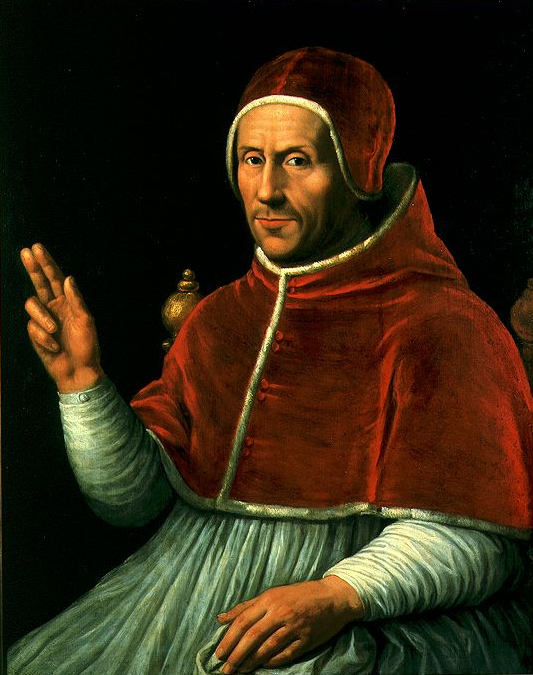

Pope Adrian was the tutor of Charles Quint and advisor to Margaret of Austria who may have owned Rosemondt’s book. This is the threshold, the gathering at the New World Gate. The Dalai Lama and Meher Baba came to America. But with the arrival of Pope Francis, comes ‘The New Mission’.
Jon ‘The Nazarite’
In November 1506 Margaret of Austria, Duchess of Savoy became Governess of the Habsburg Netherlands and chose Adrian as her advisor. The next year Emperor Maximilian I appointed him also tutor to his seven-year-old grandson, and Margaret’s nephew, Charles, who in 1519 would become Emperor Charles V. By 1512 Adrian was Charles’ advisor and his court obligations were so time consuming that he quit his positions at the university
In 1515, Charles sent Adrian to Spain to convince his maternal grandfather, Ferdinand II of Aragon, that the Spanish lands should become under his rule, and not Charles’ Spanish-born younger brother Ferdinand, whom his grandfather had in mind. Adrian succeeded in that just before Ferdinand’s death in January 1516.[3] Charles V subsequently made Adrian Bishop of Tortosa and on 14 November 1516 commissioned him Inquisitor General of Aragon. The following year, Pope Leo X (1513–21) made Adrian a cardinal,[2] naming him Cardinal Priest of the Basilica of Saints John and Paul.
Adrian VI was not successful as a peacemaker among Christian princes, whom he hoped to unite in a war against the Turks. In August 1523 he was forced into an alliance with the Empire, England, and Venice against France; meanwhile, in 1522 the Sultan Suleiman I (1520–66) had conquered Rhodes.
Charles was born as the eldest son of Philip the Handsome and Joanna the Mad in the Flemish city of Ghent in 1500. The culture and courtly life of the Burgundian Low Countries were an important influence in his early life. He was tutored by William de Croÿ (who would later become his first prime minister), and also by Adrian of Utrecht (later Pope Adrian VI).
During Charles’s reign, the Spanish territories in the Americas were considerably extended by conquistadores like Hernán Cortés and Francisco Pizarro, who conquered the large Aztec and Inca empires and incorporated them into the Empire as the Viceroyalties of New Spain and Peru between 1519 and 1542. Combined with the Magellan expedition‘s circumnavigation of the globe in 1522, these successes convinced Charles of his divine mission to become the leader of Christendom that still perceived a significant threat from Islam. The conquests also helped solidify Charles’s rule by providing the state treasury with enormous amounts of bullion. As the conquistador Bernal Díaz del Castillo observed, “We came to serve God and his Majesty, to give light to those in darkness, and also to acquire that wealth which most men covet.”[27]
In 1528 Charles assigned a concession in Venezuela Province to Bartholomeus V. Welser, in compensation for his inability to repay debts owed. The concession, known as Klein-Venedig (little Venice), was revoked in 1546. In 1550, Charles convened a conference at Valladolid in order to consider the morality of the force used against the indigenous populations of the New World, which included figures such as Bartolomé de las Casas.
Charles V is credited with the first idea of constructing an American Isthmus canal in Panama as early as 1520.[28]
Pope Adrian VI (Latin: Hadrianus VI), born Adriaan Florensz (Boeyens) [1] (2 March 1459 ‒ 14 September 1523), was the 218th pope of the Catholic Church from 9 January 1522 until his death on 14 September 1523.
Pope Adrian VI was born in the Prince-Bishopric of Utrecht in the Netherlands and was the last non-Italian pope until Pope John Paul II of Poland became the 264th pope in 1978. Pope Adrian VI and his eventual successor Pope Marcellus II are the only popes of the modern era to retain their baptismal names after their election.

Pope Adrian VI’s birthplace in Utrecht
Adriaan Florensz was born on 2 March 1459 in the city of Utrecht, which was then the capital of the Prince-Bishopric of Utrecht,[2] a part of the Burgundian Netherlands in the Holy Roman Empire. He was born into modest circumstances as the son of Florens Boeyensz, also born in Utrecht, and his wife Geertruid. Adrian consistently signed with Adrianus Florentii or Adrianus de Traiecto (“Adrian of Utrecht”) in later life, suggesting that his family did not yet have a surname but used patronymics only.[3]
Adrian was probably raised in a house on the corner of the Brandsteeg and Oude Gracht that was owned by his grandfather Boudewijn (Boeyen, for short). His father, a carpenter and likely shipwright, died when Adrian was 10 years or younger.[4] Adrian studied from a very young age under the Brethren of the Common Life, either at Zwolle or Deventer and was also a student of the Latin school (now Gymnasium Celeanum) in Zwolle.[5] In June 1476, he started his studies at the University of Leuven, where he pursued philosophy, theology and Canon Law, thanks to a scholarship granted by Margaret of York, Duchess of Burgundy.
Leuven[edit]
After the regular 12 years of study, Adrian became a Doctor of Theology in 1491. He had been a teacher at the University since 1490, was chosen vice-chancellor of the university in 1493, and Dean of St. Peter’s in 1498. In the latter function he was permanent vice-chancellor of the University and de facto in charge of hiring. His lectures were published, as recreated from his students’ notes; among those who attended was the young Erasmus. Adrian offered him a professorate in 1502, but Erasmus refused.[3]
In November 1506 Margaret of Austria, Duchess of Savoy became Governess of the Habsburg Netherlands and chose Adrian as her advisor. The next year Emperor Maximilian I appointed him also tutor to his seven-year-old grandson, and Margaret’s nephew, Charles, who in 1519 would become Emperor Charles V. By 1512 Adrian was Charles’ advisor and his court obligations were so time consuming that he quit his positions at the university.[3]
Spain[edit]
In 1515, Charles sent Adrian to Spain to convince his maternal grandfather, Ferdinand II of Aragon, that the Spanish lands should become under his rule, and not Charles’ Spanish-born younger brother Ferdinand, whom his grandfather had in mind. Adrian succeeded in that just before Ferdinand’s death in January 1516.[3] Charles V subsequently made Adrian Bishop of Tortosa and on 14 November 1516 commissioned him Inquisitor General of Aragon. The following year, Pope Leo X (1513–21) made Adrian a cardinal,[2] naming him Cardinal Priest of the Basilica of Saints John and Paul.
During the minority of Charles V, Adrian was named to serve with Cardinal Francisco Jimenez de Cisneros as co-regent of Spain. After the death of Jimenez, Adrian was appointed (14 March 1518) General of the Reunited Inquisitions of Castile and Aragon, in which capacity he acted until his departure for Rome.[6] During this period, Charles V left for the Netherlands in 1520, making the future pope Regent of Spain, during which time he had to deal with the Revolt of the Comuneros.
https://rosamondpress.com/2015/09/23/come-to-maurick-castle/
https://en.wikipedia.org/wiki/Pope_Adrian_VI
https://en.wikipedia.org/wiki/Ferdinand_II_of_Aragon
The House of Trastámara was a dynasty of kings in the Iberian Peninsula, which first governed in Castile beginning in 1369 before expanding its rule into Aragón, Navarre and Naples. They were an illegitimate cadet line of the House of Burgundy.
The line of Trastámaran royalty in Castile ruled throughout a period of military struggle with Aragon. Their family was sustained with large amounts of inbreeding, which led to a series of disputed struggles over rightful claims to the Castilian throne. This lineage ultimately ruled in Castile from the rise to power of Henry II in 1369 through the unification of the crowns under Ferdinand and Isabella.
Ferdinand is today best known for his role in inaugurating the discovery of the New World, since he and Isabella sponsored the first voyage of Christopher Columbus in 1492. That year he also fought the final war with Granada which expunged the last Islamic state on Iberian soil, thus bringing to a close the centuries-long Reconquista. At his death he was succeeded by Joanna, who co-ruled with her son, Charles V, over all the Iberian kingdoms save Portugal.
https://en.wikipedia.org/wiki/House_of_Trast%C3%A1mara
Ferdinand violated the 1492 Alhambra Decree peace treaty in 1502 by dismissing the clearly guaranteed religious freedom for Mudéjar Muslims. Ferdinand forced all Muslims in Castile and Aragon to convert, converso Moriscos, to Catholicism, or else be expelled. Some of the Muslims who remained were mudéjar artisans, who could design and build in the Moorish style. This was also practised by the Spanish inquisitors on the converso Marrano Jewish population of Spain. The main architect behind the Spanish Inquisition was King Ferdinand II. Ferdinand destroyed over ten thousand Arabic manuscripts in Granada alone, burning them.

 Rosamond Press
Leave a comment