 The new Civil War is being waged along economical lines. The red state whites have lost the moral high ground, again, and are employing men of wealth to create a have, and have not Mason Dixon line. However, with the popular vote being swayed by minorities, the plan to destroy the Federal Government and Social Safety Net, has hit a reef.
Offshore banking must end. Consider Romney’s yacht being registered in a British territory.
Jon Presco
http://archive.org/details/correspondencebe00lairuoft
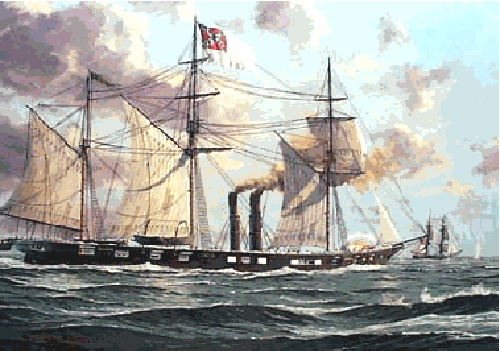
Upon his return, Bulloch discovered that the Florida was on the river, and ready to sail. She was a 700-ton steamer, bark rigged with three masts, four gun ports and two smokestacks. Her rigging was increased to improve her sailing qualities, and, her hull extended to carry extra coal and supplies (n his correspondence with Mallory, Bulloch referred to her as “O”). The Union spies in Liverpool were giving regular updates to Thomas Dudley, the U.S. Consul on the ships progress, and numerous attempts were made to have the British Government intervene, but all failed. At the insistence of the United States, the Oreto was inspected by Customs officers, but as they could find no reason to detain her, she was free to sail unmolested out of Liverpool. Charles K. Prioleau, of Fraser Trenholm had been involved in communications with Lt. North CSN in London. Prioleau wanted the Florida away as soon as possible, but North would not commit himself.
Bulloch had the foresight to register her with the Board of Trade, as an English vessel, with an English master and crew. She had the required regulation markings on her side. On 22nd March 1862 with the English Confederate John Low took The Oreto to Nassau, in the Bahamas, where he handed her over to John Newland Maffitt CSN, along with a letter from Bulloch to Maffitt. Lt. Maffitt commissioned the CSS Florida in August of 1862.
Before Bulloch returned to the Confederacy aboard the Fingal, Stephen Mallory had asked him to investigate and prepare for the construction of ironclad rams in England. The “ram” idea dated from ancient times, and had been revived in the “steam” era. The ram itself being a metal projection from the bow, the aim of which was to rip holes below an enemy’s waterline. Bulloch originally had the idea for building these vessels in Confederate ports, using the readily available timber from local forests. Once completed, the plans for these “ironclads” would be sent to England. The English would then produce all the necessary metalwork and fittings, fully marked for location, which would then be shipped back to the South aboard fast Government blockade -runners. It may well have succeeded, had the Confederate Government been open to such a radical suggestion.
http://www.csa-dixie.com/liverpool_dixie/bulloch.htm
The contract was signed on 11th August, with a completion date of nine months hence. To conceal the names of the true owners, the contract was drawn up in Bulloch’s name, as a private individual. When the keel for Bulloch’s ship was laid, it was labelled the “290”, being the 290th vessel constructed by them. There were some slight delays, as Bulloch’s plans called for a wooden ship, when most of Laird’s work then was part iron. Bulloch had good reason for insisting on a wooden ships, the isolated neutral ports in the world, which they would use, were far more likely to have repair facilities for wooden ship, rather than iron. More importantly, wooden decks are more resilient, and stronger.
Bulloch’s activities in Liverpool at this time, had not gone unnoticed by the resident U. S. Consul, Thomas H. Dudley, with offices in South Water Street. Reporting to the U. S. Ambassador in London, Charles Adams that “there is much secrecy about the Oreto, but my impressions are strong that she is intended for the Southern Confederacy”. He also reported that “no pains or expense have been spared in her construction, and when fully armed she will be a formidable and dangerous craft”. So disturbed was Adams that he complained to the British Foreign Office, that the building of the Oreto was a violation of British neutrality. The Foreign Office disagreed, for Bulloch had been so careful to keep strictly within the law. There was not a single item on the Oreto that could be described as equipment of war and he applied the same criteria for the “290”, provisionally named the Enrica.
With the building of the two cruisers now underway, Bulloch turned his attention to the despatch he had recently received from Mallory. Stating that the Confederacy needed to outfit 500,000 new force, and that agents in England were to purchase the arms and supplies. On 2nd September 1861, along with another Confederate agent in Liverpool, Edward G. Anderson of the Confederate States Army, Bulloch decided to buy a vessel to transport arms, munitions and supplies to the Confederacy. By 11th September Bulloch had secured the 800-ton steamer Fingal, an iron hulled screw steamer, to run the blockade. The cargo on board had a value o $250,000; much of it supplied my Major Caleb Huse of the Confederate States Army, who was also acting as an agent in England. Clandestine measures were taken to obscure the Fingal’s true ownership, mission and cargo. Loaded with more than 11,000 rifles, as well as pistols swords, sabres, ammunition, four cannon, seven tons of shell, leather, medicines and clothing, blankets and more.
The United Kingdom was officially neutral throughout the American Civil War, 1861–65. Elite opinion tended to favour the Confederacy, while public opinion tended to favour the United States. Large scale trade continued in both directions with the U.S., with the Americans shipping grain to Britain while Britain sent manufactured items and munitions. Immigration continued into the U.S. British trade with the Confederacy was limited, with a little cotton going to Britain and some munitions slipped in by numerous small blockade runners. The Confederate strategy for securing independence was largely based on the hope of military intervention by Britain and France, which never happened; intervention would have meant war with the United States. A serious diplomatic dispute with the United States erupted over the “Trent Affair” in 1861; it was resolved peacefully in a few months. A long-term issue was the British shipyard (John Laird and Sons) building two warships for the Confederacy, including the CSS Alabama,[1] over vehement protests from the United States. The controversy was resolved after the Civil War in the form of the Alabama Claims, in which the United States finally was given $15.5 million in arbitration by an international tribunal for damages caused by British-built warships. The British built and operated most of the blockade runners, spending hundreds of millions of pounds on them; but that was legal and not the cause of serious tension. In the end, these instances of British involvement neither shifted the outcome of the war nor provoked the U.S. into declaring war against Britain. The United States’ diplomatic mission headed by Minister Charles Francis Adams, Sr. proved much more successful than the Confederate missions, which were never officially recognized.[2]
A privateer is a private person or ship authorized by a government by letters of marque to attack foreign shipping during wartime. Privateering was a way of mobilizing armed ships and sailors without having to spend treasury resources or commit naval officers. They were of great benefit to a smaller naval power or one facing an enemy dependent on trade: they disrupted commerce and pressured the enemy to deploy warships to protect merchant trade against commerce raiders. The cost was borne by investors hoping to profit from prize money earned from captured cargo and vessels. The proceeds would be distributed among the privateer’s investors, officers, and crew. It has been argued that privateering was a less destructive and wasteful form of warfare, because the goal was to capture ships rather than to sink them.[1]
Privateers were part of naval warfare from the 16th to the 19th centuries. Some privateers have been particularly influential in the annals of history. Sometimes the vessels would be commissioned into regular service as warships. The crew of a privateer might be treated as prisoners of war by the enemy country if captured.
Historically, the distinction between a privateer and a pirate has been, practically speaking, vague, often depending on the source as to which label was correct in a particular circumstance.[2] The actual work of a pirate and a privateer is generally the same (raiding and plundering ships); it is, therefore the authorization and perceived legality of the actions that form the distinction. At various times governments indiscriminately granted authorization for privateering to a variety of ships, so much so that would-be pirates could easily
George Alfred Trenholm was born in Charleston, South Carolina. When his father, William Trenholm, died, George left school early. He went to work for a major cotton broker, John Fraser and Company in Charleston. By 1853 he was head of the company, and by 1860 was one of the wealthiest men in the United States. He had interests in steamships, hotels, cotton, plantations, and slaves; he was also director of the Bank of Charleston and of a South Carolina railroad. When the Civil War broke out, John Fraser and Company became the Confederate government’s overseas banker and financed its own fleet of blockade runners.[1] Christopher Memminger used Trenholm as an unofficial adviser throughout his own term as Secretary of the Treasury; Trenholm was appointed to that post on July 18, 1864. He was a more charismatic figure than his predecessor and this helped him with the press and with Congress.[2]
Trenholm fled Richmond with the rest of the government in April 1865 and went south as far as Fort Mill, South Carolina. Due to illness he asked President Davis to accept his resignation, which Davis accepted with his thanks on April 27, 1865.[3] He was later briefly imprisoned at Fort Pulaski near Savannah, Georgia.[4]
“I’m against having a king,” Sen. Rand Paul (R-Kentucky) said in an interview with CBN News. “I think having a monarch is what we fought the American Revolution over and someone who wants to bypass the Constitution, bypass Congress — that’s someone who wants to act like a king or a monarch.”
“I’ve been opposed to executive orders, even with Republican presidents. But one that wants to infringe on the Second Amendment, we will fight tooth and nail,” he continued.
From these offices operated Commander James Dunwoody Bulloch CSN. Commander Bulloch had served in the US Navy during the Mexican War though he later resigned his commission and went to work as a captain for a US mail steamer company.
With Civil War looking increasingly likely, Bulloch joined the Confederate States Navy on 8th May 1861. He was then despatched to Liverpool by the CSN Naval Secretary, Stephen Mallory.
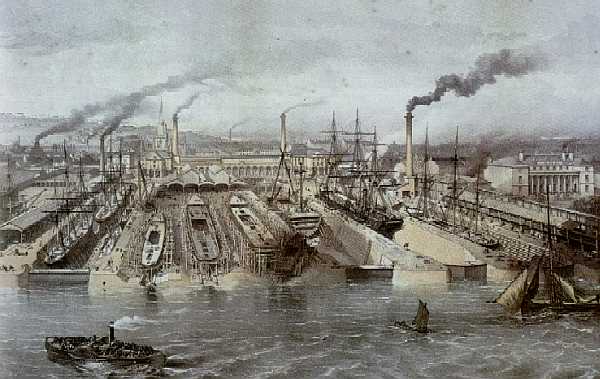
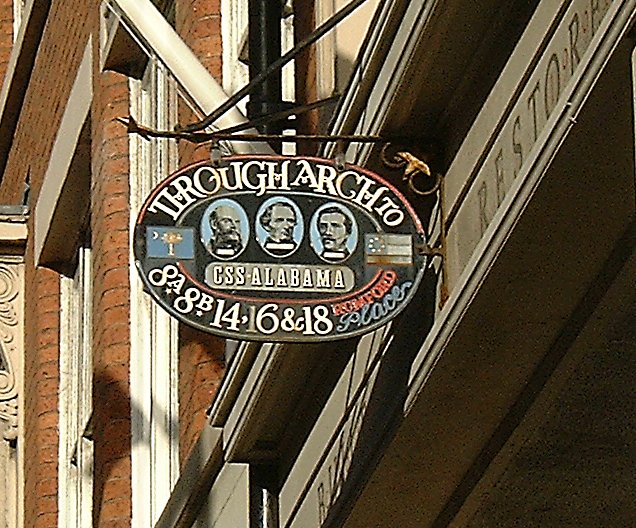
Bulloch had been instructed to buy or have constructed steam powered destroyers which would be used as commerce raiders against the United States merchantmen. One of the most famous of these CSS ALABAMA was built at Laird’s yard Birkenhead. She was described by Laird’s as “the finest cruiser in the world”.
CSS ALABAMA was built at Laird Brothers and departed from the Mersey on 29 July 1862 under the command of Cunard line master Capt. M.J. Butcher.
At Moelfre, Anglesey she spent two days preparing for sea. On 31st July she set sail, landing Commander Bulloch and the pilot at the Giant’s Causeway, Ireland. She then headed for Azores where she rendevoued with the CSS AGRIPPA loading stores, guns and ammunition. On the 13th August Capt. Raphael Semmes CSN took command of the vessel. Eleven days later CSS ALABAMA was commissioned into the Confederate States Navy to the sound of the stirring national anthem – “Dixie”.
CSS ALABAMA had a short but outstanding career with the Confederate States Navy in which she captured and burnt 55 US vessels whiilst taking another 10 as prizes.
Unfortunately lack of maintenance resulting from the pressures of war took its toll and by June 1864 she was in no fit state to take on the USS KEARSAGE off Cherbourg, France. Unfortunately KEARSAGE’s gained the upper hand and the ALABAMA’s crew were forced to abadon ship. Many of the ALABAMA’s crew and Captain Semmes were rescued by the crew of the private steam yacht DEERHOUND, also Laird built, and taken to Southampton.
On landing Captain Semmes and his crew received a hero’s welcome, officers of the Royal Navy presented him with a gold mounted sword before he returned to the CSA
Commander Bulloch, remained in Liverpool after the conclusion of hostilities. He died in1901 and is buried in Smithdown Road Cemetary, Liverpool. His gravestone reads “American by Birth – Englishman by Choice”
Search All NYTimes.com
News .World U.S. N.Y. / Region Business Technology Science Health Sports Opinion Arts Style Travel Jobs Real Estate Autos Advertise on NYTimes.com..PARLIAMENTARY PROCEEDINGS.; The Debate on the Foreign Enlistment Law, Rebel Privateers, &c.
Published: August 6, 1863
Facebook
Twitter
Google+
E-mail
Share
Print
Reprints
Mr. COBDEN, in rising to call attention to a memorial signed by thirty of the most respectable shipowners of Liverpool respecting the evasion of our Foreign Enlishment law, said that the Government professed its inability to detect and punish the breaches of the law committed by British subjects in building and sending to sea vessels-of-war to be employed against a friendly Power. It appeared to him, however, in reading the correspondence on this subject, that the Foreign-office assumed a passive position, and thought they could only be called upon to interfere when some foreign Government complained that the provisions of the law were impugned. But the Foreign Enlistment act was passed not for the benefit of foreign Powers, but for our own protection. It was, therefore, the duty of the Executive to see that the law was obeyed, and he could not conceive that the Home-office and all its machinery of magistrates and, policemen could be better employed than in inforcing the observance of the act of Parliament. There were three vessels specifically Known which were now preying upon the commerce of a friendly Power — the Orelo, alias the Florida, the Alabama, alias the “290,” and the Japan, alias the Virginia. All these were built in England, were armed and chiefly manned from England. One of these ships managed to get into Mobile and get back again, but the others had never yet entered a Confederate port. He wished the House to consider how this state of things would effect our interests if we were at war and the Americans were at peace. If the law as it now stood were not sufficient, the memorialists suggested some amendments that would give greater power to the Government to seize in British ports vessel? that were destined for the use of the belligerents. He believed that the addition of a single word would be sufficient — the word “building” in addition to the words ” furnishing out and arming”‘ ships. This would prevent vessels leaving our ports in a partially unfinished state, and afterward being converted into a vessel-of-war. He was informed that were at this moment two ironclads now being built in this country, and that the Government had received a reclamation from the United States Minister in this country that these vessels were intended for the Confederate Government. From all he observed of the slate of public opinion in America, he was convinced that if these vessels went out and began to prey upon the United States shipping it would lead to a war with that country. Tin se ships now building at Liver pool were lion rams. They were a match for any vessel of war that America now had, or that we ourselves possessed and if they were allowed to sail it would probably lead to a rupture between this country and the United States. The fact was, we had rendered the mercantile marine of America practically valueless. The American ship-owners found the rate of insurance so raised that they could no longer compete with the ships of England and other maritime Powers. They had consequently been selling their ships to English shipowners, and he asked the House to consider the effect of such a state of thin is on the minds of the shipowners of New-York and Boston, who had always been favorable to peace with Great Britain. During the recess. Her Majesty’s Government might take precautions against these ships leaving the ports of this country for service against a friendly Power. In the case of every vessel captured by the Florida, the Alabama and the Virginia, the American Government took depositions on oath as to the value of the ship and cargo, and claims for this amount were made upon the English Government- Every vessel seized and burnt was thus debited to the account of England, and a, formal claim made for the amount. Her Majesty’s Government had refused to acknowledge these claims, but some day, when the demand could be made most inconveniently for the Government, the result would probably be either humiliation or war. i\o doubt many persons in this country would prefer war; but was it desirable that the interest of the whole community should be affected by the conduct of two or three firms in this country? The hon. member for Birkenhead, on a former- occasion, spoke of the greater export of arms and ammunition to the Federal States. There was, however, a great difference between the export of ships and the export of arms and ammunition Gunpowder was a constant article or commerce, and was extensively used in the operations of mining, blasting. &c. To prohibit the export of ammunition would, therefore, be injurious to a large and regular industry. There was, moreover, no law against this export. But the law undertook to prevent the people of this country from supplying ships-of-war to be used against a friendly Power, and the manning of such ships. The honorable gentleman (Mr. LAIRD) had told the House that he had been applied to to build ships for the Federal Government. If that were so, the honorable member was quite right to refuse the applications, but he held in his hand an official contradiction to the statement of the honorable member for Birkenhead.
The Speaker said that this was not a proper occasion for replying to a speech made some time ago, and the honorable member could not be permitted to read observations on a speech made in former debate.
Mr. COBDEN said he held in his hand the copy of a letter which was of importance in the interest of peace as well as the interest of truth. It was a copy of a letter from the Secretary of the Navy at Washington to his (Mr. COBDFN’s) friend, Mr. SUMNER, and began. “You invite my attention to a statement made by Mr. LAIRD.”‘ [“Order, order.”]
The Speaker, again interposing, said that the honorable gentleman might make any statement that he thought necessary; but to read a letter referring to a speech made by a member of that House, was out of order. [Hear, hear.]
Mr. COBDEN would then content himself by saying that he was informed that no order had been sent by the American Government to any firm in this country for the building of vessels-of-war. Reverting to the memorial he had presented, he would assert that we were bound by motives of self-interest to put down these proceedings. The English Government had never made a complaint to America which was not immediately attended to and the grievance, if any, redressed, and this was the case, not only during the disturbances in Canada, but also during the war with Russia. The fact was that public opinion in the United States was in favor of maintaining this neutrality code. The claim of the Americans for indemnity for the seizures by the Confederate vessels built in England was under international, and not under municipal, law; and it was no answer to them to say that the law under which our Government acted was a municipal law. The fact was that the gentlemen who built these ships were, for their own small gains, placing this country in a situation of great danger and embarrassment. He trusted that the Government would exercise the utmost vigilance in preventing these armed vessels from leaving our shores. He thought that the arguments both of the noble Earl (RUSSELL) and the Solicitor-General contained a fallacy, because they confounded two things, — the evidence necessary to detain, and that which was necessary to convict these vessels. A Custom-house officer ought to have been placed on board to prevent the escape of the Alabama, which got away under pretence of taking a party of ladies and gentlemen on a picnic: It would be sufficient if one clause were added to the Customs’ Consolidation Act enacting that before a vessel of war left one of our ports for a foreign country, the builder or owner should prove for what foreign country she was intended. To Interfere with the quarrels of great States could only lead lo mischief, and if we new interfered in America, either by means of fitting out vessels of war or by premature recognition, we should only produce the same results as followed our intervention in the affairs of France, which led to the extension of the reign of terror all over Germany. He did not expect to live to see two independent nations within the United States. A great deal had been said in that House on a contrary assumption, but whatever the issue of this dreadful war might be, let this country keep clear of it. He desired nothing more than that we should be silent and sorrowful until this great war was over. [.Hear.]
Mr. LAIRD was prepared to prove that every word he had said in a former debate was perfectly true, and to put his proofs in the hands of the noble Lord at the head of the Government. [Hear.] The Honorable gentleman stated that the Alabama went out with a picnic party, but he had ascertained that she went, out of a dock at night, that she anchored in the river until 11 or 12 o’clock next day, and that she was seen from the shore by thousands of persons, [Mr. COBDEN — She had no clearance.] It was not necessary to take a clearance. The owner might either clear her or take a register. The course pursued was to hand the builder’s certificate to the owner and then he might do what he liked with her. A great deal of blame had been cast upon the English Government, but what had been the orders given by the American Government to the Tuscarora? She was running about the country after the Alabama, but orders were given to her not to touch the Alabama in the Channel. Mr. ADAMS, in a letter to Mr. SEWARD, dated Aug. 7, 1862, said:
“On the same day I received by mail a note from Captain CRAVEN, dated the 31st. announcing the receipt of my dispatches and his decision to go to Point Lynas at noon, on the 1st inst. Capt. CRAVLN seems to have sailed up the St. George’s Channel. This last movement must have been made in forgetfulness of my caution about British jurisdiction, for even had he found No. 290 in that region. I had in previous conversations with him explained the reason why I should not consider it good policy to attempt her capture near the coast. In point of fact, this proceeding put an end to every chance of his success.”
The honorable member stated that the Alabama had never been in a Confederate port, but that was not necessary so long as she canted the Confederate commission. If we were at war with America, and the Admiral on the North American station captured vessels that were likely to be useful, did the honorable gentleman suppose that he would be obliged to sent them into Portsmouth harbor and wait for their return? No, the moment a vessel received a commission from a belligerent Government she became a recognized vessel-of-war, and must be so regarded. A proof that the American Government admitted the lawfulness of the captures made by the Alabama was that they had recognized the bonds given by the officers of the ship seized and l???ated, by the Alabama. They thus recognized the whole proceeding under which she became a Confederate vessel and received a Confederate commission, and they could not back out of it. (Hear, hear.) The memorial presented by the hon. gentleman was signed by 30 of the ship-owners of Liverpool. They might be very respectable persons, but they were too small a number to claim to represent the ship-owners of Liverpool. Many of those who had signed it had, he was told, done so with the understanding that other nations were to do the same. It had been proposed to make the law more stringent, and that any one undertaking an order for building a ship should prove for whom she was intended. But there was this difference between ships and cannon, that ships might be used for peaceful purposes, while cannon and muskets could only be turned to one use. The Northern States got all they wanted from this country. They imported largely our arms and ammunition’ and at the same time they wished to stop a legitimate branch of industry. As a proof how easily vessels built for purposes of commerce might be converted into vessels of war, he might mention that in 1850 he thought it desirable to strengthen the local defences of each port by adapting the ferry-boats, tug and steamboats to purposes of defence. He laid a proposition before the Admiralty, and also before Lord HERBERT, by whom it was warmly taken up, offering to adapt 40 or 50 of these vessels at an expense of from £250 to £300, for the purposes of defence. The Admiralty sent down a talented officer of the navy, who made a survey, and reported that for £200 or ;300 these vessel; might be made to carry, some 32s and others 68-pounders, then the most efficient gun in the service. He (Mr. Laird) would indeed take any ship, and at a small cost adapt her to carry some of the larger, guns of the service. While the honorable gentleman (Mr. GOLDEN) was turning his attention to the breach of the Foreign Enlistment act, he could have wished that he had made inquiries into the enlistment of men to the Federal army that was now going on in Ireland. If he would advise with the American Minister on this point, he might do a great deal of good to the people, of Ireland. If The Hon. Gentleman, however, persisted in seeing only one side of the question. [Hear, hear.] The Chief Baron had given a strong opinion that the taw was on the side of these who had built the Alexandra. The ???ion. member had vouched for the readiness. of the Americans to abstain from intriguing the law in this respect. He wished however, to relate to the House what took place in regard to the America, a vessel which was built, ma??? armed and equipped in the United States, and which was taken out by Capt. HUDSON to Petropaniowski for the Russian Government. Capt. HUDSON.
“Expressed his deep chagrin at the unexpected termination of the war, as thus America was only one of fleet that were preparing and equipping for the same Government and purpose, and added that in the event of another year’s war, they would have swept the Pacific of the English vessels.”
In confirmation of this statement he would read a memorandum made by an officer on board the Sarannah:
“The America came into Rio de Ja???iro, on her way round from New-York to Petrepan???ski. When she was in Rio the Captains of the English and French men-of war lying there wanted o overhaul her, but the Brazilian Government would not permit it. They then determined to overhaul her after she left the harbor. Commander SALTER, who wits commander of the United States squadron at Rio, in the frigate Sarannah, in order to protect the, America, ordered her to take the Sarannah in tow, which effectuality prevented the English and French searching the America. One of the crew of the America gave the British Consul at Rio, information of the America having her guns in her hold ready to mount. The America was commanded by Capt. HUDSON, an Ex-Lieutenant in the United States Navy.”
Lastly, an officer of the British navy stated in a letter:
“The America laid in the Peiho River for some weeks during the months of April and May, 1858. She had the flag of Count, P???TIATINE fixing at the signing of the treaty of Tien-tsin, May. 1858, and was well known to every naval officer present as having been built in America for the Russians. She had an American eagle on her stern.”
So far from the American Government keeping faith with that of Great Britain during the war with Russia, they allowed the America to get away, and gave orders to the American Admiral to protect her against the search of the English and French officers. [Hear, hear.]
Lord PALMERSTON said: Sir, I have listened with great attention to the speech of my honorable friend the member for Rochdale; but it appears to me that he and Her Majesty’s: Government, and I think the country at large, start in the consideration of the matter to which he has directed the attention of the House from different points of departure. We look upon the two parties who are now in arms against each other in America us each of them belligerents, and, therefore, alike entitled, as far as our neutral position is concerned, to all the privileges and rights which appertain to belligerents. Now, it seems to me that that which is running in the head of the honorable gentleman, and which guides and directs the whole of his reasoning, is the feeling, although perhaps disguised to himself, that the Union is still in legal existence, that there are not in America two belligerent parties, but a legitimate Government and a rebellion against that Government. Now, that places the two parties in a very different position from that in which it is our duty to consider them. Now, what is the duty of a neutral in regard to two belligerents, and what are the rights of neutrals? The American Government have laid down the position for themselves, because they have declared that a neutral is at liberty to furnish a belligerent with anything that the belligerent may choose to buy, whether it be ships, arms, ammunition, or anything else, no restriction is imposed on a neutral in furnishing a belligerent even with those things which are material ingredients in the conduct of military operations. Therefore on no international law has the Federal Government any right whatever to complain of this or any other country that may supply a party in arms against the Federals with anything they may choose to buy. I cannot in the abstract concur with my honorable friend in thinking that there is any distinction in principle between muskets, gunpowder, bullets, and cannon, on the one side, and ships on the other. [Hear.] Those are things by which war is carried on, and you are equally assisting belligerents by supplying them with muskets, cannon, and ammunition, as you are by furnishing them with ships that are to operate in the war. What has been the practice of the United States government themselves? The honorable member for Birken- head has alluded to the case of a ship built in the United States when we were at war with Russia, We complained, and the ship was examined and declared. by the local authorities to be free from any ground for molestation. Nevertheless, there was the best reason for believing that the ship was destined for the Russian Government and for naval operations in the Eastern seas, where the Russian Government most wanted such assistance. We had reason to believe that other ships were then, building in America for the same purpose, and would have been used if the war had continued. Therefore, I hold that, on the mere ground of international law, belligerents have no right to complain if merchants — I do not say the Government, for that would be interference — as a mercantile transaction, supply one of the belligerents, not only with arms and cannon, but also with ships destined for warlike purposes. But, then, in our case, there comes in, no doubt, the municipal law. The American Government have a distinct right to expect that a neutral will enforce its municipal law, if it be in their favor. Then comes the question whether the Government has done that which a Government is enabled to do, and ought to do; and I contend that we have. My honorable friend says that we ought to have prevented ships from being built which were evidently destined for war. But it was very well said by the honorable member for Birkenhead that you cannot draw a distinction between ships that may evidently be built for warlike purposes, and those that may be eventually applied to warlike purposes. He has mentioned what everybody knows, that when we came to consider our means of naval defence we found a great number of mercantile steamers in our boris, which might, in a short time, and at a small expense, be converted into ships of war, and made available for the defence of the country. Take what has happened. One of the ship employed in the service of the Confederate to prey on the commerce of the Federals was the Nashville. Now, what was the Nashville? Suppose she had been built in this country, what possibility had we under the Foreign Enlistment Act of preventing her from leaving this country? I went on board the Nashville in Southampton docks. She was a steamer very much, like these that go up and down the Thames, with a glass room built on deck, and furnished below with a great number of berths for passengers. But they put guns on board, and being able to steam with great rapidity, the Nashville could easily capture and destroy any merchantman. In the same way a ship might be built in this country capable of being converted into a ship-of-war. but with respect to which, while building, it would be perfectly impossible to prove by any legal construction that she was intended for a ship-of-war, and, therefore, liable to be interfered with. The learned gentleman complained that the Government have not exercises the vigilance incumbent on them in such a matter, and that they have relied entirely on receiving information from the Minister of the United States; but that is not the fact. The Home-office have employed all the means that could with propriety be used, and in some cases complaints have been made that they have employed more stringent means than they ought to do. We are not in the habit in this country of employing that system of spies which is resorted to in other countries; still, the Government have thought it their duty to employ people openly and legitimately to obtain information. With regard to the Alabama, an explanation has been given by the honorable member for Birkenhard. With regard to the .Alabama, the attention of the Government having been called to the construction of the vessel, steps were taken to stop and seize her. The trial came off, but the judgment of the Court was against the Government, the Court deciding that, under the Foreign Enlistment act, the Government had no right to stop her. Exceptions have been put in to that ruling, but I am afraid the question cannot be decided until next November. I really think there is no ground on which either honorable gentlemen or the Federal Government can found any complaint that Her Majesty’s Government have not done all that the munipipal law entitles then to do in regard to the fitting out of ships in this country. There is a further difficulty. I will suppose a ship built of such a character that you might safely say it was built for warlike purposes. Then you must prove who it is intended for. The honorable gentleman assumes that parties may be in combination to evade the law, but in that case nothing can be easier than to show that a ship is not intended for the particular State for which she is supposed to be built. The honorable gentleman suggests that we ought to amend the Foreign Enlistment Act, and add the word “building,” as well as “armed and equipped.” But that goes beyond the question of ships-of-war. You put an end to a branch of trade — the building, of ships of commerce for foreign States, [Hear.] You would thus no beyond what even the honorable gentleman contemplates. I say nothing about the question of altering your law to suit the convenience of any foreign ???it, or at any part ??? moment. W??? change in the laws ??? years ago. not ??? foreign Government, but because ??? as gentlemen and men of honor, the Government and Parliament of this country ???ound to do what was proposed to protect an allied Sovereign from the personal danger to which he was exposed from conspirators in this country. We did it spontaneously, but so much principle applies to this case, for to pursue the course the honorable mentioned recommends would be f??? her own intimate industry and commerce, and I do not think that House would agree to such a change. I think that we ought to endeavor to enforce our law as far as we can, and that wherever we learn that there are ships being build presumably for a be???, between which and other belligerents we profess to be neutral. We ought to enforce our law as far as courts of justice ??? us. That will be the course pursued by the Government. As regards one of the ???lads to which any ???rable friend has referred, I am informed that the French ??? chains it for the Emperor of the French. ??? Mr. CODDEN shook his head. How that is I cannot say.

 Rosamond Press
Leave a comment