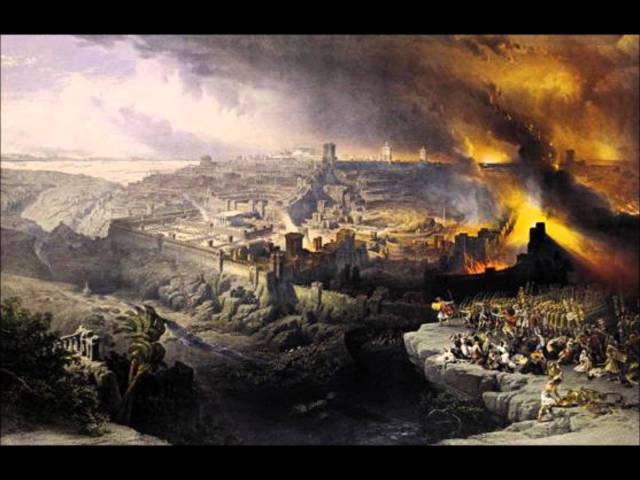
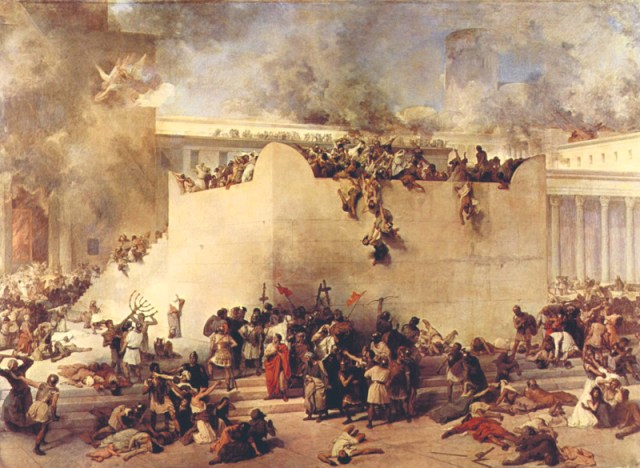
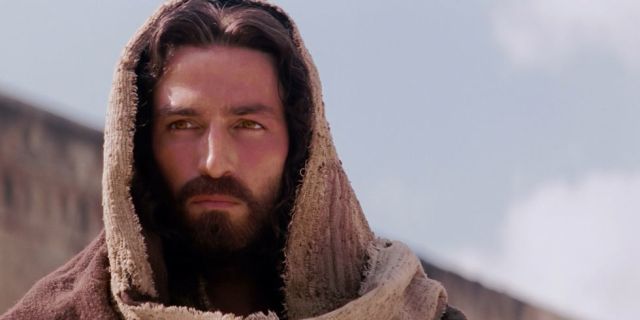
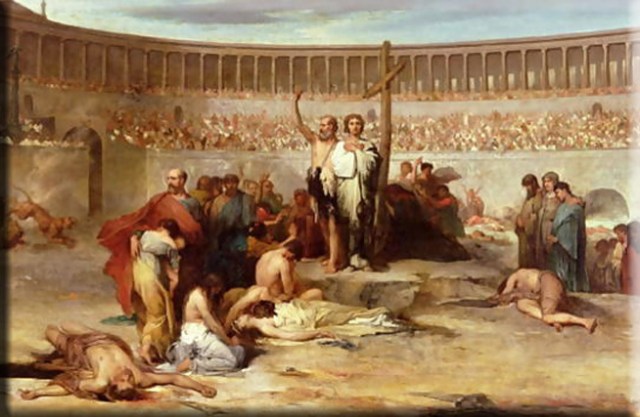
Is Anthronges the real Jesus? Is he Queen Helena’s son? Did he instigate a Tax Rebellion against the Roman Slave State? Josephus mentions a “innovation” that is behind the trouble? Anthronges may have been called ‘Savior’ the meaning of the name Jesus. Jesus was restoring the Jubilee that did away WITH DEBT. Debt archives are burned. An appeal to LOWER TAXES, is made – and denied! A war with Rome – is instigated!
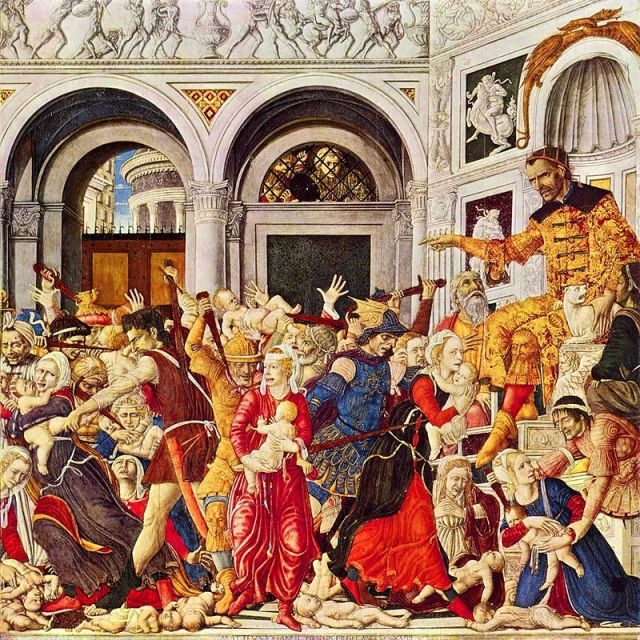
Paul addressed this TAX REVOLT in Romans 13, that is still going on! There are factions vying for control of the first church. That a Son of the Confederacy would invoke this passage in order to oppress and punish people by abusing THEIR children, is an outrage that takes us back to birth of Jesus, and the ‘Slaughter of the Innocents’ that most scholars conclude never happened. I found evidence – it did happen – which I will produce on Father’s Day.
Herod TERRORIZED the Jews. He went after their First Born, knowing the heritage they carried forth. Follow THE MONEY TRAIL! Rome and Herod wanted TAX MONEY! This is THE MOTIVE for TERRORIZING FATHERS! Take their children from them and torture them, feed them to wild animals!
Paul un-fathered The Mortal Savior’ and turned him into a ROMAN SKY GOD. The Kingdom of God and His Chosen Children, is no longer of this earth. Father’s of Paul’s church – ARE VIRGINS! Paul’s Jesus is a Dead Thing, a Neon Sign on the highway.
“Obey the Romans. Pay your taxes. And, don’t forget to tithe!”
Jon Presco
https://en.wikipedia.org/wiki/Athronges
At this time it was that a certain shepherd ventured to set himself up for a king; he was called Athrongeus. It was his strength of body that made him expect such a dignity, as well as his soul, which despised death; and besides these qualifications, he had four brethren like himself. He put a troop of armed men under each of these his brethren, and made use of them as his generals and commanders, when he made his incursions, while he did himself act like a king, and meddled only with the more important affairs; and at this time he put a diadem about his head, and continued after that to overrun the country for no little time with his brethren, and became their leader in killing both the Romans and those of the king’s party; nor did any Jew escape him, if any gain could accrue to him thereby. He once ventured to encompass a whole troop of Romans at Emmaus, who were carrying corn and weapons to their legion; his men therefore shot their arrows and darts, and thereby slew their centurion Arius, and forty of the stoutest of his men, while the rest of them, who were in danger of the same fate, upon the coming of Gratus, with those of Sebaste, to their assistance, escaped. And when these men had thus served both their own countrymen and foreigners, and that through this whole war, three of them were, after some time, subdued; the eldest by Archelaus, the two next by falling into the hands of Gratus and Ptolemeus; but the fourth delivered himself up to Archelaus, upon his giving him his right hand for his security. However, this their end was not till afterward, while at present they filled all Judea with a piratic war.
The government says more than 10,000 children are in shelters run by the Office of Refugee Resettlement. The office is part of the Department of Health and Human Services.
“Romans 13, for a long time, has been appealed to in an incorrect way, as a justification for ‘Obey the laws, no matter what,’” he said. “Whether they’re just or not. I don’t want to be too extreme, but … in Nazi Germany, Lutherans, for the most part, supported Hitler and they used Romans 13 to validate that.”
In an interview with The Washington Post, John Fea, a professor of American history at Messiah College at Pennsylvania, said the verse was also used to support slavery in the 1840s and 1850s.
“(It) is invoked by defenders of the South or defenders of slavery to ward off abolitionists who believed that slavery is wrong,” he said. “I mean, this is the same argument that Southern slaveholders and the advocates of a Southern way of life made.”
Saler noted, too, that it’s important to consider when Paul wrote Romans. At that time, Christians were being executed by the Roman Empire, he said.
What Paul was penning, Saler added, was meant to be a road map to living a gentler life full of charity, a stark contrast to how Paul would have viewed the empire.
“It’s flat-out irresponsible (for Sessions) to use it without attention to the broader context,” Saler said. “It’s basically practical advice: While you’re doing this, sure, go ahead and pay your taxes, give the government its due.
“But taken as a whole, Romans stands as a counter to unjust government and unjust rule.”
Mather, who has served at UMC Broadway for 15 years, echoed that sentiment. When he learned Sessions had been a Sunday school teacher, he chuckled.
https://rosamondpress.com/2016/03/28/nazarite-lamp-of-helena/
“Simon held the upper city, and the great walls as far as Cedron, and as much of the old wall as bent from Siloam to the east, and which went down to the palace of Monobazus, who was king of the Adiabeni, beyond Euphrates; he also held the fountain, and the Acra, which was no other than the lower city; he also held all that reached to the palace of queen Helena, the mother of Monobazus; but John held the temple, and the parts thereto adjoining, for a great way, as also Ophla, and the valley called “Valley of Cedron;”
But it was most of all unhappy before it was overthrown, while those that took it did it a greater kindness; for I venture to affirm, that the sedition destroyed the city, and the Romans destroyed the sedition, which it was a much harder thing to do that to destroy the walls; so that we may justly ascribe our misfortunes to our own people , and the just vengeance taken on them by the Romans; as to which matter let every one determine by the actions on both sides.
https://rosamondpress.com/2014/09/08/burning-the-debt-archives-2/
Before the zealots burned Sephoris in 66 C.E., “their first impulse
once armed was to destroy the debt archives and revenge themselves
on those cities that administered their exploitation and
oppression.”
The reaction was outrage. Mobs swarmed the streets, driving the outnumbered soldiers out of the city. The people stormed the Antonia (the Roman fort) and burned the archives, destroying records of debts. The revolt spread. The Zealots surprised the Roman garrison and occupied the fortress of Masada. From this fortress, huge supplies of weapons were distributed. Though there were voices urging calm, even the nonpolitical Pharisees joined the Zealot movement in droves.
Upon this the multitude were pleased, and presently made a trial of what he intended, by asking great things of him; for some made a clamor that he would ease them in their taxes; others, that he would take off the duties upon commodities; and some, that he would loose those that were in prison; in all which cases he answered readily to their satisfaction, in order to get the good-will of the multitude; after which he offered [the proper] sacrifices, and feasted with his friends. And here it was that a great many of those that desired innovations came in crowds towards the evening, and began then to mourn on their own account, when the public mourning for the king was over. These lamented those that were put to death by Herod, because they had cut down the golden eagle that had been over the gate of the temple. Nor was this mourning of a private nature, but the lamentations were very great, the mourning solemn, and the weeping such as was loudly heard all over the city, as being for those men who had perished for the laws of their country, and for the temple. They cried out that a punishment ought to be inflicted for these men upon those that were honored by Herod; and that, in the first place, the man whom he had made high priest should be deprived; and that it was fit to choose a person of greater piety and purity than he was.
But Sabinus came, after he was gone, and gave them an occasion of making innovations; for he compelled the keepers of the citadels to deliver them up to him, and made a bitter search after the king’s money, as depending not only on the soldiers which were left by Varus, but on the multitude of his own servants, all which he armed and used as the instruments of his covetousness
In Sepphoris also, a city of Galilee, there was one Judas (the son of that arch-robber Hezekias, who formerly overran the country, and had been subdued by king Herod); this man got no small multitude together, and brake open the place where the royal armor was laid up, and armed those about him, and attacked those that were so earnest to gain the dominion.
 Rosamond Press
Leave a comment