Dylan won the Nobel Prize and is honored as a great poet. His ‘Sad Eyed Lady of the Lowlands’ is one of the most profound poems written in the English language. Alas, my generation is honored, for we were not sexual deviants and rapers of women. We shared poetry with one another, and, some great men and women picked up instruments. Our muses were everywhere! We had the wings of angels, because they stood behind us, our beautiful dictators.
“Rena has been captured by a Christian Militia and works in a tower as a janitor while she recites thousands of poems. Dark men are taking heads and enslaving women.”
At sometime in practicing Their Trust, and artist comes to terms with the truth, they are going to become famous, are going to remembered, are going to become an immortal.
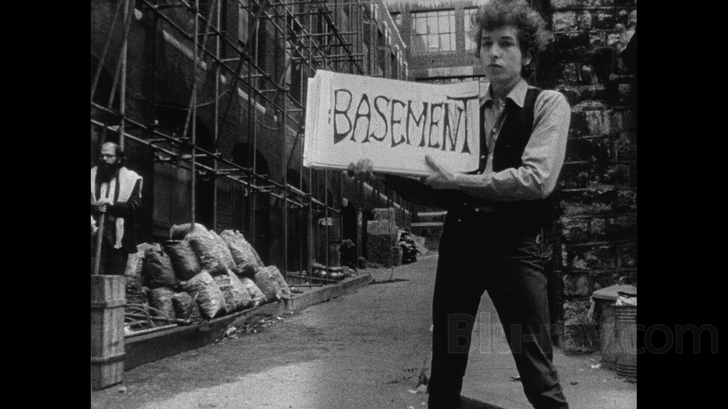
In this famous video we see poet, Allen Ginsberg, and Dylan’s best friend.
In 1963 I hitchhiked to New York and lived on the edge of the Village. Keith came to live with me and we drank in the bars on Fourth Street. I am a Subterranean Blogger. I spend every morning with my Computer Muse.
The Muses are under attack by Donald Trump who grew up in New York. I have declared Rena Easton the Lost Muse of Poetry hidden away in a Tower, where she recites a million poems she keeps safe in her Memory Bank! Her time has come!
Jon
Painter, road manager, sidekick, confidante, henchman, poet, underground cult hero, womanizer, party organizer, self-appointed king of cool, and baiter-in-chief of Baez, Donovan, and any other unfortunate who wound up in the line of fire of his sledgehammer jibes, Neuwirth went on to become a film-maker and a credible singer-songwriter in his own right, co-writing the wonderful ‘Mercedes Benz’ with his friend Janis Joplin.[2]
Dylan has also stated that when he attended the University of Minnesota in 1959, he fell under the influence of theBeat scene: “It was Jack Kerouac, Ginsberg, Corso and Ferlinghetti.”[5] Kerouac’s The Subterraneans, a novel published in 1958 about the Beats, has been suggested as a possible inspiration for the song’s title.[6][7]
Bob Dylan was awarded the Nobel Prize in literature on Thursday for work that the Swedish Academy described as “having created new poetic expressions within the great American song tradition.”
He is the first American to win the prize since Toni Morrison in 1993, and a groundbreaking choice by the Nobel committee to select the first literature laureate whose career has primarily been as a musician.
Although long rumored as a contender for the prize, Dylan was far down the list of predicted winners, which included such renown writers as Haruki Murakami and Ngugi wa Thiong’o.
This is the second year in a row that the academy has turned away from fiction writers for the literature prize. And it’s possibly the first year that the prize has gone to someone who is primarily a musician, not a writer.
The permanent secretary of the Swedish Academy, Sara Danius, made the announcement in Stockholm. In a televised interview afterward, Danius said that Dylan “embodies the tradition. And for 54 years, he’s been at it, reinventing himself, creating a new identity.” She suggested that people unfamiliar with his work start with “Blonde on Blonde,” his album from 1966.
“Bob Dylan writes poetry for the ear,” she said. “But it’s perfectly fine to read his works as poetry.”
She drew parallels between Dylan’s work and poets as far back as Greek antiquity.
“It’s an extraordinary example of his brilliant way of rhyming and his pictorial thinking,” Danius said. “If you look back, far back, you discover Homer and Sappho, and they wrote poetic texts that were meant to be listened to. They were meant to be performed. It’s the same way with Bob Dylan. But we still read Homer and Sappho. He can be read and should be read. He is a great poet in the grand English tradition. I know the music, and I’ve started to appreciate him much more now. Today, I’m a lover of Bob Dylan.
“Subterranean Homesick Blues” is a song by Bob Dylan, recorded on January 14, 1965, and released as a singleby Columbia Records, catalogue number 43242, on March 8.[1] It was the lead track on the album Bringing It All Back Home, released some two weeks later.[2] It was Dylan’s first Top 40 hit in the United States, peaking at number 39 on the Billboard Hot 100. It also entered the Top 10 on the singles chart in the United Kingdom. The song has subsequently been reissued on numerous compilations, the first being the 1967 singles compilation Bob Dylan’s Greatest Hits. One of Dylan’s first electric recordings, “Subterranean Homesick Blues” is also notable for its innovative film clip, which first appeared in D. A. Pennebaker‘s documentary Dont Look Back.
An acoustic version of the song, recorded the day before the single, was released on The Bootleg Series Volumes 1–3 (Rare & Unreleased) 1961–1991.
“Subterranean Homesick Blues” is an amalgam of Jack Kerouac, the Woody Guthrie–Pete Seeger song “Taking It Easy” (“Mom was in the kitchen preparing to eat / Sis was in the pantry looking for some yeast”) and the rock’n’roll poetry of Chuck Berry‘s “Too Much Monkey Business“.[3]
In 2004, Dylan said, “It’s from Chuck Berry, a bit of ‘Too Much Monkey Business’ and some of the scat songs of the ’40s.” [4]
Dylan has also stated that when he attended the University of Minnesota in 1959, he fell under the influence of theBeat scene: “It was Jack Kerouac, Ginsberg, Corso and Ferlinghetti.”[5] Kerouac’s The Subterraneans, a novel published in 1958 about the Beats, has been suggested as a possible inspiration for the song’s title.[6][7]
The song’s first line is a reference to codeine distillation and the politics of the time: “Johnny’s in the basement mixing up the medicine / I’m on the pavement thinkin’ about the government”.[2][8] The song also depicts some of the growing conflicts between “straights” or “squares” and the emerging counterculture of the 1960s. The widespread use of recreational drugs and turmoil surrounding the Vietnam War were both starting to take hold of the nation, and Dylan’s hyperkinetic lyrics were dense with up-to-the-minute allusions to important emerging elements in the 1960syouth culture. According to rock journalist Andy Gill, “an entire generation recognized the zeitgeist in the verbal whirlwind of ‘Subterranean Homesick Blues’.”[8]
The song also references the struggles surrounding the American civil rights movement (“Better stay away from those / That carry ’round a fire hose“). (During the civil rights movement, peaceful protestors were beaten and sprayed with high-pressure fire hoses.) Despite the political nature of the lyrics, the song was the first Top 40 hit for Dylan in the United States.[9]
Influence[edit]
Listed by Rolling Stone magazine as the 332nd “Greatest Song of All Time”,[10] “Subterranean Homesick Blues” has had a wide influence, resulting in iconic references by artists and non-artists alike. Most famously, its lyric “you don’t need a weatherman to know which way the wind blows” was the inspiration for the name of the American radical left group the Weathermen, a breakaway from the Students for a Democratic Society.[11] In a 2007 study of legal opinions and briefs that found Dylan was quoted by judges and lawyers more than any other songwriter, “you don’t need a weatherman…” was distinguished as the line most often cited.[12][13][14]
John Lennon was reported to find the song so captivating that he did not know how he would be able to write a song that could compete with it.[15][16] The groupFirehose (former members of Minutemen) took its name from another of the song’s enigmatic warnings: “Better stay away from those that carry around a fire hose…” In addition, the opening of the last verse, “Ah get born, keep warm”, provided the Australian garage rock band Jet with the title of their debut album Get Born.
In the same way that Dylan paid homage to Jack Kerouac‘s novel, The Subterraneans,[6] “Subterranean Homesick Blues” has been referenced in the titles of various songs, for example, Radiohead‘s “Subterranean Homesick Alien” from the 1997 album OK Computer; the ska punk band Mustard Plug’s “Suburban Homesick Blues” from the 1997 album Evildoers Beware; the Memphis indie band The Grifters‘ “Subterranean Death Ride Blues”, the B-side of a 1996 single; and the British folk rock band Deaf Havana‘s “Subterranean Bullshit Blues” from the 2013 album Old Souls. It was also the basis for the title of the second episode ofLaw & Order‘s premiere season, “Subterranean Homeboy Blues”.
In the 1980s sitcom Murphy Brown, a flashback sequence shows Brown (Candice Bergen) and her future head writer (Joe Regalbuto) meeting for the first time in a bar. In order to prove to one another their genuine counterculture credentials from the mid-1960s, they join in a “challenge duet” of the first verse of “Subterranean Homesick Blues”.
Cover versions[edit]
Covers of the song span a range of styles, including those by the reggae musician Gregory Isaacs on Is It Rolling Bob?, his 2004 album of Dylan songs, withToots Hibbert;[17] the bluegrass musician Tim O’Brien on his 1996 album of Dylan covers, Red on Blonde; the rock band Red Hot Chili Peppers on the 1987 albumThe Uplift Mofo Party Plan; the Cajun-style fiddle player Doug Kershaw on Louisiana Man in 1978; and the singer-songwriter Harry Nilsson on his 1974 albumPussy Cats.[18] The song was also covered by Alanis Morissette when she stood in for Dylan at his 2005 induction into the UK Music Hall of Fame.[19] In addition,Robert Wyatt‘s “Blues in Bob Minor”, on his 1997 album Shleep, uses the song’s rhythm as a structural template.[20] In December 2009, the rapper Juelz Santanareleased the single “Mixin’ Up the Medicine“, which features lyrics in the chorus, performed by alternative rapper Yelawolf, and maintains some of the song’s original acoustics. Ed Volker of the New Orleans Radiators also has performed the song in his solo shows and with the Radiators, often paired with Highway 61 Revisited.[citation needed] The Arizona band Chronic Future covered the song on their 2004 EP, Lines in My Face. In 1994, The Day Today, a British spoof television news series, claimed that Dylan’s performance was in fact a cover version of an original by ukulele virtuoso George Formby. The programme aired a clip of the purported newly discovered original, showing Formby performing to troops in a black-and-white newsreel with the song overdubbed. Ten years earlier, another British TV series, The Young Ones, featured a performance of the song (in the episode Cash), by a one-off conglomerate called Ken Bishop’s Nice Twelve, featuring high-profile musicians such as Jools Holland, Chris Difford and Stewart Copeland, as well as a number of TV theme composers. In some DVD releases the performance was omitted for contractual reasons but it was restored for a re-release to mark the show’s 25th anniversary. In 1985, British actor Tom Watt, at the time enjoying a high profile playing the role of Lofty Holloway in EastEnders, released a version of the song that made number 67 in the UK singles chart.
Allusions in other artists’ songs[edit]
Echo & the Bunnymen‘s 1980 song “Villiers Terrace” includes the lyric “There’s people rolling ’round on the carpet / Mixin’ up the medicine.”
Robert Wyatt‘s song “Blues in Bob Minor” from his 1997 album Shleep includes the line, “Genuflecting, bowing deeply/It don’t take a weathergirl to see/Where the wind is blowing/What the wind is bending.”
Radiohead‘s song “Subterranean Homesick Alien“, from their 1997 album OK Computer, pays homage by referencing Bob Dylan’s track in the title.
The Gaslight Anthem‘s song “Angry Johnny and the Radio”, from their 2007 album Sink or Swim, includes the lyrics “And I’m still here singin’, thinking about the government” and “Are you hidin’ in a basement, mixin’ up the medicine?”
Deaf Havana‘s album Old Souls contains the song “Subterranean Bullshit Blues”, which references the title in homage to the songwriter James Veck-Gilodi’s respect for Dylan.
Adam Green‘s song “Novotel” includes the lyric “Novotel / The phone’s tapped anyway.”
Promotional film clip[edit]

The three locations for the “cue card” clip as seen in Dont Look Back

The clip was originally a segment ofD. A. Pennebaker’s filmDont Look Back
In addition to its influence on music, the song was used in one of the first “modern” promotional film clips, the forerunner of what was later known as the music video. Rolling Stone ranked it seventh in the magazine’s October 1993 list of “100 Top Music Videos”.[21] The original clip was the opening segment of D. A. Pennebaker‘s film Dont Look Back, a documentary on Dylan’s 1965 tour of England. In the film, Dylan, who came up with the idea, holds up cue cards with selected words and phrases from the lyrics. The cue cards were written by Donovan, Allen Ginsberg, Bob Neuwirth and Dylan himself.[8] While staring at the camera, he flips the cards as the song plays. There are intentional misspellings and puns throughout the clip: for instance, when the song’s lyrics say “eleven dollar bills”, the poster says “20 dollar bills”. The clip was shot in an alley close to the Savoy Hotel in London. Ginsberg and Neuwirth are briefly visible in the background. For use as a trailer, the following text was superimposed at the end of the clip, Dylan and Ginsberg are exiting the frame: “Surfacing Here Soon | Bob Dylan in | Don’t Look Back by D. A. Pennebaker”. The Savoy Hotel has retained much of its exterior as it was in 1965, and the alley used in the film has been identified as the Savoy Steps.[22]
In addition to the Savoy Hotel clip, two alternate promotional films were shot: one in a park (Embankment Gardens, adjacent to the Savoy Hotel) where Dylan, Neuwirth and Ginsberg are joined by Dylan’s producer, Tom Wilson, and another shot on the roof of an unknown building (actually the Savoy Hotel)[citation needed]. A montage of the clips can be seen in the documentary No Direction Home.
The film clip was used in September 2010 in a promotional video to launch Google Instant.[23] As they are typed, the lyrics of the song generate search engine results pages.
 Rosamond Press
Leave a comment