

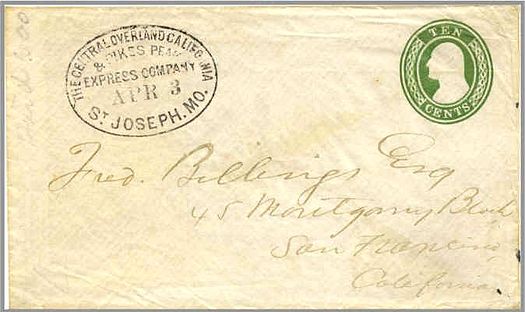


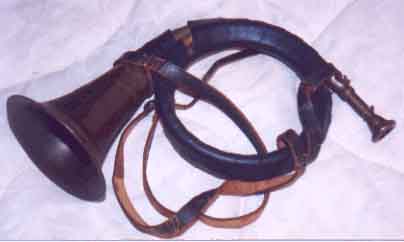
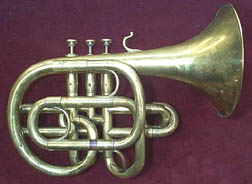
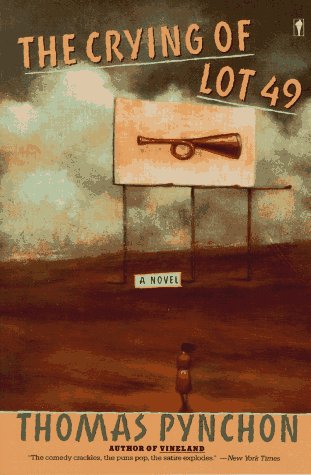
Thomas Pynchon employs the cornet and the House of Orange to create his highly personalized alternative reality that many authors have enjoined. He says in ‘The Crying of Lot 49’ the postal horn is found in a cote of arms, but, does not name the family. He employs William of Orange whom my kindred were devoted to as Orangemen.
“In 1577, the northern provinces of the Low Countries, led by the Protestant noble William of Orange, had been struggling nine years for independence from Catholic Spain and a Catholic Holy Roman Emperor. In late December, Orange, de facto master of the Low Countries, entered Brussels in triumph, having been invited there by a Committee of Eighteen.”
“In 1825, in the village of Fenagh in county Leitrim in Ireland, a
gang of Catholic youths attacked the Rosamond home. The Rosamonds were
staunch Protestants. James, aged 20 (born 1805) and his brother Edward, aged 15, attempted to protect their mother. A shot was fired by Edward and a youth was dead. The boys fled to Canada. James went to Merrickville where he worked for James Merrick as a weaver. Edward, still fearing arrest, worked his way eventually to Memphis, Tennessee.”
Thomas Pynchon and I are in the Rosamond Family tree because we married the same woman. OUR kindred, Elizabeth and Jessie Benton Fremont, were in San Francisco when the first Pony Express rider arrived. Another Jessie Benton was married to Mel Lyman who had a cult following. Mel and Tom are very much alike. The Lyman and Pynchon families are related to Princess Diana, and thus her two Windsor sons. Thomas’s reality has not escaped the common genealogy, nor real history that might be stranger than anything Pynchon could dream up.
Several authors have associated Pynchon’s writing with Dan Brown and Bageant and Leigh, the authors of ‘Holy Blood, Holy Grail’. Mary Magdalene is employed to jump modern day feminist claims. Post Pynchon alternative approaches to fiction writing, is a process that will not die with Thomas. Indeed, a gauntlet has been passed to me via the nuptial intercourse with Mary Ann Tharaldsen, who I titled a ‘Apocalyptic Artist’. Mary Ann may be the model for Opedia Maas, who is now in the Windsor family tree via her two ex-husbands.
One does not have to believe anything is true. However, no one can ignore the prophecy of an old black woman on Beacon Hill who in 1971 said;
“The head-takers are coming!”
With the rise if ISIS it is time to reveal what Mary Ann Tharaldsen’s attorney bid me to keep secret.
Pope Francis stopped short of calling for a Holy Crusade. What about the Protestants….the Orangemen? Where are the Knights Templar? NATO is amassing troops to fight the Read Menace.
Jon Presco
Copyright 2014
http://www.archive.org/stream/recollectionsofe00fr/recollectionsofe00fr_djvu.txt
http://en.wikipedia.org/wiki/Prince_of_Orange
At the end of the eighth century, Charlemagne recognized the importance of Orange, and entrusted its government to William au-Cornet, one of his men who had distinguished himself in the wars against the Saracens. To the same William the town owes its coat of arms, depicting a ‘horn’ (as in William au ‘Cornet’).
Between the twelfth and fourteenth century, Orange was ruled by several noble families; it was first incorporated in Venassin County, whose overlord was the troubadour Rimbaut of Orange, and then by the Baux and Chalons.
One of the incidents of our life at this time
was the inauguration of the Pony Ex-
press. The mail, always an important fac-
tor when one is so far from home, reached
us once a month by steamer during our early
California days. Later, the overland stage
was a great improvement and was looked
upon as quite modern — coming in even severe
weather, with wonderful regularity. The
Pony Express was the culmination of rapid-
ity, carrying only letter mail, at advanced
charges. We chanced to have gone in to San
Francisco for our mail on the day when the
first Pony Express arrived. The street had
been cleared for the arrival and the sidewalks
were packed with onlookers. We were asked
to drive on, when a voice from the crowd
called out, ** Let Mrs. Fremont’s carriage
stay, for the Colonel blazed that path long
before the day of the pony rider,” So we
remained until welcomed by cheering all
down the street, the first Pony Express gal-
loped up, and in the quick distribution our
letters were handed to us. It was near this
very spot that we were landed through the
surf upon our first arrival in California.
But the world-wide conspiracy angle we start to understand in these middle chapters is a parody of the make-believe investigative fiction that reached its apotheosis decades later in Dan Brown’s The Da Vinci Code. Now why would he want to do that?
The cornet is a brass instrument very similar to the trumpet, distinguished by its conical bore, compact shape, and mellower tone quality. The most common cornet is a transposing instrument in B♭.
The name cornet derives from corne, meaning horn, itself from Latin cornus. While not musically related, instruments of the Zink family (which includes serpents) are named “cornetto- ” with a tonal or pitch related Latin word following the hyphen to describe the particular variant. The 11th edition of the Encyclopædia Britannica referred to serpents as “old wooden cornets”.[4] The Roman/Etruscan cornu (or simply “horn”) is the lingual ancestor of these. It is a predecessor of the post horn from which the cornet evolved and was used like a bugle to signal orders on the battlefield.[3]
The area started as the County of Orange, a fief in the Holy Roman Empire, in its constituent Kingdom of Burgundy. It was awarded to William of Gellone, a grandson of Charles Martel and therefore a cousin of Charlemagne, around the year 800 for his services in the wars against the Moors and reconquering southern France and the Spanish March. His Occitan name is Guilhem. However, as a Frankish lord, he probably knew himself by the old Germanic version of Wilhelm. William was also count of Toulouse, duke of Aquitaine, and marquis of Septimania. The horn that came to symbolize Orange when heraldry came in vogue much later in the 12th century was a pun on his name in French, from the character his deeds inspired in the chanson de geste, the Chanson de Guillaume, “Guillaume au Court Nez” or “Guillaume au Cornet”.[3] The chanson appears to be based on William of Gellone’s battle at the Orbieu or Orbiel river near Carcassonne in 793 as well as his seizure of the town of Orange.[4]
Did Mary Magdalene travel to Provence, in France? Ralph Ellis follows the trail of mythology and reveals compelling circumstantial evidence that she did, and that her presence there has left its mark on the history of the region. In addition, Ralph suggests that the legacy of Mary Magdalene was bequeathed upon the city of Orange in southern France, the city that was central to the Royal Dutch House of Orange, and thus central to the entire Reformation and Enlightenment movement. The book then goes on to explore the Orange Enlightenment and the Age of Reason, the twin religious reforms that created the modern rational and technical world that we live in today.
http://archiver.rootsweb.ancestry.com/th/read/OBITUARIES/2008-06/1212528181
Thomas Pynchon was born in 1937 in Glen Cove, Long Island, New York, one of three children of Thomas Ruggles Pynchon, Sr. (1907–1995) and Katherine Frances Bennett (1909–1996). His earliest American ancestor, William Pynchon, emigrated to the Massachusetts Bay Colony with the Winthrop Fleet in 1630, then became the founder of Springfield, Massachusetts in 1636, and thereafter a long line of Pynchon descendants found wealth and repute on American soil.
Pynchon’s family background and aspects of his ancestry have provided source material for his fictions, particularly in the Slothrop family histories related in the short story “The Secret Integration” (1964) and Gravity’s Rainbow (1973).
Anne Still (1572) m Robert Eyre (1569)
12 Catherine Eyre (1601-1667) m Rev Charles Chauncey (1592-1672) [Ref 2]
13 Rev Nathaniel Chauncey (1639) m Abigail Strong (c 1645), daughter of Elder John Strong [Ref 3 p 37]
14 Issac Chauncey (1674)
14 Catherine Chauncey (1676)
http://freepages.genealogy.rootsweb.ancestry.com/~carrington/edward3chauncey.html
http://archive.org/stream/genealogyoflyman00byucole/genealogyoflyman00byucole_djvu.txt
http://books.google.com/books?id=wqWQuhsfTIYC&pg=PT412&lpg=PT412&dq=Thomas+Ford+Lyman+princess+diana&source=bl&ots=f_aW3eL3ml&sig=hqlr2iih2EEy82XvzSyF530fqRU&hl=en&sa=X&ei=GGMDVOeGBKW1iwLe_oDIBw&ved=0CC4Q6AEwAg#v=onepage&q=Thomas%20Ford%20Lyman%20princess%20diana&f=false
During a period in the early 1960s, Lyman lived in New York City, where he associated with other artists, filmmakers, musicians and writers. An example of which was his friendship with underground filmmaker Jonas Mekas, which led to the studios of Andy Warhol and Bruce Conner. The latter from whom he learned the art of filmmaking and made some films with. Several of Lyman’s films have recently been digitally restored and were presented to Jonas Mekas to be included in the permanent collection of the Anthology Film Archives.[citation needed]
It was his relationship with Judy which brought him to Boston in 1963. Again, Lyman became acquainted with many artists and musicians in the vibrant Boston scene, including Timothy Leary’s group of LSD enthusiasts, IFIF. Lyman was involved for a very short time and, against his wishes, so was Judy. Knowing LSD’s power, he felt she was not ready but, “the bastards at IFIF gave her acid… I told her not to take it. I knew her head couldn’t take it.” Lyman’s fears turned out to be justified and she left college and returned to her parents in Kansas.[6] Lyman was by all accounts very charismatic and later, after Judy had left, a community or family naturally tended to grow up around him. At some point thereafter Lyman began to realize himself as destined for a role as a spiritual force and leader.
In 1966, Lyman founded and headed The Lyman Family, also known as The Fort Hill Community, centered in a few houses in the Fort Hill section of Roxbury, then a poor neighborhood of Boston. The Fort Hill Community, to observers in the mid-to-late Sixties, combined some of the outward forms of an urban hippie commune with a neo-transcendentalist[7] socio-spiritual structure centered on Lyman, the friends he had attracted and the large body of his music and writings. Members of Lyman’s Community briefly included the young couple Mark Frechette and Daria Halprin, two non-actors who had been discovered and cast by Italian director Michelangelo Antonioni for the lead roles in his second English-language feature, the 1970 film Zabriskie Point.
Although Lyman and the Family shared some attributes with the hippies — prior experimenting with LSD and marijuana and Lyman’s cosmic millennialism — they were not actually hippies either in appearance (female members dressed conservatively and male members wore their hair relatively short by the standards of the era) or beliefs (while Lyman and other Family members had fathered children by different women, polyamory was eschewed in favor of serial monogamy).
http://en.wikipedia.org/wiki/Mel_Lyman
http://en.wikipedia.org/wiki/The_Crying_of_Lot_49
Based on this form and other data received from Mr. Knapp, I was able to trace almost half of the novelist’s ancestry from readily available printed sources (I have made no attempt to trace the novelist’s mother). The immigrant Amy Wyllys and her husband John Pynchon, the Springfield leader and successor to his father William, themselves left a son, John Pynchon, Jr., who married Margaret Hubbard and in turn left a son William. This last married Catherine Brewer, daughter of Rev. Daniel Brewer and Catherine Chauncey, daughter of Nathaniel and Abigail (Strong) Chauncey and granddaughter of royally-descended (RD) immigrant Rev. Charles Chauncey, 2nd president of Harvard College (and Catherine Eyre), and of John and Abigail (Ford) Strong, these last ancestors of the late Diana, Princess of Wales, and of Princes William and Henry. Joseph Pynchon, son of William and Catherine (Brewer) Pynchon, was a Yale graduate of 1757 and married Sarah Ruggles, daughter of Rev. Thomas Ruggles, Yale graduate of 1723, and Rebecca Hart, daughter (by Rebecca Hubbard) of Rev. John Hart, Yale graduate of 1703, son of Thomas and Ruth (Hawkins) Hart and grandson of another couple in the ancestry of the late Princess of Wales, Stephen Hart of Farmington and his unknown wife.
http://www.americanancestors.org/novelist-thomas-pynchon/
“Two of Pynchon’s Cornell friends, his future girlfriend Tharaldsen and her then-husband, David Seidler, had moved to Seattle and encouraged Pynchon to join them. Tharaldsen says Pynchon arrived “depressed—very down.” She worked for Boeing, and hooked him up with a job writing technical copy for their in-house guide, Bomarc Service News. The aerospace giant was just then developing the Minuteman, a nuclear-capable missile that likely inspired Pynchon, years later, to cast Germany’s World War II–era V-2 rocket as the screaming menace of Gravity’s Rainbow. (One of the joys of tracking Pynchon is tracing the far-flung interconnections in his work to unlikely real-world experiences—dating an NSA worker; seeing Charles de Gaulle in Mexico; fooling around on a primitive music synthesizer in 1972.)
Blobb inquired around about the Trystero organization, running into zipped mouths nearly every way he turned. But he was able to collect a few fragments. So, in the days following, was Oedipa. From obscure philatelic journals furnished her by Genghis Cohen, an ambiguous footnote in Motley’s Rise of the Dutch Republic, an 8o-year-old pamphlet on the roots of modern anarchism, a book of sermons by Blobb’s brother Augustine also among Bortz’s Wharfingeriana, along with Blobb’s original clues, Oedipa was able to fit together this account of how the organization began:
In 1577, the northern provinces of the Low Countries, led by the Protestant noble William of Orange, had been struggling nine years for independence from Catholic Spain and a Catholic Holy Roman Emperor. In late December, Orange, de facto master of the Low Countries, entered Brussels in triumph, having been invited there by a Committee of Eighteen. This was a junta of Calvinist fanatics who felt that the Estates-General, controlled by the privileged classes, no longer represented the skilled workers, had lost touch entirely with the people. The Committee set up a kind of Brussels Commune. They controlled the police, dictated all decisions of the Estates-General, and threw out many holders of high position in Brussels. Among these was Leonard I, Baron of Taxis, Gentleman of the Emperor’s Privy Chamber and Baron of Buysinghen, the hereditary Grand Master of the Post for the Low Countries, and executor of the Thurn and Taxis monopoly. He was replaced by one Jan Hinckart, Lord of Ohain, a loyal adherent of Orange. At this point the founding figure enters the scene: Hernando Joaquin de Tristero y Calavera, perhaps a madman, perhaps an honest rebel, according to some only a con artist. Tristero claimed to be Jan Hinckart’s cousin, from the Spanish and legitimate branch of the family, and true lord of Ohainrightful heir to everything Jan Hinckart then possessed, including his recent appointment as Grand Master.
From 1578 until Alexander Farnese took Brussels back again for the Emperor in March, 1585, Tristero kept up what amounted to a guerrilla war against his cousinif Hinckart was his cousin. Being Spanish, he got little support. Most of the time, from one quarter or another, his life was in danger. Still, he tried four times to assassinate Orange’s postmaster, though without success.
Jan Hinckart was dispossessed by Farnese, and Leonard I, the Thurn and Taxis Grand Master, rein-stated. But it had been a time of great instability for the Thurn and Taxis monopoly. Leery of strong Protestant leanings in the Bohemian branch of the family, the Emperor, Rudolph II, had for a time withdrawn his patronage. The postal operation plunged deeply into the red.
It may have been some vision of the continent-wide power structure Hinckart could have taken over, now momentarily weakened and tottering, that inspired Tristero to set up his own system. He seems to have been highly unstable, apt at any time to appear at a public function and begin a speech. His constant theme, disinheritance. The postal monopoly belonged to Ohain by right of conquest, and Ohain belonged to Tristero by right of blood. He styled himself El Deshe-redado, The Disinherited, and fashioned a livery of black for his followers, black to symbolize the only thing that truly belonged to them in their exile: the night. Soon he had added to his iconography the muted post horn and a dead badger with its four feet in the air (some said that the name Taxis came from the Italian tasso, badger, referring to hats of badger fur the early Bergamascan couriers wore). He began a sub rosa campaign of obstruction, terror and depre
“The artist is anonymous,” Bortz said, “so is the poetaster who rewrote the play. Here Pasquale, remember, one of the bad guys? actually does marry his mother, and there’s a whole scene on their wedding night.” He changed slides. “You get the general idea, notice how often the figure of Death hovers in the background. The moral rage, it’s a throwback, it’s mediaeval. No Puritan ever got that violent. Except possibly the Scurvhamites. D’Amico thinks this edition was a Scurvhamite project.” “Scurvhamite?”
Robert Scurvham had founded, during the reign of Charles I, a sect of most pure Puritans. Their central hangup had to do with predestination. There were two kinds. Nothing for a Scurvhamite ever happened by accident, Creation was a vast, intricate machine. But one part of it, the Scurvhamite part, ran off the will of God, its prime mover. The rest ran off some opposite Principle, something blind, soulless; a brute automatism that led to eternal death. The idea was to woo converts into the Godly and purposeful sodality of the Scurvhamite. But somehow those few saved Scurvhamites found themselves looking out into the gaudy clockwork of the doomed with a certain sick and fascinated horror, and this was to prove fatal. One by one the glamorous prospect of annihilation coaxed them over, until there was no one left in the sect, not even Robert Scurvham, who, like a ship’s master, had been last to go.
“What did Richard Wharfinger have to do with them?” asked Oedipa. “Why should they do a dirty version of his play?”
“As a moral example. They were not fond of the theatre. It was their way of putting the play entirely away from them, into hell. What better way to damn it eternally than to change the actual words. Remember that Puritans were utterly devoted, like literary critics, to the Word.”
“But the line about Trystero isn’t dirty.”
He scratched his head. “It fits, surely? The ‘hallowed skein of stars’ is God’s will. But even that can’t ward, or guard, somebody who has an appointment with Trystero. I mean, say you only talked about crossing the lusts of Angelo, hell, there’d be any number of ways to get out of that. Leave the country. Angelo’s only a man. But the brute Other, that kept the non-Scurvhamite universe running like clockwork, that was something else again. Evidently they felt Trystero would symbolize the Other quite well.”
She had nothing more then to put it off with. Again with the light, vertiginous sense of fluttering out over an abyss, she asked what she’d come there to ask. “What was Trystero?”dation along the Thurn and Taxis
mail routes.
The Naming of Oedipa Maas: Feminizing the Divine Pursuit of Knowledge in Thomas Pynchon’s The Crying of Lot 49
Emma V. Miller
Durham University
Oedipa’s pursuit of knowledge, and ultimately a final revelation or epiphany, can be compared to Mary Magdalene’s own passage towards very similar goals. Magdalene is particularly interesting from a feminist perspective because she is reputedly the first witness of the Resurrection, although she is not given the status of Christ’s male followers either within the New Testament or historically. She follows Christ, presumably to learn from Him, as he is reputed as a teacher throughout the New Testament – and repeatedly called “teacher” in some translations44 – and she pursues the knowledge he can impart in a predominantly male environment. This mirrors Oedipa’s journey through Lot 49 where the information she desires is nearly always to be sought from men, although the men in Oedipa’s world are shown to be considerably less capable than she is:
My shrink, pursued by Israelis, has gone mad; my husband, on LSD, gropes like a child further and further into the rooms and endless rooms of the elaborate candy house of himself and away, hopelessly away from what has passed, I was hoping forever, for love; my one extra marital fella has eloped with a depraved fifteen-year-old; my best guide back to the Trystero has taken a Brody. Where am I? (105)
https://www.pynchon.net/owap/article/view/12/67
Interpreting Other Names in Lot 49
Although the situations of Oedipa and Mary Magdalene are comparable, it is not until other aspects of Lot 49 are considered that the significance of the connection becomes clear to the plot. Tresemer and Cannon assert that Magdalene “is considered the ‘apostle of apostles,’ and is so called even by Saint Augustine,”54 and Leloup goes on to say that “because she was the first witness of the Resurrection, she was considered by the apostle John as the founder of Christianity, long before Paul and his vision on the road to Damascus.”55 Pierce Inverarity, the writer of the will Oedipa executes and her former lover, has been interpreted by Thomas Hill Schaub to be closely connected to St Peter, who along with St Paul, is traditionally credited as being the founder of the Christian Church.56 J. Kerry Grant writes of Schaub’s interpretation of the text:
http://www.thomaspynchon.com/v/extra/eti2.html
Vera Meroving
The Merovingian Dynasty ruled over the Franks (the Germanic tribe which conquered Gaul after the fall of the Roman Empire) from A.D. 475 to 751. There are those who believe that [to quote Steve Mizrach from his summary of the thesis of Holy Blood, Holy Grail by Michael Baigent, Richard Leigh and Henry Lincoln (1982)]
“Jesus and Mary Magdalene, legitimate nobility from the Judaic Houses of Benjamin and David, married and sired heirs. Jesus did not die on the cross but went either to England or India.The Magdalene’s heirs married into the Visigoth families of the time, and gave birth to the sacred Merovingian ruling family. The Visigoths of the area might have themselves been descended from the House of Benjamin, which had fled to the Arcadia region of Greece, and thence north into France, a thousand years earlier. The Merovingians were not wiped out by the Carolingian usurpers, and their lineage survives in some of the other royal families of Europe. […] The Merovingians were “sacred kings” who reigned but did not rule, leaving the secular governing function to chancellors known as the Mayors of the Palace. It was the one of the Mayors, Pepin the Fat, who founded the dynasty that came to supplant them–the Carolingians.”
Interestingly, History of the Franks by Gregory of Tours (539-594 A.D.) lists Merovingian women’s names and includes the names Leibovera and Audovera.
To plunge down the rabbit hole of Pynchon’s fiction is to commence a journey into an alternate world, a world — somewhat like our own but, as Pynchon put it “Maybe it’s not the world, but with a minor adjustment or two it’s what the world might be.” It’s a world infused with magic and mystery, wonderfully labyrinthine, where “real” history and fiction intersect and dissolve into dream. “Shall I project a world?” wonders Oedipa Maas, the heroine in Pynchon’s second, and some say most accessible, novel, The Crying of Lot 49 (1966). Thomas Pynchon projects a world, and so does the reader. Onto Pynchon’s richly detailed and often ambiguous landscape the reader projects his/her own interpretation in order to bring the work “into pulsing stelliferous Meaning” (Lot 49, p.82). This provides, as another long-time fan expressed it, “the tremendous pleasure bestowed on the reader of being in on a joint venture of a sort.”
http://www.thomaspynchon.com/pynchonalia.html
http://www.thomaspynchon.com/v/extra/eti2.html
You might say it’s no fair to compare Dan Brown to Thomas Pynchon, and sure, it isn’t. But a sentence can do a lot of duty for your story, or not, whether you’re writing a smaller novel (and arguably Brown’s novel is hunting even bigger thematic game, in a sense, than Pynchon’s) or a major work.
http://awriterscosmos.blogspot.com/2007/04/opening-sentence-in-depth.html
 Rosamond Press
Leave a comment