
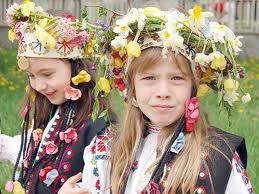

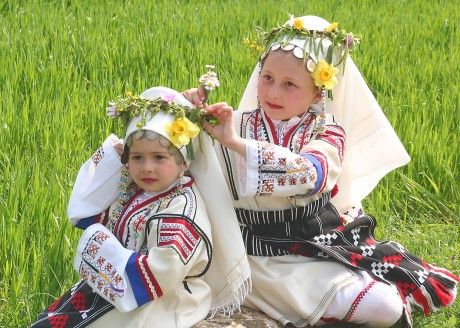



Christine Von Wandel and I have one thing in common, the Papacy launched Holy Crusades against our people with the intent of wiping us out, if they failed to convert us. We are talking about Genocide, a term applied to the Jews and our military action in Vietnam. We Hippies opposed this war, and dropped out from participating in a society that participated in this illegal war that bid Anglo-Saxons to rewrite history in order to legitimize it. How like the so called Holy Crusades where Knights were diverted from fighting Muslims in order to fight fellow Europeans. Consider how the Lying Christian Teabag Traitors have taken over our Congress so they can continue to wage Cultural Warfare against the Liberal Hippie Heresy. How old is this need to wipe us out and shut us up? I am going to send a letter to Pope Francis and ask him to apologize for these Crusades. I am going to establish the Bohemian World Organization of Wends, the BWOW.
Christine descends from the Wends, and I from the Bohemians, the Boii. We are Slavs and Celts. My great grandfather, Wensel Anton Braskewitz came from Bohemia in 1848 and lived in Conneticut. Wensel is Wenceslaus, a name given to the Kings of Bohemia who were the Margraviate of Brandenburg a Wendish capital.
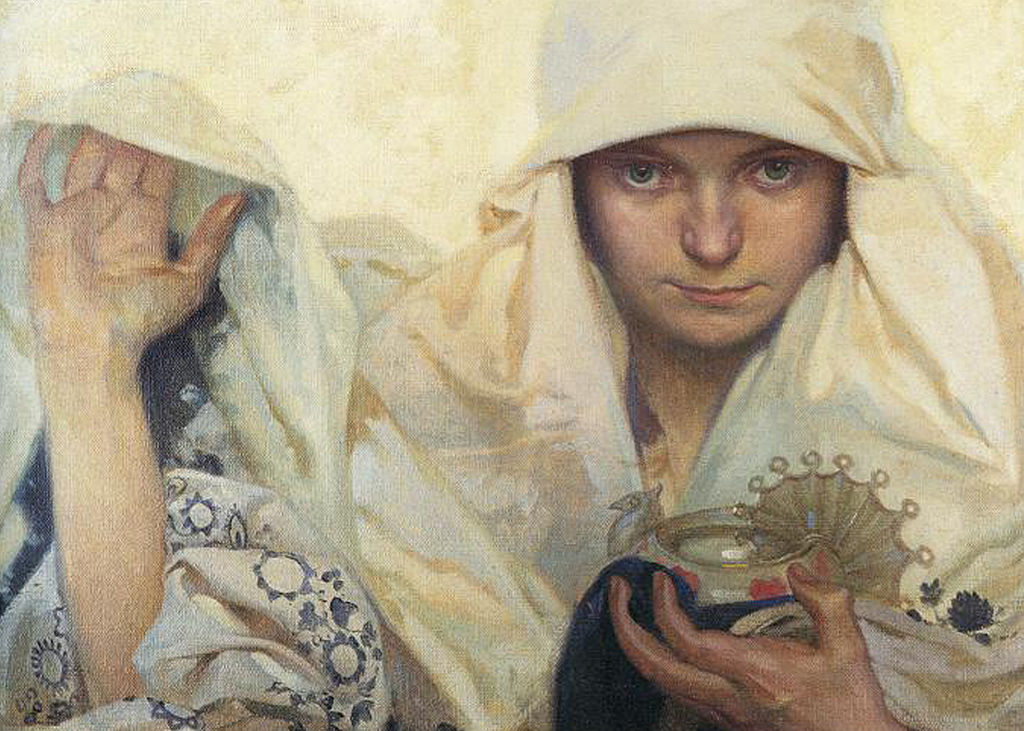
When I first saw Christine, she reminded me of the beautiful women we see rendered by the Bohemian Artist, Alphonso Mucha, that we Hippies admired. You could find Mucha’s posters in the Height, and most head-shops. I did several paintings in the sytle of this Nouvau Pioneer that also influenced the works of my later sister, Christine Rosamond Benton.
Both Christines had close bonds with the same men, and they never met.
Keith Purvis met Chris just after he met my sister in 1963. My sister and Keith were lovers in 1966. He was also the lover of Barry Zorthian and Nancy Hamren in 1965. Wandel and I became lovers in 1967. Chris was a good friend of Brian Purvis, and Tim O’Connor, who were good friends of my mother who was fond of Julie Purvis. Chris is like family. Our bond is unbroken after forty-seven years.
In 1963, Chris was the lover of Peter Shapiro and went with him when he played at Frat houses in Berkeley with a rock group called ‘Danny Clapp and the Bangers’. Peter played with the Charlatans before he formed his own band ‘The Marbles’ who played at the first Acid Test at Longshoreman’s Hall. I explained to Peter why he and his band are on the first page of the Hippie Genesis. Almost everyone in the audience was high on LSD. They came back for more. Anna Halprin and her dancers took part and thus the connection to Mel Lyman thorugh he daughter, Dana, that starred in Zabriski Point. The Loading Zone also played at the Open Theatre on College Avenue in Oakland.
With the help of Koch brothers, the evangelical-tea-party has rewritten white history for redneck, neo-confederate, bubbas. They are only steeped in slavery tradition and represent the minority of white folks I the world. Denis de Rougemont helped define the European Union that needs to to take the next step in established a world-wide Bohemian Culture that will move us away from the evil world of armed religious fanatics to a Creative World of Peace.
Today the Oregon Country Fair begins. It has its roots with the Trips Festivals that employed a Chinese Dragon. My childhood friend, Nancy, was instrumental in founding this event. The Creamery named a yogurt after the first girl I ever kissed. Nancy and Chris bonded with Keith.
I would love to have Chris and her boyfriend, Stefan Eins, fly out for this event next year. Stefan is a well-known New York artist who came from Austria and redefined the art of the Counter Culture.
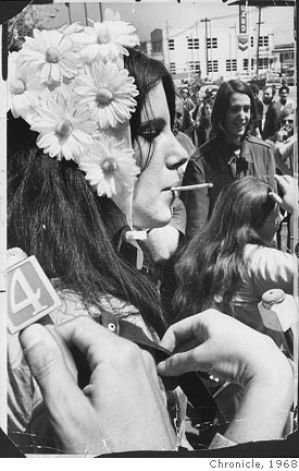
It’s time to make Love and Peace, again, and, never again, armed holy war. Let the sun shine in, and wear flowers in your hair!
Jon Presco
http://en.wikipedia.org/wiki/Oregon_Country_Fair
http://en.wikipedia.org/wiki/Stefan_Eins
http://www.oregonlive.com/O/index.ssf/2010/03/sometimes_a_great_yogurt_nancy.html
http://www.globalwends.com/oct-2012-preface.html
http://www.globalwends.com/oct-2012-part-1.html


The Great Society missed The Trips Festival because they had a poorly attended gig at The Gate Theater in Sausalito (poorly attended because the potential audience was at The Trips Festival). Nonetheless they appeared to have succeeded at their audition, since they played the second Fillmore weekend on February 12. Even the Great Society subsequently admitted they were not a very good band at the point, so one has to think that Grace Slick’s natural star power went a long way in convincing Graham they were worth booking.
It is more problematic to judge the results of The Dead’s audition. The Dead were probably in San Francisco because they had played the Matrix over the weekend (January 28-29), and joined in on an Acid Test early Sunday morning. However, other than David Nelson’s quote 30 years after the fact, neither Bill Graham nor Jerry Garcia has ever mentioned this, despite numerous interviews over the years (nor has Lesh, Weir or anyone else). Given the tendency of both Graham and the Dead to recite stories from their storied past over and over (often in response to the same questions over and over), it seems surprising that this event was simply forgotten. I cannot help but think it was because the Dead did poorly at the audition, and given the subsequent comfortable history of Graham and the Dead, everybody involved just preferred to forget about it.
Soon after the Fillmore auditions, The Dead moved South to Los Angeles with Owsley. Nonetheless, while Owsley was their patron, if Graham had offered the Dead some bookings in early February they very likely would have stayed in town, at least briefly. Thus it is hard not to conclude that Graham either did not offer the Dead a booking, or at least did not offer them a well paying enough one to stick around. The Grateful Dead did not in fact play the Fillmore again until June 3. Given that the band crawled back to San Francisco in April, dead broke and happy to be home, Graham must have been in no hurry to hire them, a fact presumably everyone involved prefers to forget.
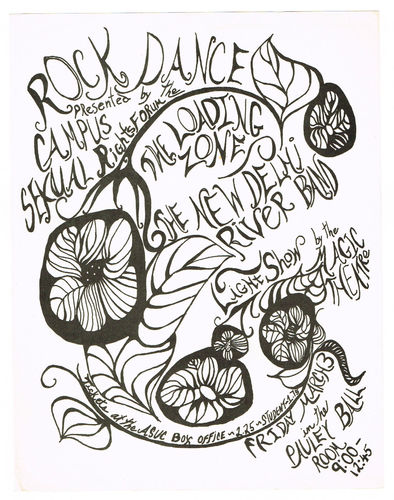
The Loading Zone also appear to have not succeeded at the audition, and did not play the Fillmore until they opened for a Grateful Dead show on October 21, 1966. The Zone played with the Dead many times in 1966, not least at The Trips Festival, but this audition shows the connection went back farther than I realized. While Loading Zone did not play the Mime Troupe Benefit, they did play the smaller if similarly legendary Open Theater Benefit in Berkeley on the same night.
Although its known that The Warlocks auditioned various times, I know of no other instance where The Grateful Dead had to audition. Thanks to Ken Kesey, Owsley and fate, the band became legendary before most people had heard them, and they never lacked for an audience after this. Its appropriate that their only apparent audition was at Ground Zero for the San Francisco scene. The most remarkable aspect of the audition remains left to the imagination: the newly-christened Grateful Dead, playing in an unadorned Fillmore Auditorium, Grace Slick, David Nelson and a few others standing around, Bill Graham frowning in thought.
http://berkeleyfolk.blogspot.com/2009/08/open-theater-2976-college-berkeley-ca.html
Open Theater, 2976 College, Berkeley, CA
The Open Theater, at 2976 College, was a venue for “Happenings” that would now be called Performance Art. The directors were a Berkeley Drama School dropout named Ben Jacopetti and his wife Rain. Among their innovations were a light show that featured significant (if arty) nudity. When the performers auditioned for Tom “Big Daddy” Donahue’s psychedelic nightclub Mother’s on Broadway (home of Carol Doda and numerous topless clubs), Donahue rejected the show for having too much nudity.
The Open Theater seemed to be only open for a year or 18 months, but it was an important part of the scene, as the Open Theater was a big part of the Bay Area underground prior to the Fillmore.
Berkeley comedy duo The Congress of Wonders got their start as part of the Happenings and Gary “Chicken” Hirsch (later in Country Joe and The Fish) sometimes played in the house jazz group. George Hunter and Alton Kelly artwork graced the lobbies. Thus the fact that Big Brother’s first public show (on January 15, 1966) was a benefit for the Open Theater seems only fitting. Charles Perry in his book Haight Ashbury – A History (Vantage 1985) has a brief but excellent history of the Open Theater.
http://hippie.wikia.com/wiki/Art_Nouveau_and_hippie_art
http://berkeleyfolk.blogspot.com/2009/08/open-theater-2976-college-berkeley-ca.html
http://lostlivedead.blogspot.com/2009/11/january-4-1966-fillmore-auditorium.html
http://foundsf.org/index.php?title=THE_ACID_TEST
Reverse side of Acid Test ID Card
The Merry Pranksters
Can YOU pass the Acid Test? There’s no way to think about it or read about it. There’s no other way to know than go ahead on it. Can you die to your corpses? Can you metamorphose? Can you pass the 20th Century?
What is total dance?
The Acid Test has been conducted in recent weeks at Santa Cruz, San Jose, Palo Alto, Portland, San Francisco, here, and is snowballing fast. Rolling east next month, it will soon be international, if not cosmic.
Sunday, January 23
We don’t know.
Participants, beside yourself, are Henry Jacobs (who first carried out the fantasy of turning on an air dome), John Korty (illustrious film maker), Gordon Ashby (who designed the Light Matrix for IBM), Bruce Conner (illustrious film maker), Anna Halprin & dancers, Pauline Oliveros (with Elizabeth Harris and the 12-foot light sitar), Chinese New Years Lion Dancers & Drum and Bugle Corps, the Stroboscopic Trampoline, The Grateful Dead, Big Brother and the Holding Company, The Loading Zone, America Needs Indians, Open Theater, Tape Center, the Merry Pranksters, and
It’s prayer, mostly.
Festival credits:
PRODUCED IN ASSOCIATION WITH BILL GRAHAM ENVIRONMENT: OSBORNE AND STEWART ARCHITECTS
http://foundsf.org/index.php?title=THE_ACID_TEST
http://deadsources.blogspot.com/2013/02/january-1966-san-francisco-acid-tests.html
http://recordmecca.com/products-page/museum-quality-collectibles/acid-test-handbill/
Anna Halprin (born Anna Schuman on 13 July 1920) helped pioneer the experimental art form known as postmodern dance and referred to herself as the breaker of modern dance.[1] Halprin, along with her contemporaries such as Trisha Brown, Simone Forti, Yvonne Rainer, John Cage, and Robert Morris, collaborated and built a community based around the fundamentals of post-modern dance. In 1950s, she established the San Francisco Dancers’ Workshop to give artists like her a place to practice their art. Being able to freely explore the capabilities of her own body, she created a systematic way of moving using kinesthetic awareness.[2] Many of her works since have been based on scores, including Planetary Dance, 1987, and Myths in the 1960s which gave a score to the audience, making them performers as well.
Grateful Dead – 1966 Trips Festival /Acid Test Program
An extremely rare San Francisco collectible from the Psychedelic era–an original program from the legendary January, 1966 Trips Fesvial at the Longshoreman’s Hall in San Francisco. This 3 night event was the first true psychedelic event in the bay area, and has been written about extensively.
The three nights featured different events, each intended to expand the consciousness of attendees and in some way simulate the psychedelic experience. The first night featured “America Needs Indians” and the “Open Theatre.” The Second night had “Options and Contracts” and “The Sound-Light Console,” which included Big Brother & The Holding Company, and most importantly, at 10:00 PM “The Acid Test” overseen by Ken Kesey and the Merry Pranksters, and including performances by The Grateful Dead and Big Brother again. The third night was titled “We Don’t Know” and included numerous participants “besides yourself”, films by artist and filmmaker Bruce Conner, Big Brother once again, The Loading Zone, and others. The 8 page program, with a mandala on the cover by Bruce Connor, includes the full schedule and credits (the Trips Festival “produced in association with Bill Graham,” marked Graham’s entry into the “rock” business.)
The program is two 7″ x 14″ sheets folded to 7″ square, and is in excellent condition, with a single pinhole in the top left corner and two in the bottom left corner.
http://www.soulwalking.co.uk/Linda%20Tillery.html
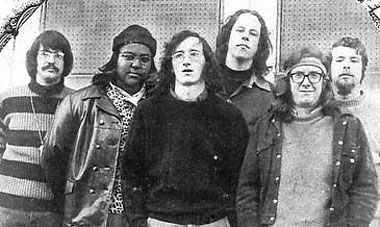
The Marbles had the following members: Peter Shapiro on lead guitar, Steve Dowler on rhythm guitar, David Dugdale on bass and Ray Greenleaf on drums. They were a psychedelic and rock group whose most notable performances were at the Tribute to Dr. Strange at the Longshoremen’s Hall in San Francisco on October 15, 1965, and again at the same venue for The Trips Festival on January 21, 22 and 23 along with Jefferson Airplane, The Charlatans and The Great Society. Both Shapiro and Dowler went on to become members of Paul Fauerso’s The Loading Zone.[1][2]
http://en.wikipedia.org/wiki/History_of_the_hippie_movement
The hippie subculture began its development as a youth movement in the United States during the early 1960s and then developed around the world. Its origins may be traced to European social movements in the 19th and early 20th century such as Bohemians, and the influence of Eastern religion and spirituality. From around 1967, its fundamental ethos — including harmony with nature, communal living, artistic experimentation particularly in music, and the widespread use of recreational drugs — spread around the world.
http://en.wikipedia.org/wiki/History_of_the_hippie_movement
http://en.wikipedia.org/wiki/Wandervogel
The hippie movement has found historical precedents as far back as the Mazdakist movement in Persia, whose leader the Persian reformer Mazdak, advocated communal living, the sharing of resources, vegetarianism and free love.
Tribute to Dr. Strange Handbill 1965 Family Dog Hand-Colored
http://www.flyingsnail.com/Scrapbook/Mike_Wilhelm-The_Charlatans.html
The Margraviate of Brandenburg (German: Markgrafschaft Brandenburg) was a major principality of the Holy Roman Empire from 1157 to 1806. Also known as the March of Brandenburg (Mark Brandenburg), it played a pivotal role in the history of Germany and Central Europe.
Brandenburg developed out of the Northern March founded in the territory of the Slavic Wends. Its ruling margraves were established as prestigious prince-electors in the Golden Bull of 1356, allowing them to vote in the election of the Holy Roman Emperor.

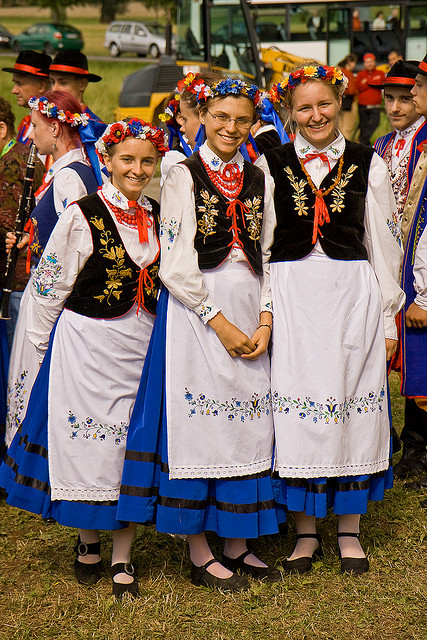
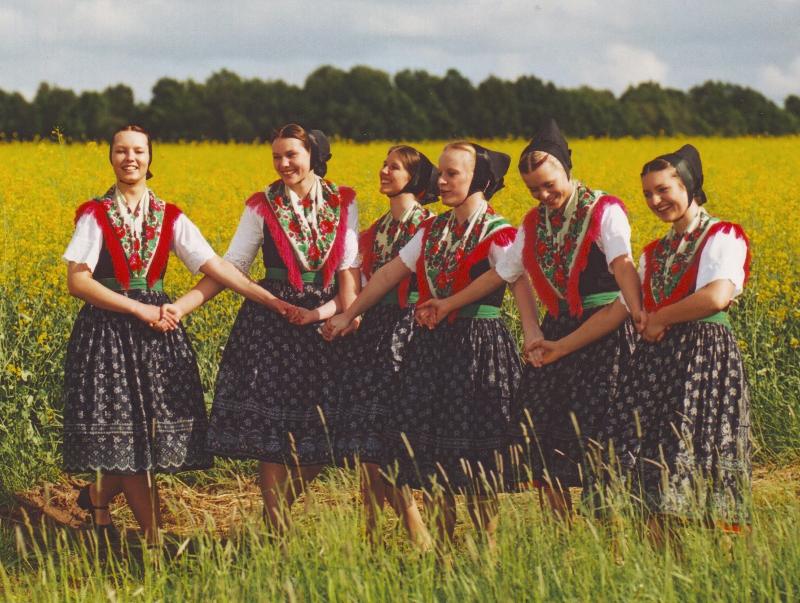
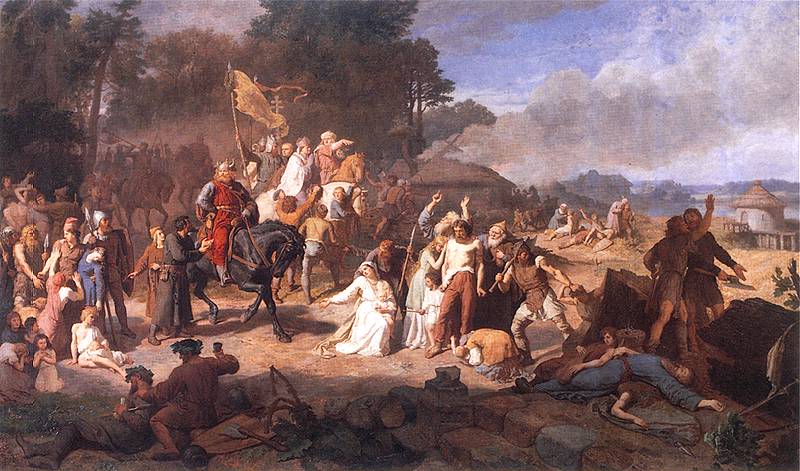
According to Bernard of Clairvaux, the goal of the crusade was to battle the pagan Slavs “until such a time as, by God’s help, they shall either be converted or deleted”.[6] However, the crusade failed to achieve the conversion of most of the Wends. The Saxons achieved largely token conversions at Dobin, as the Slavs returned to their pagan beliefs once the Christian armies dispersed; Albert of Pomerania explained, “If they had come to strengthen the Christian faith … they should have done so by preaching, not by arms”.
Alfons Maria Mucha[1][2] (Czech: [ˈalfons ˈmuxa] ( listen); 24 July 1860 – 14 July 1939), often known in English and French as Alphonse Mucha, was a Czech Art Nouveau painter and decorative artist,[3] known best for his distinct style. He produced many paintings, illustrations, advertisements, postcards, and designs.
Mucha produced a flurry of paintings, posters, advertisements, and book illustrations, as well as designs for jewelry, carpets, wallpaper, and theatre sets in what was termed initially The Mucha Style but became known as Art Nouveau (French for “new art”). Mucha’s works frequently featured beautiful young women in flowing, vaguely Neoclassical-looking robes, often surrounded by lush flowers which sometimes formed halos behind their heads. In contrast with contemporary poster makers he used pale pastel colors.[5] Mucha’s style was given international exposure by the 1900 Universal Exhibition in Paris, of which Mucha said, “I think [the Exposition Universelle] made some contribution toward bringing aesthetic values into arts and crafts.”[6] He decorated the Bosnia and Herzegovina Pavilion and collaborated with decorating the Austrian Pavilion. His Art Nouveau style was often imitated. The Art Nouveau style however, was one that Mucha attempted to disassociate himself from throughout his life; he always insisted that rather than maintaining any fashionable stylistic form, his paintings were entirely a product of himself and Czech art.[4] He declared that art existed only to communicate a spiritual message, and nothing more; hence his frustration at the fame he gained by his commercial art, when he most wanted to concentrate on more artistic projects.
Mucha expected to earn money to fund his nationalistic projects to demonstrate to Czechs that he had not “sold out”.[4] He was assisted by millionaire Charles R. Crane, who used his fortune to help promote revolutions and, after meeting Thomas Masaryk, Slavic nationalism. Alphonse and his family returned to the Czech lands and settled in Prague, where he decorated the Theater of Fine Arts, contributed his time and talent to create the murals in the Mayor’s Office at the Municipal House, and other landmarks around the city. When Czechoslovakia won its independence after World War I, Mucha designed the new postage stamps, banknotes, and other government documents for the new state.
With the appointment of Crane as co-head of the commission, it set about to issue a report to inform U.S. policy makers.[7] In respect to the creation of a Jewish state in the Middle East, the report cautioned “Not only you as president but the American people as a whole should realize that if the American government decided to support the establishment of a Jewish state in Palestine, they are committing the American people to the use of force in that area, since only by force can a Jewish state in Palestine be established or maintained.” Crane opposed the establishment of a Jewish state in the Middle East,[8] but was as passionate a spokesman for the independence of the Arab states.[9]
The Wendish Crusade (German: Wendenkreuzzug) was a military campaign in 1147, one of the Northern Crusades and a part of the Second Crusade, led primarily by the Kingdom of Germany within the Holy Roman Empire and directed against the Polabian Slavs (or “Wends”).
By the early 12th century, the German archbishoprics of Bremen and Magdeburg sought the conversion to Christianity of neighboring pagan West Slavs through peaceful means. During the preparation of the Second Crusade to the Holy Land, however, a papal bull was issued supporting a crusade against these Slavs. The Slavic leader Niklot preemptively invaded Wagria in June 1147, leading to the march of the crusaders later that summer. They achieved an ostensible baptism of Slavs at Dobin but were repulsed from Demmin. Another crusading army marched on the already Christian city of Szczecin (Stettin), whereupon the crusaders dispersed upon arrival.
The Christian army, composed primarily of Saxons and Danes, forced tribute from the pagan Slavs and affirmed German control of Wagria and Polabia, but failed to convert the bulk of the population immediately.
The Ottonian dynasty supported eastward expansion of the Holy Roman Empire towards Wendish (West Slavic) lands during the 10th century. The campaigns of King Henry the Fowler and Emperor Otto the Great led to the introduction of burgwards to protect German conquests in the lands of the Sorbs. Otto’s lieutenants, Margraves Gero and Hermann Billung, advanced eastward and northward respectively to claim tribute from conquered Slavs. Bishoprics were established at Meissen, Brandenburg, Havelberg, and Oldenburg to administer the territory. A great Slavic rebellion in 983 reversed the initial German gains, however. While the burgwards allowed the Saxons to retain control of Meissen, they lost Brandenburg and Havelberg. The Elbe River thus became the eastern limit of German-Roman control.
By the early 12th century, the Archbishoprics of Bremen, Magdeburg and Gniezno sought the conversion of the pagan Slavs to Christianity through peaceful means: notable missionaries included Vicelin, Norbert of Xanten, and Otto of Bamberg (sent to Pomerania by Bolesław III Wrymouth of Poland). Lacking support from the Salian dynasty of the Holy Roman Empire, secular Saxon princes seeking Slavic territory found themselves in a military stalemate with their adversaries. Christians, especially Saxons from Holstein, and pagans raided each other across the Limes Saxonicus, usually for tribute.
From 1140-43 Holsatian nobles advanced into Wagria to permanently settle in the lands of the pagan Wagri. Count Adolf II of Holstein and Henry of Badewide took control of Polabian settlements which would later become Lübeck and Ratzeburg; Vicelin was subsequently installed as bishop at Oldenburg. Adolf sought peace with the chief of the Obodrite confederacy, Niklot, and encouraged German colonization and missionary activity in Wagria.[1]
The fall of Edessa in 1144 shocked Christendom, causing Pope Eugenius III and St. Bernard of Clairvaux to preach a Second Crusade to reinforce Outremer. While many south Germans volunteered to crusade in the Middle East, the north German Saxons were reluctant. They told Bernard of their desire to campaign against the Slavs at a Reichstag meeting in Frankfurt on 13 March 1147. Approving of the Saxons’ plan, pope Eugenius issued a papal bull known as the Divina dispensatione on 13 April; there was to be no difference between the spiritual rewards of the different crusaders. Those who volunteered to crusade against the Slavs were primarily Danes, Saxons, and Poles,[2] although there were also some Bohemians.[3] The German monarchy took no part in the crusade, which was led by Saxon families such as the Ascanians, Wettin, and Schauenburgers.[4] Papal legate Anselm of Havelberg was placed in overall command.
Holy war[edit]
Henry’s duchies Saxony and Bavaria
Upset at Adolf’s participation in the crusade, Niklot preemptively invaded Wagria in June 1147, leading to the march of the crusaders in late summer 1147. After expelling the Obodrites from his territory, Adolf signed a peace treaty with Niklot. The remaining Christian crusaders targeted the Obodrite fort Dobin and the Liutizian fort Demmin.
The forces attacking Dobin included those of the Danes Canute V and Sweyn III, Archbishop Adalbert II of Bremen, and Duke Henry the Lion of Saxony. Avoiding pitched battles, Niklot ably defended the marshland of Dobin. One army of Danes was defeated by Slavs from Dobin, while another had to defend the Danish fleet from Niklot’s allies, the Rani of Rügen. Henry and Adalbert maintained the siege of Dobin after the retreat of the Danes. When some crusaders advocated ravaging the countryside, others objected by asking, “Is not the land we are devastating our land, and the people we are fighting our people?”[5] The Saxon army under Henry the Lion withdrew after Niklot agreed to have Dobin’s garrison undergo baptism.
The Saxon army directed against Demmin was led by several bishops, including those of Mainz, Halberstadt, Münster, Merseburg, Brandenburg, Olmütz, and Bishop Anselm of Havelberg. While their stated goal was to achieve the conversion of the pagans, most also sought additional territory and tithe for their dioceses; Abbot Wibald of Corvey went in the hopes of acquiring the island of Rügen. The Demmin campaign also included the secular margraves Conrad I and Albert the Bear, who hoped to expand their marches. A Royal Polish contingent wanted to add to the Bishopric of Lebus. Marching from Magdeburg, Albert the Bear recovered Havelberg, lost since the 983 Slavic rebellion. The crusaders then destroyed a pagan temple and castle at Malchow. After an unsuccessful siege of Demmin, a contingent of crusaders was diverted by the margraves to attack central Pomerania instead. They reached the already Christian city Szczecin, whereupon the crusaders dispersed after meeting with Bishop Adalbert of Pomerania and Christian duke Ratibor I of Pomerania.
Aftermath[edit]
The Wendish Crusade achieved mixed results. While the Saxons affirmed their possession of Wagria and Polabia, Niklot retained control of the Obodrite land east of Lübeck. The Saxons also received tribute from Niklot, enabled the colonization of the Bishopric of Havelberg, and freed some Danish prisoners. However, the disparate Christian leaders regarded their counterparts with suspicion and accused each other of sabotaging the campaign.
According to Bernard of Clairvaux, the goal of the crusade was to battle the pagan Slavs “until such a time as, by God’s help, they shall either be converted or deleted”.[6] However, the crusade failed to achieve the conversion of most of the Wends. The Saxons achieved largely token conversions at Dobin, as the Slavs returned to their pagan beliefs once the Christian armies dispersed; Albert of Pomerania explained, “If they had come to strengthen the Christian faith … they should have done so by preaching, not by arms”.[7]
The countryside of Mecklenburg and central Pomerania was plundered and depopulated with much bloodshed, especially by the troops of Henry the Lion.[1] Of Henry’s campaigns, Helmold of Bosau wrote that “there was no mention of Christianity, but only of money”.[1] The Slavic inhabitants also lost much of their methods of production, limiting their resistance in the future.[8]
http://hippie.wikia.com/wiki/Art_Nouveau_and_hippie_art
The Margraviate of Brandenburg (German: Markgrafschaft Brandenburg) was a major principality of the Holy Roman Empire from 1157 to 1806. Also known as the March of Brandenburg (Mark Brandenburg), it played a pivotal role in the history of Germany and Central Europe.
Brandenburg developed out of the Northern March founded in the territory of the Slavic Wends. Its ruling margraves were established as prestigious prince-electors in the Golden Bull of 1356, allowing them to vote in the election of the Holy Roman Emperor. The state thus became additionally known as Electoral Brandenburg or the Electorate of Brandenburg (Kurfürstentum Brandenburg or Kurbrandenburg).
Wenceslaus was born in the Imperial city of Nuremberg, the son of Emperor Charles IV by his third wife Anna von Schweidnitz, a scion of the Silesian Piasts, and baptized at St. Sebaldus Church. He was raised by the Prague Archbishops Arnošt of Pardubice and Jan Očko z Vlašimi. His father had the two-year-old crowned King of Bohemia in 1363 and in 1373 also obtained for him the Electoral Margraviate of Brandenburg. When in 1376 Charles IV asserted Wenceslaus’ election as King of the Romans by the prince-electors, two of seven votes, those of Brandenburg and Bohemia, were held by the emperor and his son themselves.
Wenceslaus (also Wenceslas; Czech: Václav; German: Wenzel, nicknamed der Faule (“the Idle”);[1] 26 February 1361 – 16 August 1419) was, by inheritance, King of Bohemia
The Hussite Wars, also called the Bohemian Wars or the Hussite Revolution, were fought between the Hussites (the followers of Bohemian priest and reformer Jan Hus) and various monarchs who sought to enforce the authority of the Roman Catholic Church against the Hussites, and also between Hussite factions. These wars lasted from 1419 to circa 1434.
The Hussite community included most of the Czech population of the Kingdom of Bohemia, and formed a major military power. They defeated five crusades proclaimed against them by the Pope (1420, 1421, 1422, 1427 and in 1431), and intervened in the wars of neighboring countries. The Hussite Wars were notable for the extensive use of early hand-held firearms such as hand cannons.
The fighting ended after 1434, when the moderate Utraquist faction of the Hussites defeated the radical Taborite faction. The Hussites agreed to submit to the authority of the King of Bohemia and the Church, and were allowed to practice their somewhat variant rite.
The Extraordinary History of a Unique People, Part 1
Mila Deacon
(First published in the Summer 2012 edition of Glasilo magazine)
[Note: Throughout my article, I write most Wendish words as they are pronounced and not as they are spelled in the Slovene literary language, and I use English spelling for various Wendish sibilants for which English does not have specific letters. E.g., I write “sh” and not “š”, “ts” and not “c”, “ch” and not “č“, “j” (pronounced as “j” in journal) and not “ž”. For the same reason, I also use the English letter “w” instead of “v”, because, in Wendish, “v” is, in fact, pronounced as “w”. For example, I write “Slowends” and not “Slovenc”. I use italics to indicate a translation of a particular highlighted word or phrase. I also highlight certain words, or roots/stems of words, to help the reader – including those who speak English only – to more easily recognize a word’s Wendish origin, and its linguistic connections.
I will use this kind of spelling in my text to indicate a word’s origin and its actual pronunciation, and to make it easier to see the similarities and connections between words in modern Wendish and words based on Wendish in other languages. For instance, in future instalments, I will also give examples of Wendish words occurring in Canadian Micmaq and Cree languages in the form they are pronounced – not written.]
I have collected information on Wends, their language and history, since my childhood, to satisfy my own curiosity about the history of my people, Carinthian Wends, without any intention of publishing what I found. I have only recently changed my mind and decided to write this article, for the following reasons:
FIRSTLY, to give additional and necessary support to the research done by Dr. Šavli, Rev. Tomažič, Matej Bor and A. Ambrožič in the fields of the factual Wendish history and their language. Because, regrettably, the results of their scrupulous research continue to be ignored by all official institutions and most of the media. Governments and educational institutions still propagate their entirely fictional version of Wendish history, supported by no evidence. I have namely arrived myself at the same, or very similar conclusions, as have the above-mentioned Wendish scholars. I have done so independently and prior to their work having been published – while following different paths and exploring various other sources of information. I found their research to be objective, although, at times, I interpret certain facts differently.
SECONDLY, I wish to present to the public what I believe to be rather surprising and interesting additional insights, in the fields not yet explored by others. They are relevant to Wendish history and Wendish language.
My insights and conclusions are as follow:
Wendish dialects – which include over 50 Wendish dialects spoken in the Republic of Slovenia alone, as well as dialects in the Austrian provinces of Carinthia and Styria, Northern Germany, Hungary and Northern Italy – are spoken by people who refer to themselves either as Slowends or as Slowinds. These two terms are reflected in German terms, “Windisch” and “Wendish”. The prefix “slo” in these names is derived from the original “Sol”, which is one of the names of the Wendish sun-god, used by Wends in pre-Christian times throughout central Europe, from Sweden to Sicily. Swedes still call themselves “Swensk”, a shortened version of Carinthian “Swowensk” and Slovene “Slowensk”. Italians still call the sun “sole”, and in English, there is the winter solstice, sun’s shortest day.
In western Europe, Northern Africa, Asia Minor, and parts of North America, the sun-god, called Sol, was referred to as the “white” god, god of light. He was known also as Belin, Bel, or Baal. His name is based on the Wendish word bel, meaning white. Mother earth goddess also had various Wendish names. For example, her name in ancient Greece was Semela/Zemela (zemla, earth, in Wendish). In Babylon she was known as Baba (woman) and her name turns up even in Japan. Their third most important deity was the lord of the lower realms, the god of darkness, in Europe called Tchrni Bog, the Black God.
The terms Wi(n)ds and We(n)ds – referred to by Germans as “Windisch” and “Wendisch”, by Italians as Veneti, in Scandinavian sagas as Vani (retained in Solvani,/Slo-), in Hungarian as Vendek – may be connected to the two Wendish Druidical sects, the “wids”, i.e., priests, seers, prophets, and the weds, i.e., sages, scientists, scholars. Both these terms occur also in the Indian Sanskrit and Buddhist texts. The name of Buddha itself is obviously of Wendish origin, derived from budit, to wake up, to be awake, to be open to insights and knowledge.
The word Druid itself, as spelled by Romans, is doubtless a Wendish term, namely a trowid or a trowed. Druids studied and explored the various subjects, trinities, “troyitsas”, e.g., this world, the upper divine regions, the lower realms; sun-god, mother earth goddess, god of darkness; the past, the present, the future; body, soul, mind; matter/solids, liquids, gasses, etc.
All the remaining Wendish dialects show characteristics of a truly ancient language. They are grammatically sophisticated, highly inclined, retaining – as the only European language – the ancient dual and various neuter forms. Some of these are still present in Sanskrit of ancient India, but are already much simplified in later Latin. Both these languages are based on Wendish. Wendish is, as a result of these many ancient linguistic characteristics and its complicated grammatical structure, an amazingly precise linguistic tool. Wendish, I discovered, is one of the oldest languages in existence, seemingly already existing in the Ice Age. This is evidenced in the substantial Wendish linguistic imprint in various parts of the globe – even in the far east and America. Moreover,
Wends are what linguists and historians refer to today as Continental Celts. The Continental Celtic language is, in fact, what we know today as the Wendish language. Having observed a substantial Wendish vocabulary in all modern European languages, there is no doubt in my mind that modern Wends are the last remnants of Continental Celts and, as such, they are the last remaining speakers of their ancient Continental Celtic language.
Until about 200 B.C., Wendish was spoken by a great majority of Europeans, particularly by farmers, Europe’s first permanent settlers who had arrived in Europe from the Middle East and from Northern Africa after the last Ice Age. However, the first wave of Wendish settlers may have reached Europe already during the last warm period in the Ice Ages, around 42,000 years B.C. Because, up to the last century, farmers formed the overwhelmingly largest population in all western societies, Wendish was, in fact, the lingua franca of pre-Roman and pre-Christian Europe.
The decline of the Wendish language in Europe – now surviving only in some 2 million Wendish speakers in five Central European states, Germany, Austria, Hungary, Italy and Slovenia – was caused by two historic phenomena: (a) the founding and the spread of the Roman Empire, which caused the formation of Romance languages in Southern and Western Europe and (b) the introduction of the new Bible-based religions into the formerly Wendish-speaking pagan territories of Northern and Central Europe and British Isles, which resulted in the evolution of all modern Germanic languages.
Wends played major roles in both decisive historic events, i.e., the formation of the Roman Empire, as well as the introduction of Christianity to Europe by the Franks, with their Holy Roman Empire, the later Holy Roman Empire of the German Nation. Some Wendish tribes contributed to the creation Latin, as well as to the growth of the Roman Empire itself. Many other Wendish tribes became victims of Rome’s expansion. Yet others remained its allies. Wends, who lived farther north, resisted the onslaught of Rome and managed to retain their independence and language much longer. However, one by one, even they eventually succumbed to the brutal force of proselytizing Franks.
Wendish is actually what is now called the original Indo-European language – on which all modern and classical Indo-European languages, i.e., Romance, Slavic and Germanic languages, Sanskrit, as well as Ainu, Japanese and Algonquian languages, etc. – are based. Wendish is the only language which qualifies for this position, being the only language well represented in all Indo-European languages. It is not a proto- or pre-Indo-European language.
The new Romance and Germanic languages of Western, Southern, Central and Northern Europe have evolved comparatively recently, on the basis of Wendish dialects, due to foreign occupations, namely that of Romans and Franks.
The modern Slavic languages of Eastern Europe have not undergone an equally drastic change from the original Indo-European, i.e., Wendish, as did those in the West. The reason being that most of them have evolved without foreign invasions or prolonged occupations. In contrast to Western Europe, their conversion to the new religion had not been imposed by a foreign power introducing a foreign tongue. It had taken place much later and was due to their own rulers’ voluntary conversion, and spread among their subjects in their own language. Nevertheless, modern Slavic languages differ greatly from each other, and from Wendish, in their vocabularies and in their simplified grammatical structure. As this difference is not due to foreign occupation, it allowed a considerably larger Wendish linguistic imprint in modern Slavic languages. They differ from the original Indo-European Wendish due to the intermarriage of Wendish farmers with various foreign speaking nomadic populations, who had eventually decided to settle and marry among them. There are some exceptions. For instance, Bulgarian and Serbo-Croatian evolved under a protracted (500 years long) Ottoman occupation.
This fact, namely that Slavic languages had remained linguistically comparatively closer to ancient Wendish, contributed to the confusion of European scholars – already brainwashed by Christian admirers of Roman and Germanic cultures and accomplishments – and further diminished their objectivity. As public servants, they had to follow their governments’ policies when researching the early European history and the historic role of pagan Wends. Prejudices against, and demonization of pagans, built up during the millennium-long religious wars against them, followed by equally fanatic expansionist nationalist wars, have firmly established the presently universally accepted distorted and falsified versions of their histories. This was done to such an extent and over such a long period of time that today few, if any, scholars question its reliability. They copy from earlier historians and fail to do independent research.
Not only West, but also East European scholars, led by Russians, continue to support and propagate this invented version of European history for the same nationalistic, empire-building reasons. Official histories have created in Europe a clear and deep division between the east and the west. They are a convenient excuse for aggression into each other’s territories. They support the expansionist policies of Germans and allow Russia to widen its political influence over the Slavic speaking territories, including those belonging to Wends.
The status quo in the prevalent historic perceptions is likely to be fanatically defended by Germans, Italians, and Russians alike. German governments have followed policies of settlement and annexation of Slavic territories in Eastern Europe ever since they had, in the 15th century, firmly established their Holy Christian Empire of the German Nation. They pursued these expansionist goals on the pretext that Slavs are not real Europeans, but primitive invaders into Germanic and Italic lands, arriving from Asia rather late in recorded history. They demonized Slavs to such an extent, that their pride will not allow them now to admit that they have the same blood running in their own veins, as have those whom they had been trying for centuries to remove from the map of Europe.
As mentioned, it seems that Wendish was perfected already in the Ice Age. Its dialects were not only spoken by some Ice Age hunting and gathering tribes (e.g., the first population in Cornwall and Japan), but also by some of the earliest farming communities and advanced civilizations in Europe, as well as in Northern Africa, India and in Asia Minor (Akkadia, Babylon, Phrygia, Cilicia, Paphlagonia, etc.). Wendish Akkadian remained the lingua franca of the Middle East up to its invasion by Rome, and the later Arab occupation of Northern Africa. Arabic was spread throughout these regions, along with the Quran and their Muslim faith.
A close relationship seems to have existed between Wendish-speaking societies and the expansion of the megalithic cultures, with their sun-god and mother-earth-goddess veneration – judging from the name Solwendi itself, and by their linguistic imprint found in languages spoken today wherever megalithic cultures, with their astronomic temples, had once flourished.
Wendish has miraculously survived until today and continues to be spoken by over 2 million Wends in Central Europe – despite the creation of new languages due to Roman occupation and the introduction of Bible-based religions (Christian and Muslim) by Franks into formerly Wendish-speaking territories.
Today’s German, Austrian, Italian and Hungarian governments, assisted by the legislation of the European Union – and that of the Slovene government itself – continue the destruction of the ancient Wendish language. These policies are carried out willingly by Wends themselves, unaware of their true identity, under the false assumption that their fictitious official history is true and based on facts.
Global Wends: Wendish Language & History
Introduction
I wish to stress here that the present, officially accepted versions of Wendish history and Wendish language – as presented by all educational and governmental institutions and accepted by all European scholars, including Wends themselves – are based on no facts whatsoever. They are, in fact, pure fiction. They falsely claim (a) that Wends are a Slavic people who had arrived in Central Europe only after the disintegration of the Roman Empire, between the 6th and 10th century A.D. And (b) that they spoke, at the time of their arrival in their present homelands, Serbo-Croatian in the south, and Sorbish in the north, i.e., that they spoke modern Slavic languages.
Having collected linguistic and historic data for over 60 years, I came to the conclusion that both these statements are false, supported by no evidence. They were invented in the past millennium by Christian secular and religious institutions. The destruction of Wends was the aim of the Christian Holy
Roman Empire which was, starting with Charlemagne in the 8th century, expanding farther and farther into the pagan Wendish territories of Central and
Northern Europe. Their Empire reached its zenith and stabilized its total control over Central and Northern Europe by the 15th century. At that time, the
Christian Empire also changed its name to the Holy Roman Empire of the German Nation – with German as its official language. By that time, all the modern Germanic languages, including German, had evolved on the basis of the language of proselytizing Franks and on the basis of Wendish spoken by the new converts. English too was perfected at that time. It is a hybrid, it can be equally correctly regarded a Romance or a Germanic language. It too, like all other modern European languages, is based on Wendish. You will realize this if you look at the List of Wendish in English, and other Lists, which appear elsewher on this website.
The fact is that Wends are not recent arrivals in Central Europe, as officially claimed. The exact opposite is true. Wends were, in fact, the first permanent settlers of Europe, the first farmers. Wendish was once spoken by the great majority of people throughout Europe – from Britain to the Urals, from Sicily to Norway. Wendish remained the lingua franca of Europe, the Middle East and Northern Africa up to the founding of Rome and the introduction of the three Biblical religions into their territories. My conclusion is supported with thousands of facts reflected in classical and modern Indo-European languages and writings. Wendish is the only language amply represented in all of them.
In my search for facts, I discovered the same unscientific approach of our government-sponsored scholars not only with regard to Wendish history, but also in their study of languages. Wendish is not just another modern Indo-European language, as scholars claim. Wendish is a truly antique language, perfected already in the Ice Age, with a rich vocabulary and a highly sophisticated grammatical structure. Wendish is the only European language which continues to use even the ancient dual and neuter forms. It is by no means a modern language, it is truly ancient. It had left its imprint already in the Ainu language in Japan, which originated in the Ice Age.
Reading a collection of Ancient pre-Roman and Roman Gallic/Celtic Inscriptions by a Harvard linguist, I realized that Wendish is the language
referred to by our scholars as the “extinct Continental Celtic”. Not only that – after I had analyzed languages belonging to all the 4 modern
Indo-European language families (Germanic, Slavic, Romance and Celtic) – also classical Latin and Sanskrit, ancient Middle Eastern languages, languages of
Japan, and several American native languages – I was forced to accept the unexpected fact that Wendish happens to be also the language which is
officially, again mistakenly, referred to as the “extinct, original Indo-European language on which all Indo-European languages are based”.
Wendish is actually Continental Celtic, and Continental Celtic is without doubt the original Indo-European language, and is not just another Indo-European
language family, as linguists insist.
Neither Continental Celtic, nor the original Indo-European language, are extinct languages. They both survive in some 60 closely related Wendish
dialects. These dialects continue to be spoken by approximately 2 million Wends in various Central European countries. Wends form ethnic minorities in Central and North-Eastern Germany, in two provinces of Austria (Carinthia and Styria), in Northern Italy and in Western Hungary. Over 50 of these dialects are spoken by farming communities in today’s only Wendish speaking independent state, Slovenia. However, the Slovene literary language itself, promoted in all educational facilities and the media – not only in Slovenia but also in Austria and Hungary – is no longer a Wendish language. It was substantially changed in the last 150 years by Wendish scholars themselves, deluded by their conviction that the fictionalized official version of Wendish history is true and based on facts. Tens of thousands of traditional Wendish words were removed by them from the literary language as being non-Slavic terms. They were replaced with equivalent terms borrowed from modern Slavic languages. Even the spelling itself was substantially changed, to bring their literary Slovene closer to that of their Slavic eastern neighbours – who indeed had arrived on the Balkans after the fall of Rome and whose language is indeed a modern Slavic language.
To destroy their very identity, Wendish history was falsified by their traditional adversaries and their language was declared extinct. For generations, Wends were indoctrinated by this invented fiction that they are newcomers in Europe and that their language is just another modern Slavic language. However, only today, in the European Union, their adversaries seem to have reached their ages-old goal of destroying the historical identity of Wends, together with their truly unique ancient language. George Orwell wrote that the simplest way of perpetrating a genocide is to pervert a peoples history. This insight applies also to Wends. Their language and identity are nearing an inevitable extinction. This can be avoided only if they act immediately, join their forces, inform their new generation of their true history and the uniqueness of their ancient mother tongue.
Wendish in Japan
You may wonder how I came to search for traces of Wendish as far afield as Japan. It happened quite accidentally. I became curious about whether there was a linguistic connection between ancient Japanese and Wendish in the mid-1980s, when reading a biography of an American who had grown up in Japan. He mentions that a very ancient Japanese sword is called meich in Japanese. Surprisingly, meich or mech has the same meaning also inWendish. How did Wends reach Japan, and when? I decided to find out first if this particular word, meich, really exists in Japanese. And, if it does, at which point in time in the past Wendish speakers could have had contact with Japanese islands.
I describe in more detail, mentioning my tentative conclusions with regard to the origins of Wendish in Japanese, and its relation to the Ainu language, in the 5th installment of my article,The Extraordinary History of a Unique People, published in the Glasilo magazine, Toronto, Canada. Anyone interested will find all the already published installments of this article, including the 5th installment, on my still not quite organized website, http://www.GlobalWends.com. In the next, winter issue of Glasilo, i.e., in the 6th installment of my article, I will report my discoveries and conclusions with regard to the origins of Wendish in the Ainu language, the language of the aboriginal white population of Japan.
I started my search for the word meich by buying Kenkyusha’s New School Japanese-English Dictionary. Unfortunately, I had acquired a dictionary meant for ordinary students and meich is not mentioned in it. Obviously, I should have bought a dictionary of Old Japanese instead, in which ancient terms are mentioned. Nevertheless, to my amazement, I found in Kenkyusha’s concise dictionary, instead of meich, many other Wendish words and cognates, which I am quoting below in my List.
I found it intriguing that the present form of words in Japanese, with clearly Wendish roots, show that Chinese and Korean immigrants to the islands were trying to learn Wendish, not vice versa. This indicates that the original population of Japan was Caucasian and that the influx of the Asian population was, at least at first, gradual. Today, after over 3000 years of Chinese and Korean immigrations, about half of the Japanese vocabulary is based on Chinese.
There is another puzzle to be solved. Logically, one would expect the language of the white aboriginies of Japan, the Ainu – also deeply influenced by Wendish – to have been the origin of Wendish in modern Japanese. Yet, considering the set up of the Wendish vocabulary occurring in Japanese, Ainu does not seem to have played any part in the formation of modern Japanese, or only a negligible one. Wendish vocabulary in Japanese points to a different source. It seems to have been the result of a second, perhaps even a third Wendish migration wave into the Islands, at a much later date. Ainu seem to have arrived already in the Ice Age, when present Japan was still a part of the Asian continent. They have remained hunters and gatherers until their final demise in the mid-20th century. They retained their Ice Age religion, which regarded everything in the universe and on earth as a spiritual entity, to be respected and venerated – including rocks and stars. Wendish words in Japanese, however, mirror an evolved megalithic agricultural culture and a sun-venerating religion.
A list of all Wendish cognates I have discovered in the Kenkyusha’s dictionary is on my website, under the heading of a List of Wendish in Japanese. It is by no means a complete list. My Japanese is very limited, based solely on Kenkyusha’s dictionary and some introductory lessons to the Japanese culture, history, language, literature and legends, by a Japanese friend of mine, with an authentic Wendish name Hiroko, pronounced in the Tokyo dialect, as in Wendish,shiroko, wide, all-encompassing. Besides, although I have a university level knowledge of Wendish, I do not possess the extensive Wendish vocabulary necessary to discover most of Wendish words which may have changed somewhat their meaning with thousands of passing years, complicated by the arrival of a new population whose language had nothing in common with Wendish.
Future, more thorough and patient researchers – whose mother-tongue is Wendish but who also have a thorough knowledge of Japanese – will, no doubt, find a vastly larger number of Wendish cognates in Japanese than I did.
 Rosamond Press
Leave a comment