
 William and Kate’s baby is being called ‘Baby Cambridge’. His royal title will be ‘The Prince of Cambridge’.
Of course I have an entry in the Baby naming contest….McCambridge, which is a form of Ambrose, or Ambrosius, the name Merlin was given as a boy.
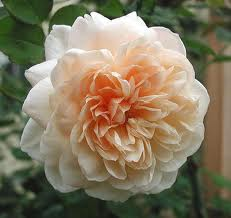
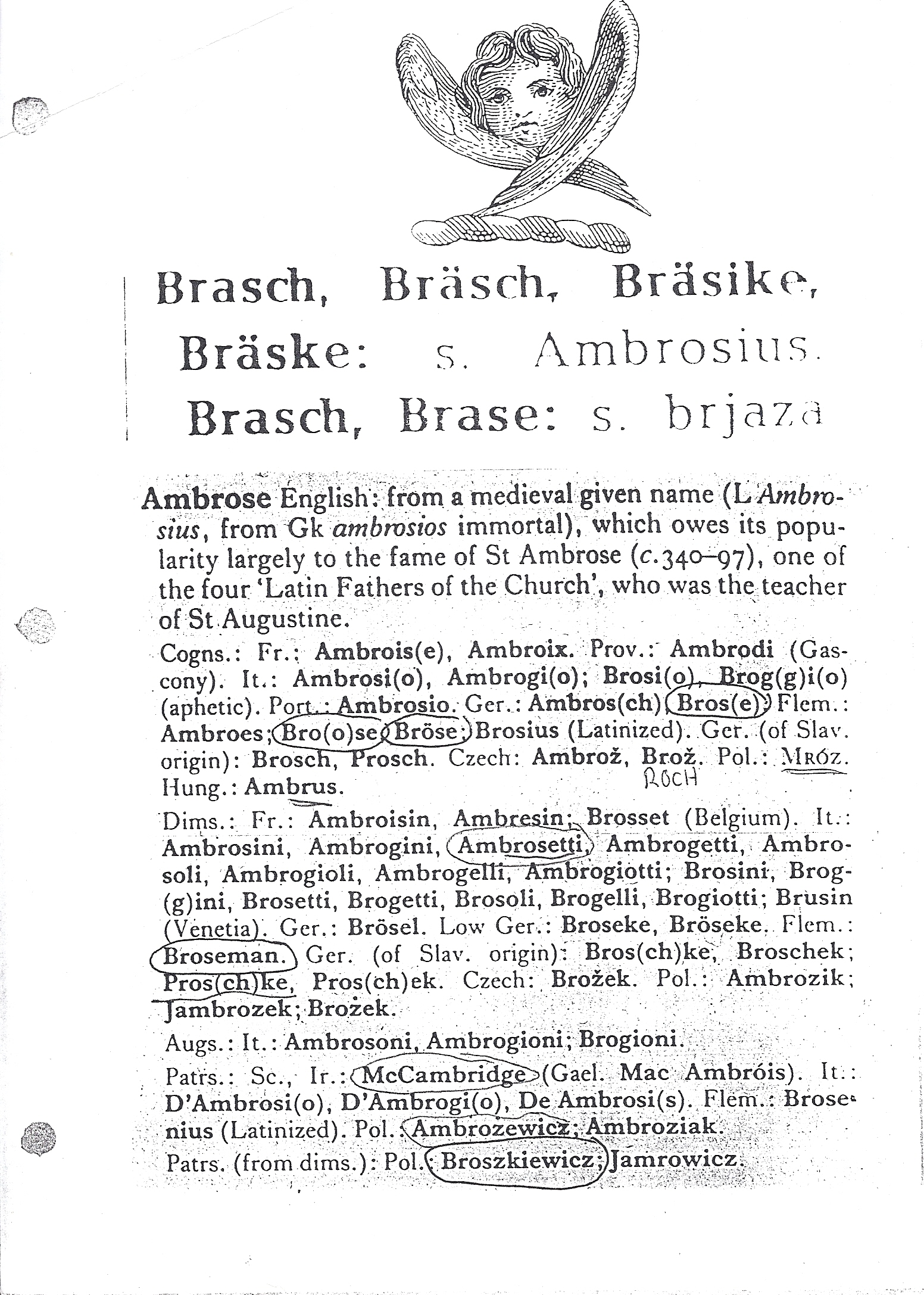
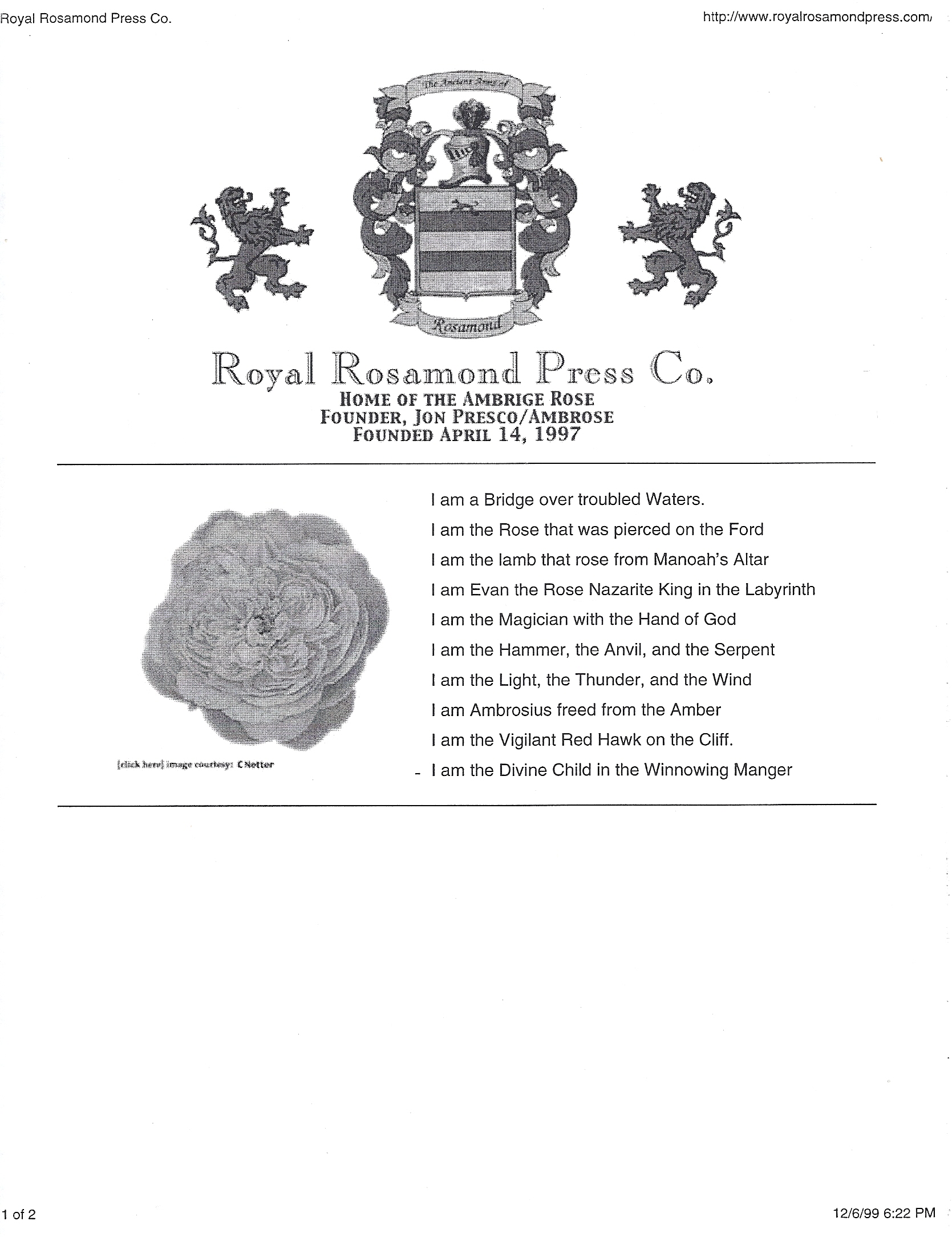
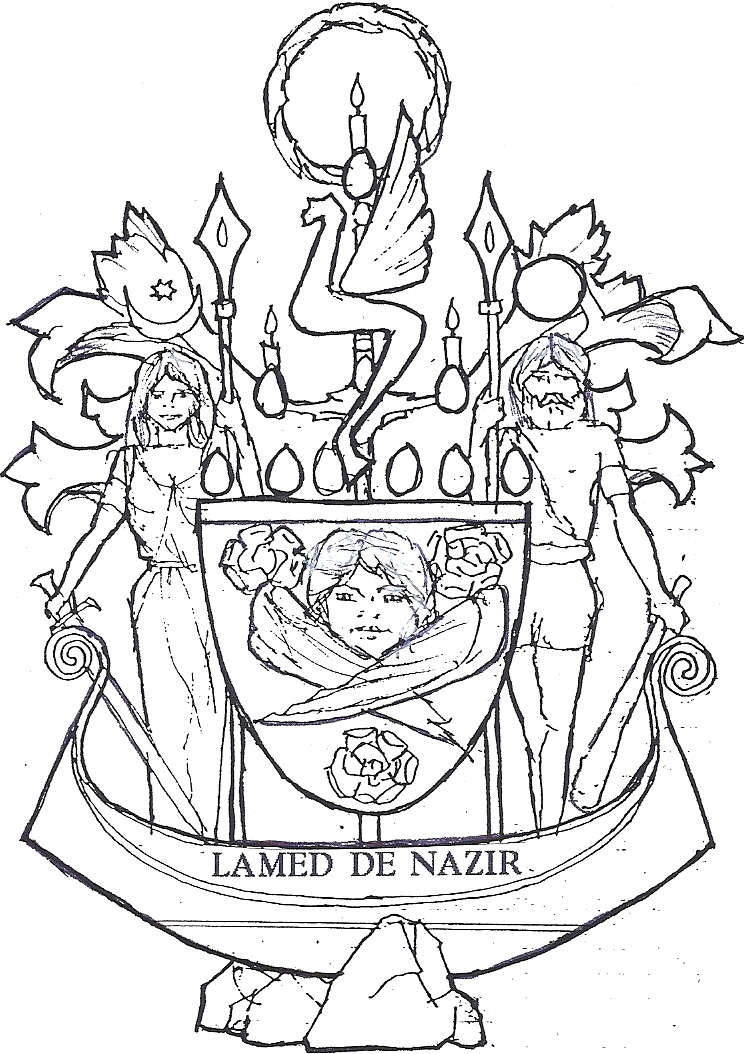
As fate would have it, Ambrose is the meaning Braskewitz, and thus the boy resting in the wings of angels in my cote of arms. Here you will find the Ambridge Rose, the first chapter of my essay first published by Royal Rosamond Press in 1997. Coincidence?
We need a miracle and magician in this world that will bring us all joy.
Welcome McCambridge Windsor to this rosy world.
Jon Presco
Royal baby FAQs answered as Duchess of Cambridge labor is announced
By Autumn Brewington and Veronica Toney, Published: July 22 at 7:30 am
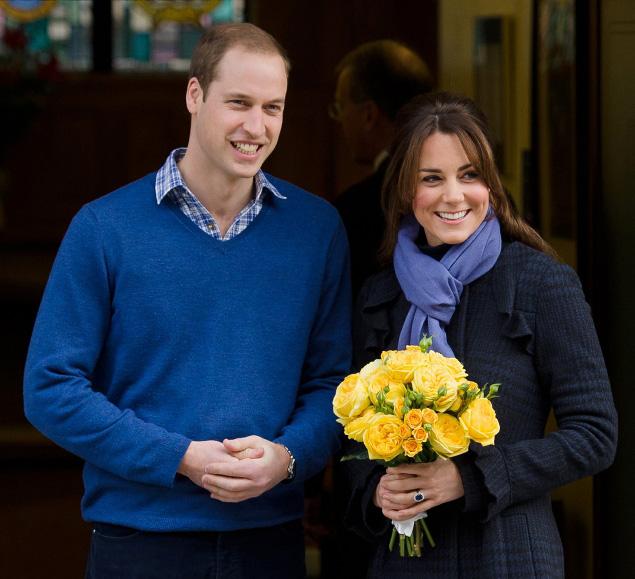
The #GreatKateWait is almost over! Catherine, Duchess of Cambridge, is in labor and was admitted to this hospital early Monday morning, before 3 a.m. Eastern time. While we wait to find out if Baby Cambridge is a boy or girl and what we’ll call the little royal, there are plenty of other questions we can answer. Here’s a crash course in all things Baby Cambridge:
View Photo Gallery — The world is eagerly anticipating the first child of Prince William and Catherine, Duchess of Cambridge. Catherine is set to give birth at St. Mary’s Hospital in London, where William was born in 1982.
What was different about Baby Cambridge’s birth?
Catherine is currently in the Lindo Wing of St. Mary’s Hospital. Members of the media have been staked out in front of the wing for weeks leading up to the big day. Why is the Lindo Wing so special? It’s where Diana, Princess of Wales, gave birth to Prince William in 1982 and Harry in 1984.
What will they name the baby?
Many are speculating that the Duke and Duchess will give the baby a family name. Professional betters are placing odds on Alexandra, Victoria, Elizabeth, after the queen, or Diana, after the prince’s late mother, as potential girl names. Male baby names popular in the royal family are George and Arthur; both were names of the queen’s father.
Royal babies of this level generally have four names. Prince William is William Arthur Philip Louis, Prince Charles is Charles Philip Arthur George, and Prince Harry is technically Henry Charles Albert David. So there’s a good chance that at least one name in the office pool could make it into the royal baby’s moniker.
But, it’s likely to be a while before we learn the name. Princess Diana and Prince Charles took a full week before sharing Prince William’s name.
What about a last name?
Most royals don’t cite a last name, though they often take a last name from their title. Prince William, the son of the Prince of Wales, is known in the Royal Air Force as Flight Lt. Wales. He used William Wales in college.
What will we commoners call the royal baby?
Baby Cambridge after Prince William and Duchess Catherine’s titles.
Will the royal baby, boy or girl, become king or queen one day?
Baby Cambridge, boy or girl, will be third in line to the throne. As part of a law change that went into effect after Prince William and Kate Middleton were married. Britain’s parliament moved to end the country’s centuries-old tradition in which male heirs superseded female heirs, no matter who was born first. As Prime Minister David Cameron said when announcing the proposal, “Put simply, if the Duke and Duchess of Cambridge were to have a little girl, that girl would one day be our queen.”
So if the law hadn’t changed, what would that make Baby Cambridge?
Prince Charles and Prince William are both the heir apparent to the throne. Queen Elizabeth was never heir apparent but heiress presumptive, presuming that if her parents never had a son, she would succeed her father as monarch. However, if she had a younger brother, he would have moved ahead of her in the order of succession. So the order now stands: Prince Charles, Prince William, Baby Cambridge. Sorry, Harry.
Recorded as Ambridge, Hambridge, Hambrick, Hambrook, Hanbridge, Hanbidge, Hanbrook and possibly others, this is an English locational surname. There does not seen to be or have been a place called Ambridge, this surname probably originates from either Hambridge, a village in Somerset, or Ham Bridge, a village in Sussex, or the four places called Hambrook in the counties of Gloucestershire (twice), Hereford or Sussex. The places as Ham Bridge translate as ‘stone bridge’ from the pre 7th century Olde English word ‘han’ meaning stone, and ‘brygg’, a causeway, or Ham Brook, the stony stream, with Hambrook in Gloucestershire being recorded as ‘Hanbroc’ in the famous Domesday Book of 1086. The transposition of ‘n’ to ‘m’ as in han to ham, is a common feature of early recordings, and may be put down to either poor spelling or thick dialects, or probably both. Locational surnames are by their nature ‘from’ names. They were names given to people as easy identification, after they left their original homes to move somewhere else. In so doing they took or were given as their surname the name of their former village. In this case the surname in its different forms is well recorded in the diocese of Greater London, the ‘mecca’ then as now, for those hoping to make their fortune. Examples of the surname recording taken from surviving church registers of the city of London include Susanna Hanbidge, at the church of St Brides Fleet Street, on December 7th 1632, Paul Hambrooke at St Pauls Covent Garden, on February 14th 1664, Elizabeth Ambridge who maried Franciscus Norris, at St Martins in the Field, Westminster, on January 2nd 1667, and Joseph Hambrick at St Dunstans in the East, Stepney, on August 5th 1868.
Read more: http://www.surnamedb.com/Surname/Ambridge#ixzz2Zpc8SmZy
It is finally time to talk about this baby.
This bouncing Buckingham baby, who prompted Harlequin to launch a whole line of royal-baby-themed romance novels — “His Royal Love Child,” “Sheikh’s Baby Bombshell,” “His Pregnant Princess” — currently populating Amazon. This baby, who set British bookies aflutter with due-date speculations, who introduced us unwillingly to the phrase “too posh to push.” Where is the royal baby? headlines began demanding five days ago, as if the Windsors were deliberately hiding it in the Duchess of Cambridge’s womb.
Graphic
Prince William and Duchess Kate’s first child means a reworking of who is next in line for the British throne.
Click Here to View Full Graphic Story
Prince William and Duchess Kate’s first child means a reworking of who is next in line for the British throne.
More on the Royal Baby
Holiday Guide 2012
Catherine, the Duchess of Cambridge, gives birth to a boy
Catherine, the Duchess of Cambridge, gives birth to a boy
Anthony Faiola 6:20 PM ET
Prince William’s wife gave birth at 4:24 p.m. London time, palace officials said.
Royal baby makes three — and third in line to the throne
Royal baby makes three — and third in line to the throne
JUL 15
Prince William and Duchess Kate’s first child means a reworking of who is next in line for the British throne.
After royal birth, a labor for privacy
After royal birth, a labor for privacy
Anthony Faiola JUL 9
An uneasy relationship with the media is set to take center stage when Catherine’s first child is born.
Photos: Royal baby preparations
Photos: Royal baby preparations
Anthony Faiola JUL 11
Those close to the 87-year-old British monarch dismiss any suggestion that she will abdicate the throne.
Waiting for the royal birth is the hardest part
Waiting for the royal birth is the hardest part
Anthony Faiola JUL 19
A rumor-fueled paranoia sets in for the media and the royal-obsessed as they await Britain’s next noble.
Brits put cash in the royal baby book
Brits put cash in the royal baby book
Karla Adam JUL 5
Odds are that England’s next heir will be a girl named Alexandra, say the bettors.
.
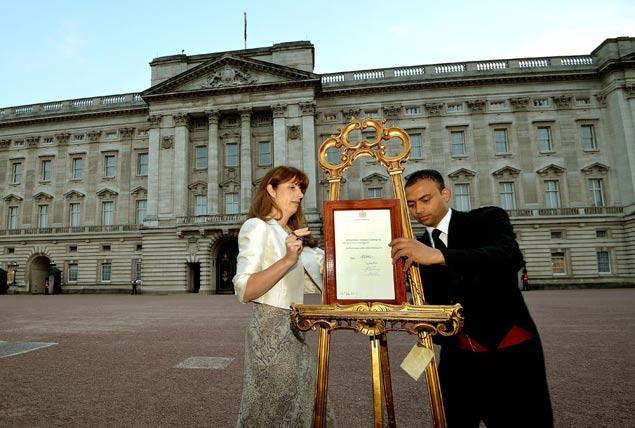
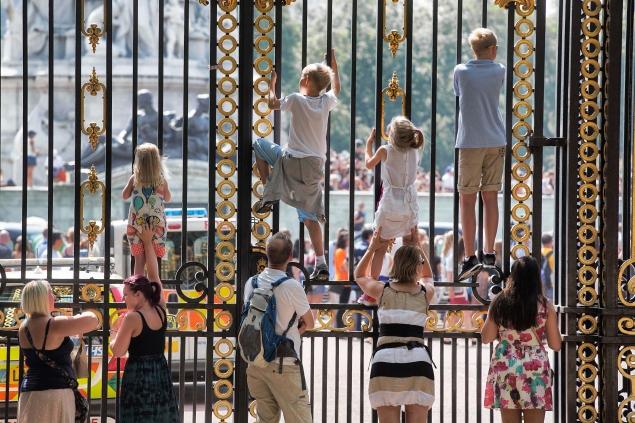
This baby was delivered unto the people at 4:24 Monday afternoon, weighing eight pounds and six ounces, a presumably adorable boy. Throngs gathered outside of Buckingham Palace awaiting the official announcement to be posted, as is tradition, on the gilded easel.
“It is an important moment in the life of our nation,” said Prime Minister David Cameron of the new arrival, according to Britain’s ITV news. “But I suppose above all it’s a wonderful moment for a warm and loving couple who got a brand-new baby boy.”
This baby is . . . an important baby?
Yes — he is the future king of England. Which is only slightly less momentous than a future queen of England would have been — this year, Parliament finally repealed an ancient succession rule that gave heirs the preference over heiresses, regardless of birth order.
Amid the pomp and general celebration, one finds something both archaic and strange about declaring any baby’s arrival “important,” any more so than every baby’s arrival is “important.” When we talk about this baby, what we are really talking about is the powerful vortex he inhabits: the intersection of celebrity worship, royal worship and the burgeoning baby-industrial complex.
His Royal Highness — the name has not yet been announced — was born into a world in which a British market research firm recently estimated that celebrations surrounding his birth would inject $400 million into the British economy, and in which photos of star offspring can fetch $15 million (as People magazine reportedly paid for photos of Angelina Jolie’s twins in 2008). A world in which sites such as Babyrazzi.com exist to stalk A-list toddlers, in which Forbes magazine a few years back published an earnest analysis of the “most influential babies.”
Historically, the arrival of a much-anticipated baby meant more than a cash influx. Sometimes, the birth changed history, as when King James II unexpectedly had a son. After the 17th century Reformation, there was a strong anti-Catholic feeling in England. James II had sired two Protestant daughters with his first wife, but when she died, he converted to Catholicism and married an Italian princess. “If the new queen had produced a daughter, the heir would have been the existing Protestant daughters,” and all would have been well, British historian John Ashdown-Hill said.
Instead, the birth of James Francis Edward Stuart resulted in the Glorious Revolution. For more than a century, Catholics were prohibited from holding seats in Parliament; for more than three, monarchs were prohibited from marrying them.
 Rosamond Press
Leave a comment