
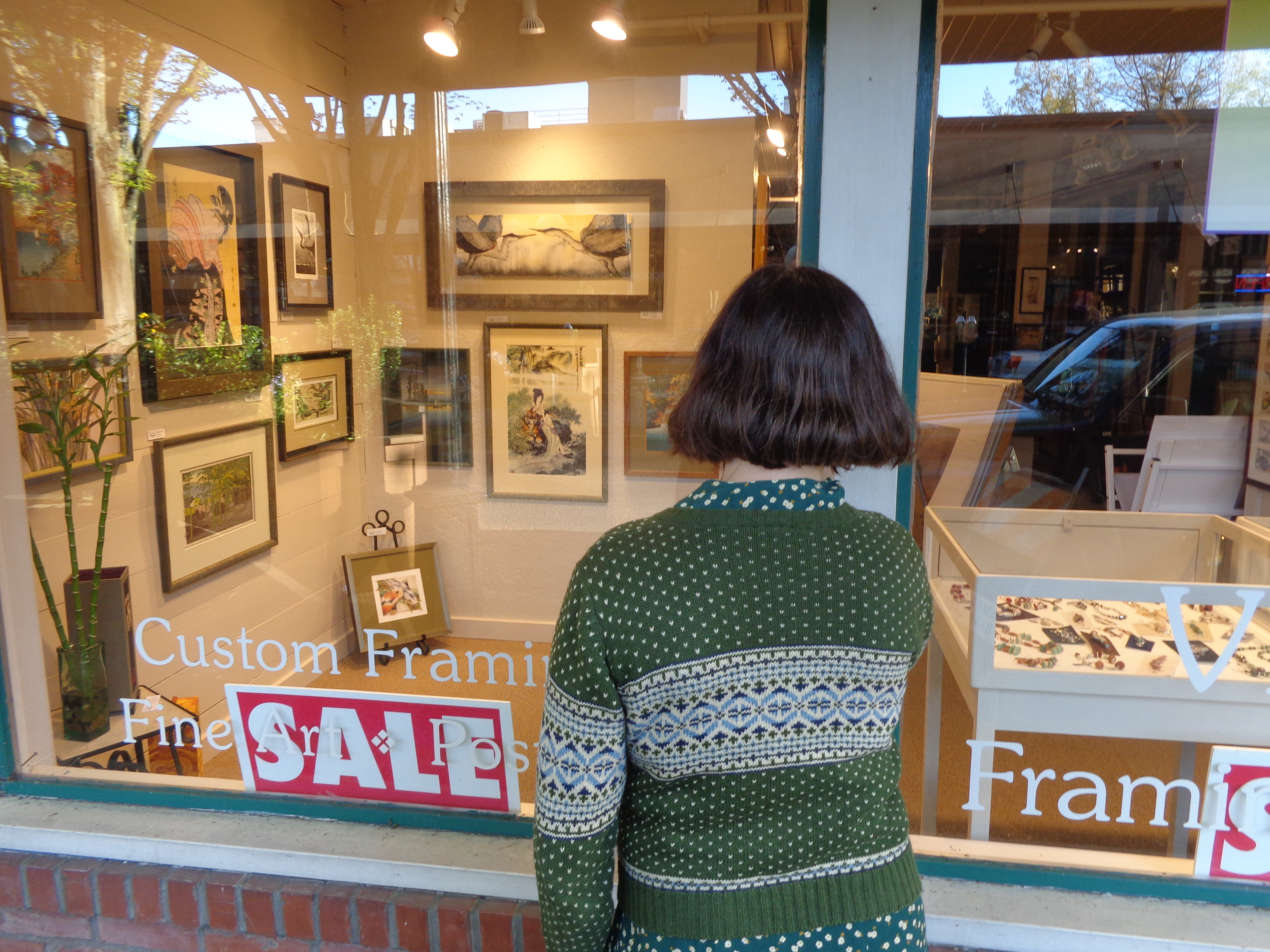
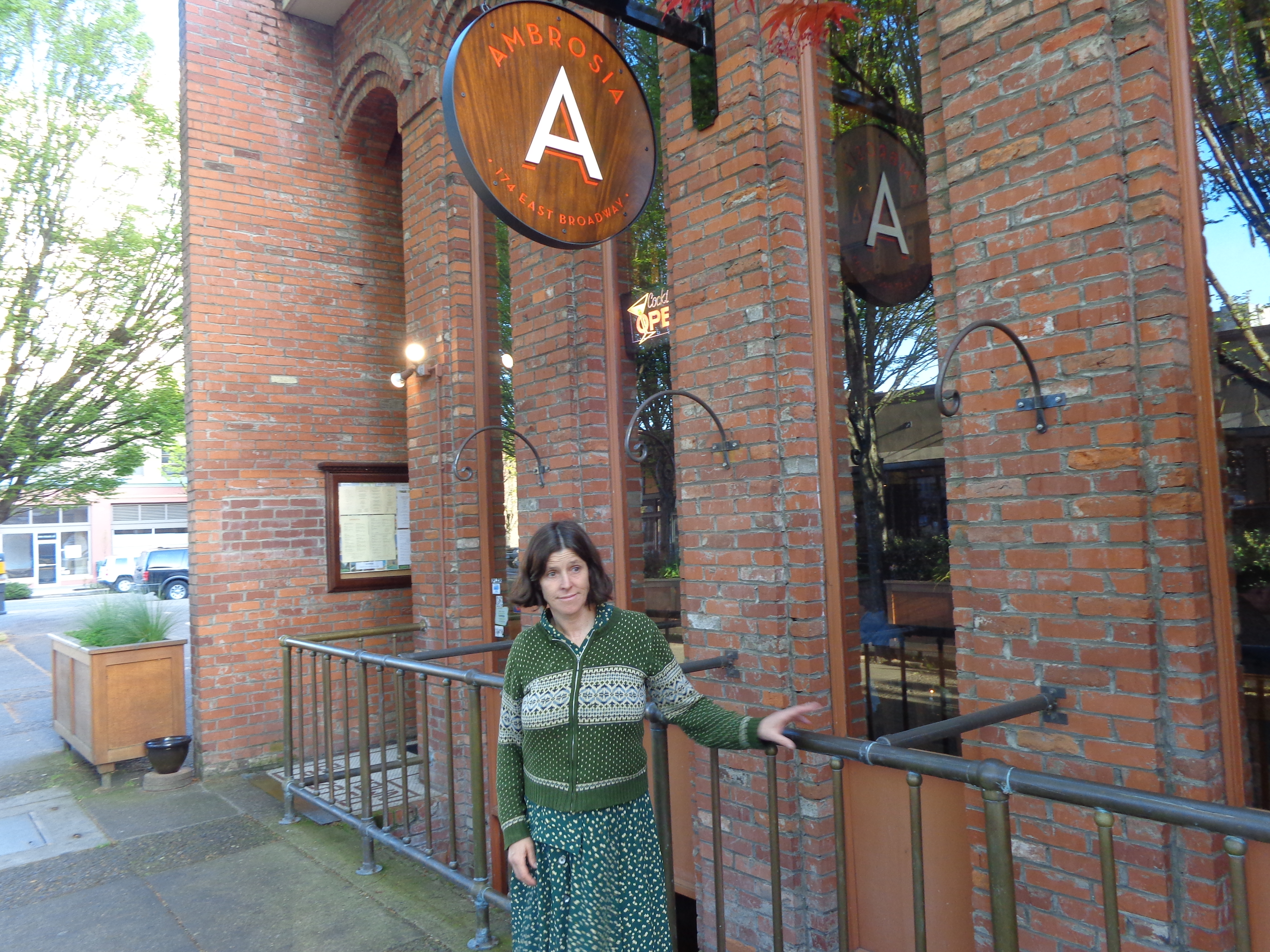
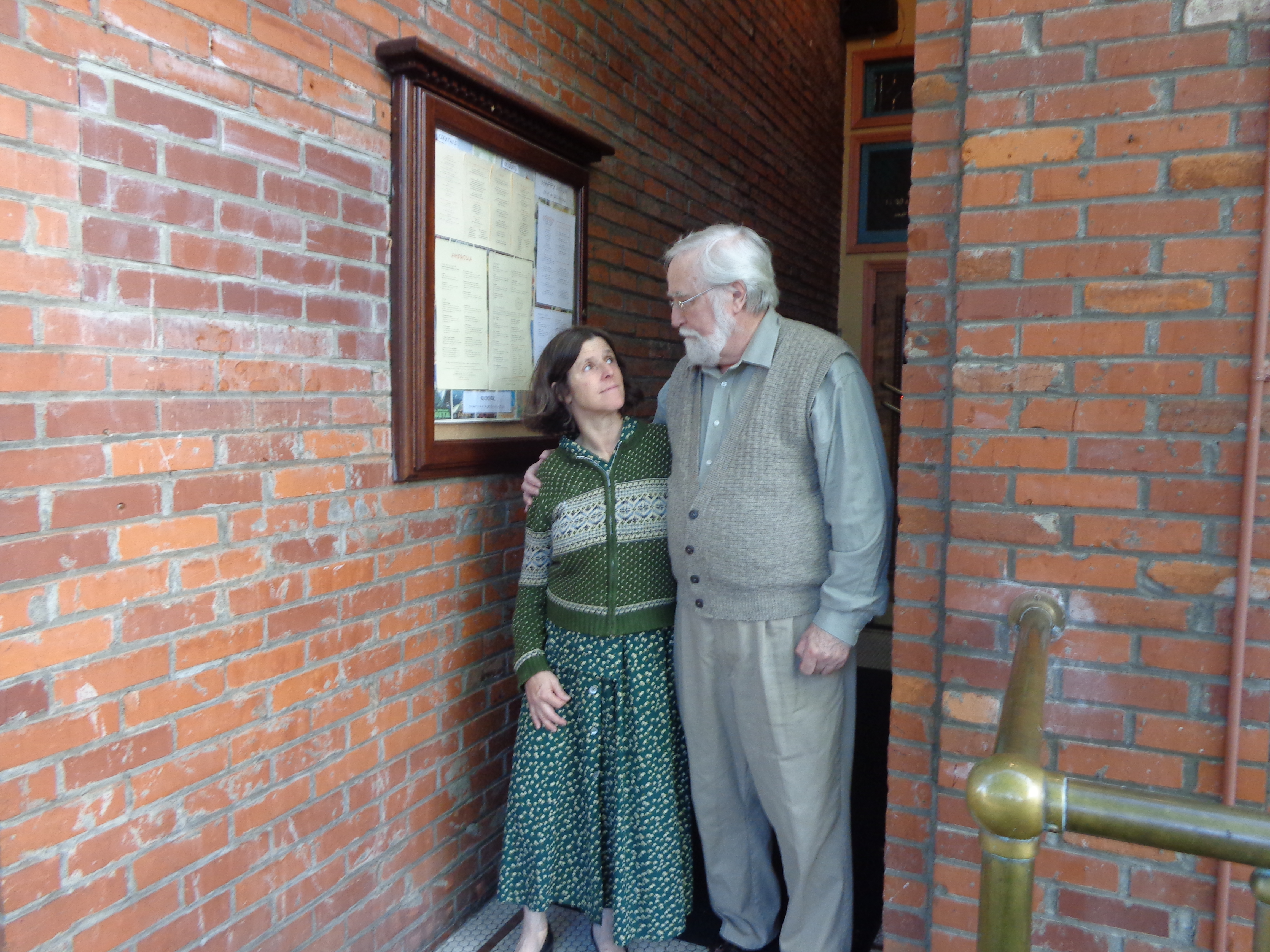

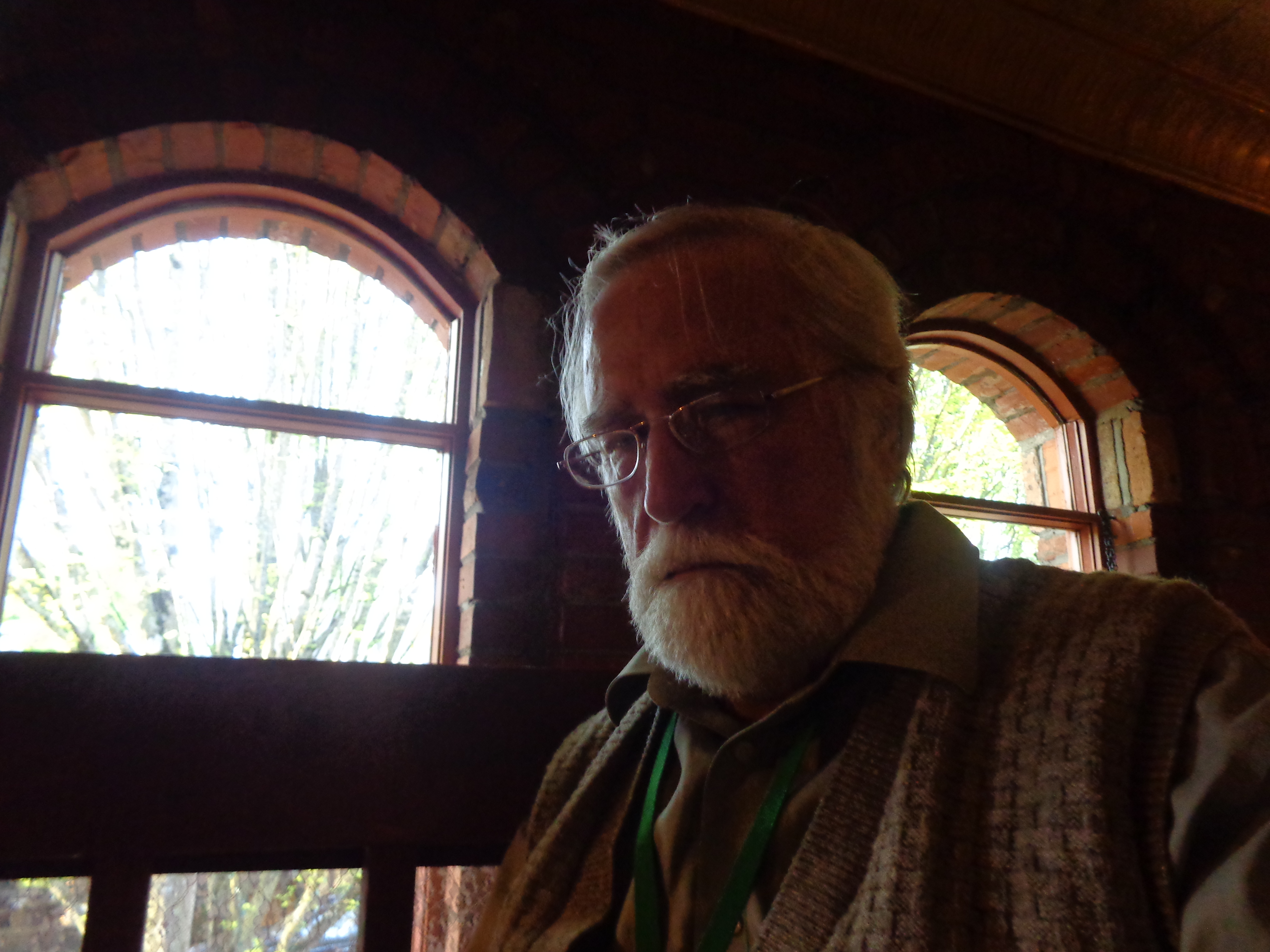
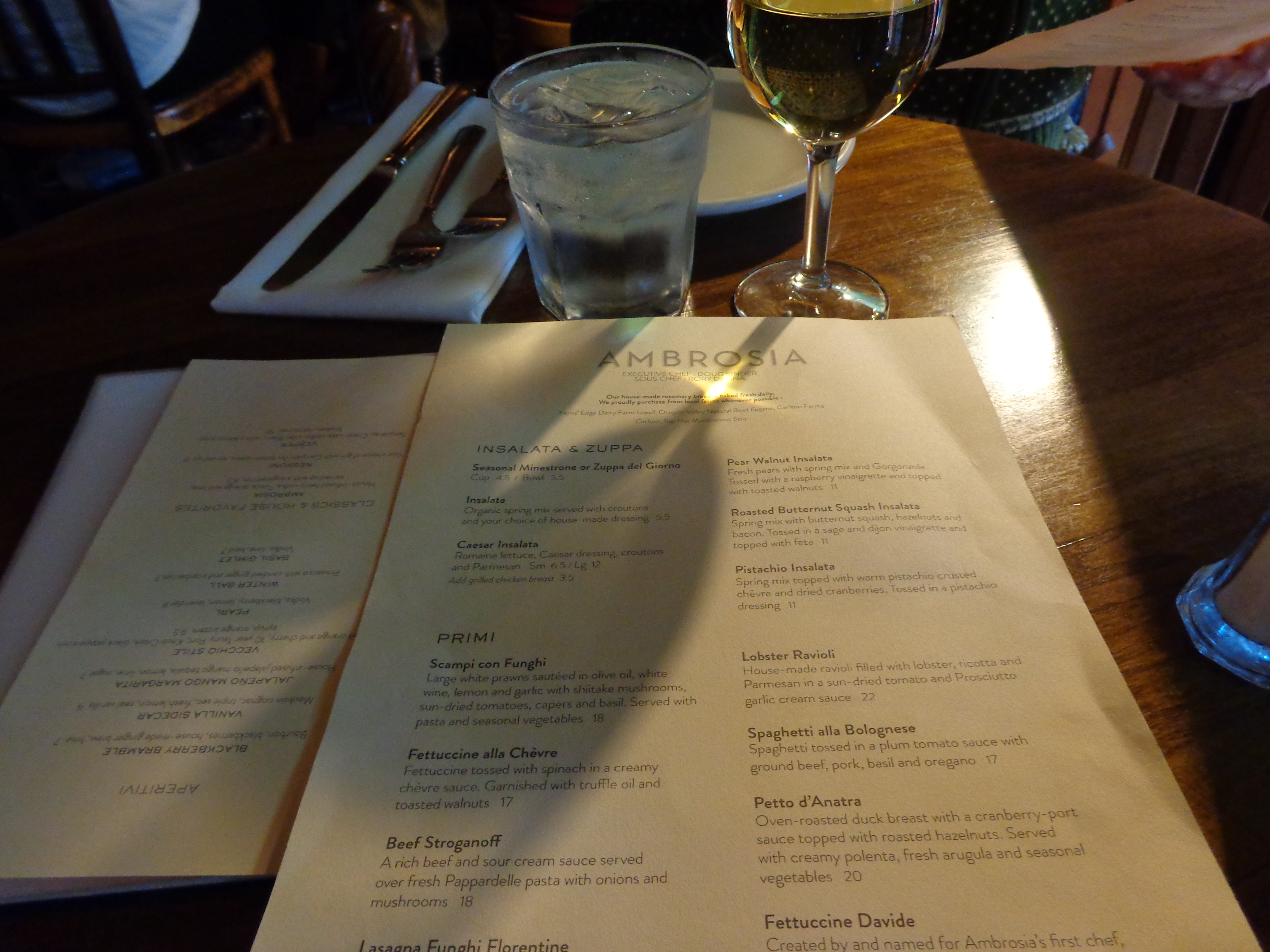
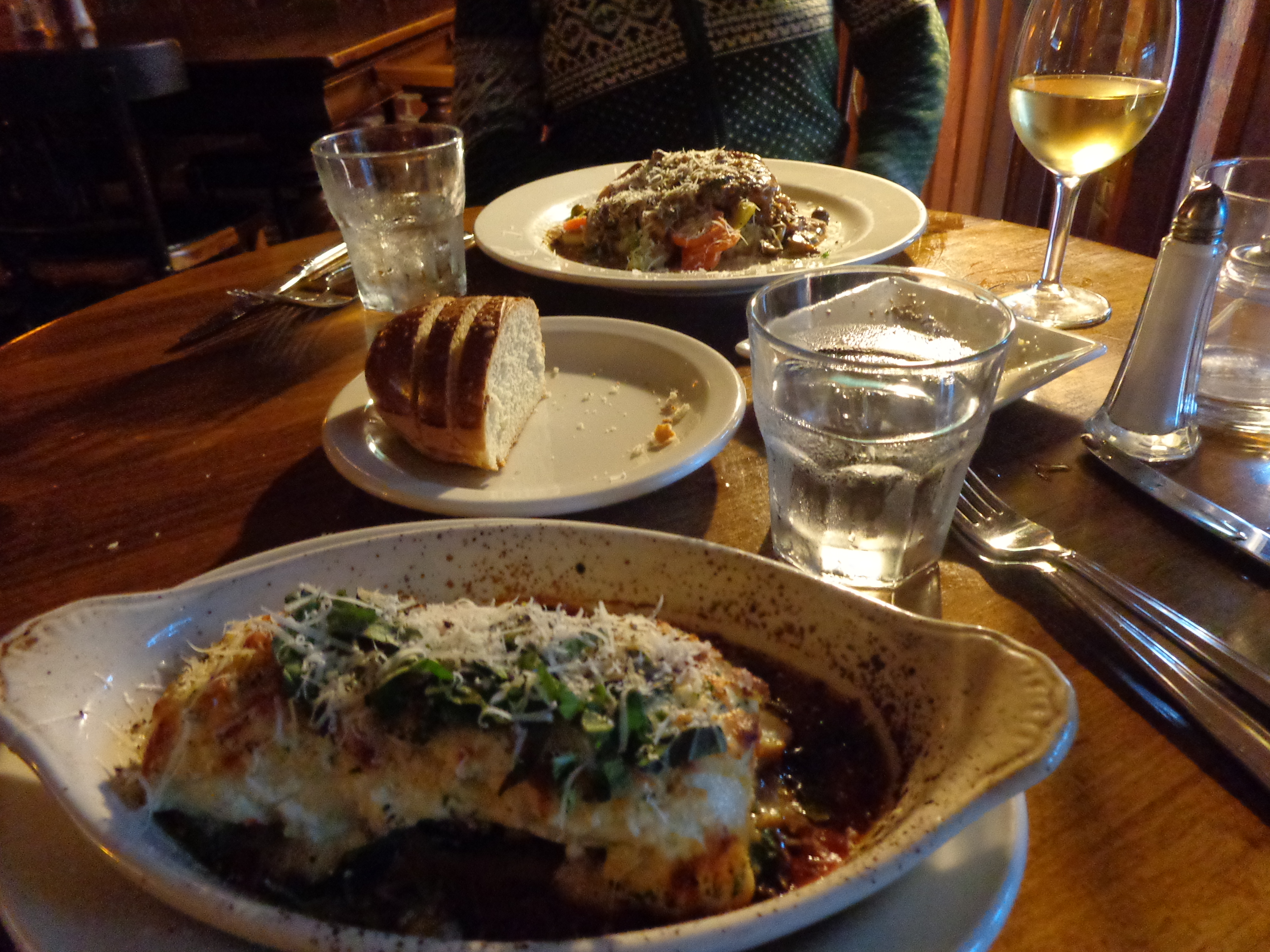
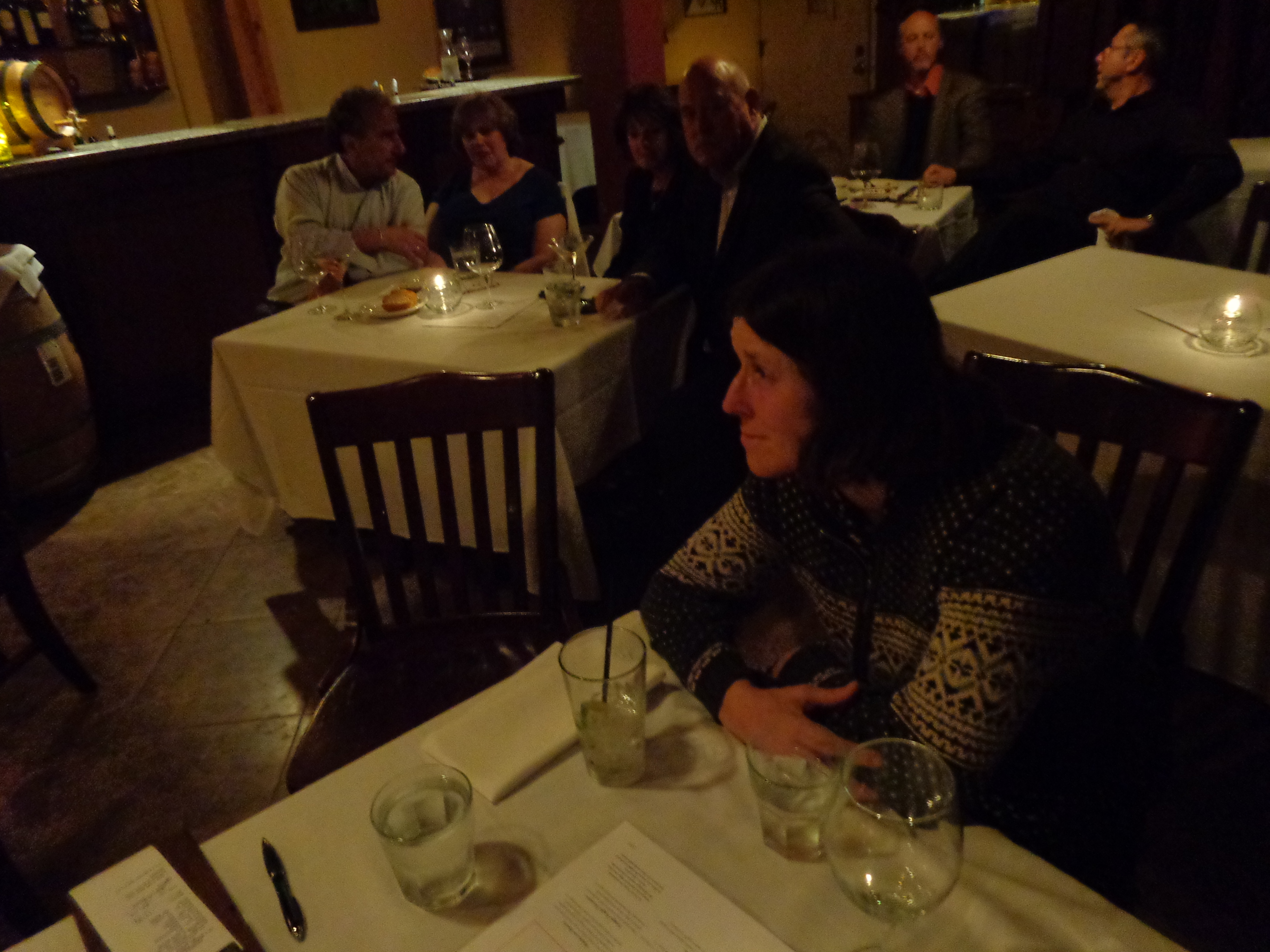
“Death is glamorous!” declared my dining mate, Virginia Hambley, at the Ambrosia restaurant in downtown Eugene. And my mouth is agape for I had been feeling homesick after reading my hometown, Oakland, had been declared the most exciting city in America. I had been spreading rumors I might go home.
1. full of glamour; charmingly or fascinatingly attractive, especially in a mysterious or magical way.
2. full of excitement, adventure, and unusual activity:
the glamorous job of a foreign correspondent.
Forget Oakland! Here is the rub! For the time being there is nothing there, there. Here in Eugene, I cover the waterfront. Virginia has taken us out to sea in an old wooden tugboat, and we are bailing out the absurd bilge water with the great French existentialists who refuse to be forgotten. And as long as Virginia is alive, they plow forward into the artificial fog we see in the movie ‘Casablanca’. I now launch into our mutual history.
“We are in a movie. Death surrounds us. There is the Vichy government. The Nazis are knocking at the door, and we are dining in a Bohemian restaurant clinging to idea of individuality and free will. We will never bow down to tyranny! Viva la France!”
I had brought up our conversations we had at the Beanery where Virginia poured over the books on Death she had found in our little town. Who knew they existed? That was ten years ago, and jarring her damaged memory, my dear friend is waxing poetic.
“Everyone is afraid of death. They don’t want to look anywhere nears the direction we are all heading. They don’t appreciate what they are missing! Death is glamorous!”
I filled Virginia with my latest discoveries about our mutual history. Our great grandfathers had waged war against the Barbary Coast pirates. I spoke of Hussein, the Bey who dwelt in the palace that is home to the Bardo Museum in Tunisia.
“These museum goers, these lovers of art, were killed by terrorists. But they refuse to be prevented from performing a great cultural function. They did a dance of the Muses!”
Death in Venice. Death in a Museum. Life will go on.
“Do you find life meaningless?” my beautiful companion asked, and I am in love.
“More wine?” our waiter asks.
“Though we dance along death’s icy brink, is the dance less full of fun?” sayeth Sir Richard Burton disguised as the fictional Sufi Poet in order to bring Sufism to the West – before Meher Baba was born.
Virginia was in a terrible accident coming back from an outing at Evergreen College when she was twenty-two.. She was pulled from the dead and was in a coma for twenty-eight days. Her sister Caroline never left her side. She suffers from memory loss. I am her Memory Holder and have learned how to open her treasure chest. We have been dear friends for seventeen years.
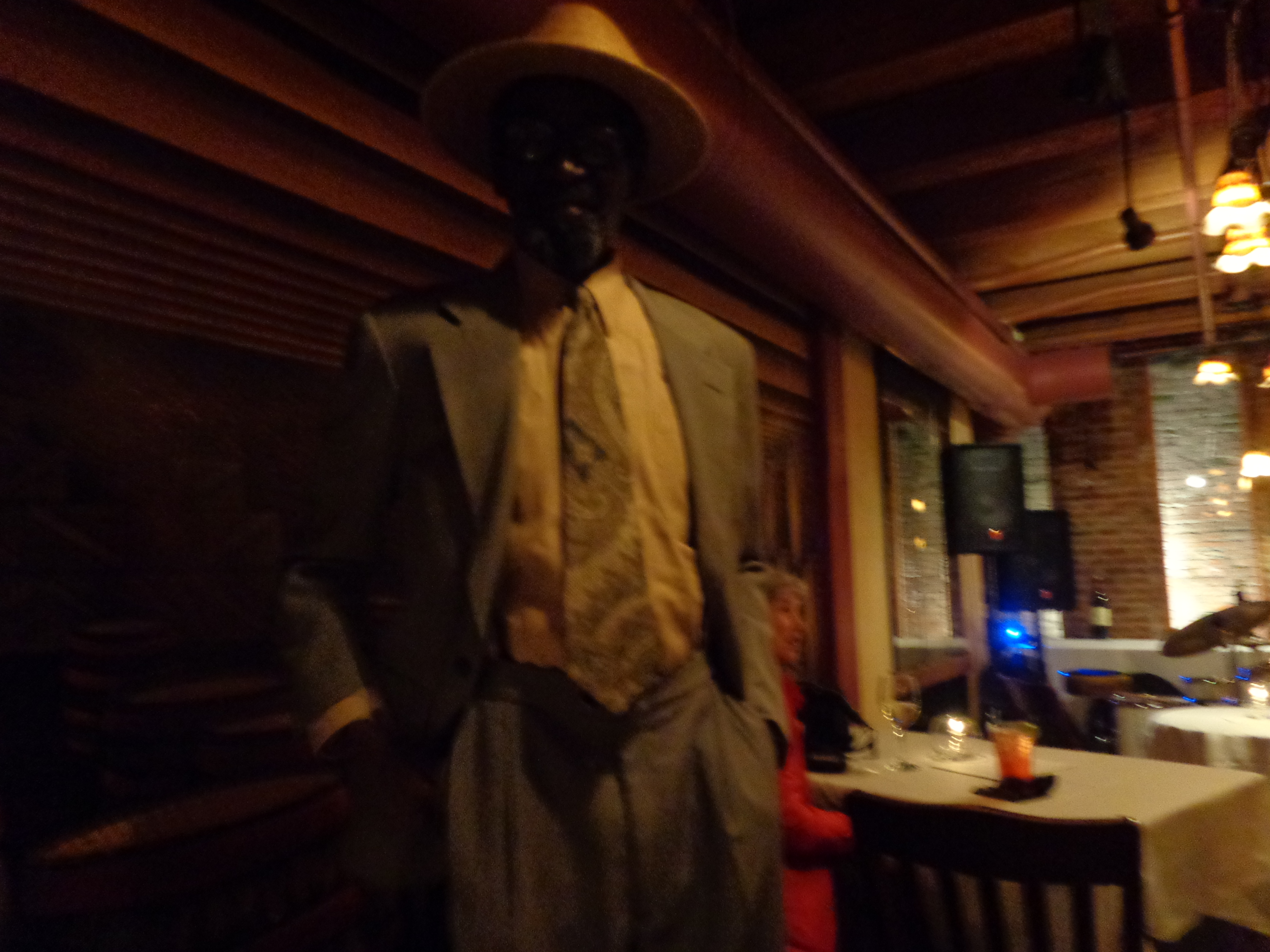
Going downstairs Virginia finds our table. There are faux wooden barrels and crates painted on the wall. I am home with my Benton kindred. There is a painted burning candle next to a bottle of wine. Over Virginia’s head hangs a bare lightbulb. My friends recognizes someone at the next table, but has forgotten his name. She has forgotten our waitress. Then, Kenny Reed is standing over us extending his hand. He looks dapper in his suit.
I point out a fellow poet across the room. We had read our poems at the Granary while Stone Cold Jazz played in the background. It was High Bohemianism that found an underground tunnel dug from 5th. Street to Broadway. Was this our new home? How exciting! We need tension, us artists, us poets. Absurd rivalries on cat’s feet making their way to the latest hot-spot. Cosmopolitan Cool Cats enjoying our little town blues.
Suddenly the owner is on stage with a microphone in his hand. With an Italian accent he recounts how persistent Kenny was in getting this new gig on Thursdays. He asks where the real Mayor is. He has forgotten his name.
“Izzy!” says Kenny.
Kenny and Izzy were in the documentary ‘Animal House of Blues’. Last year I found Bluto’s car. Kenny has performed with Ken Babbs, the Merry Prankster. A play about Ken Keasy is being performed by young people. The glamorous and exciting magic, will go on!
Jon Presco – Existentialist

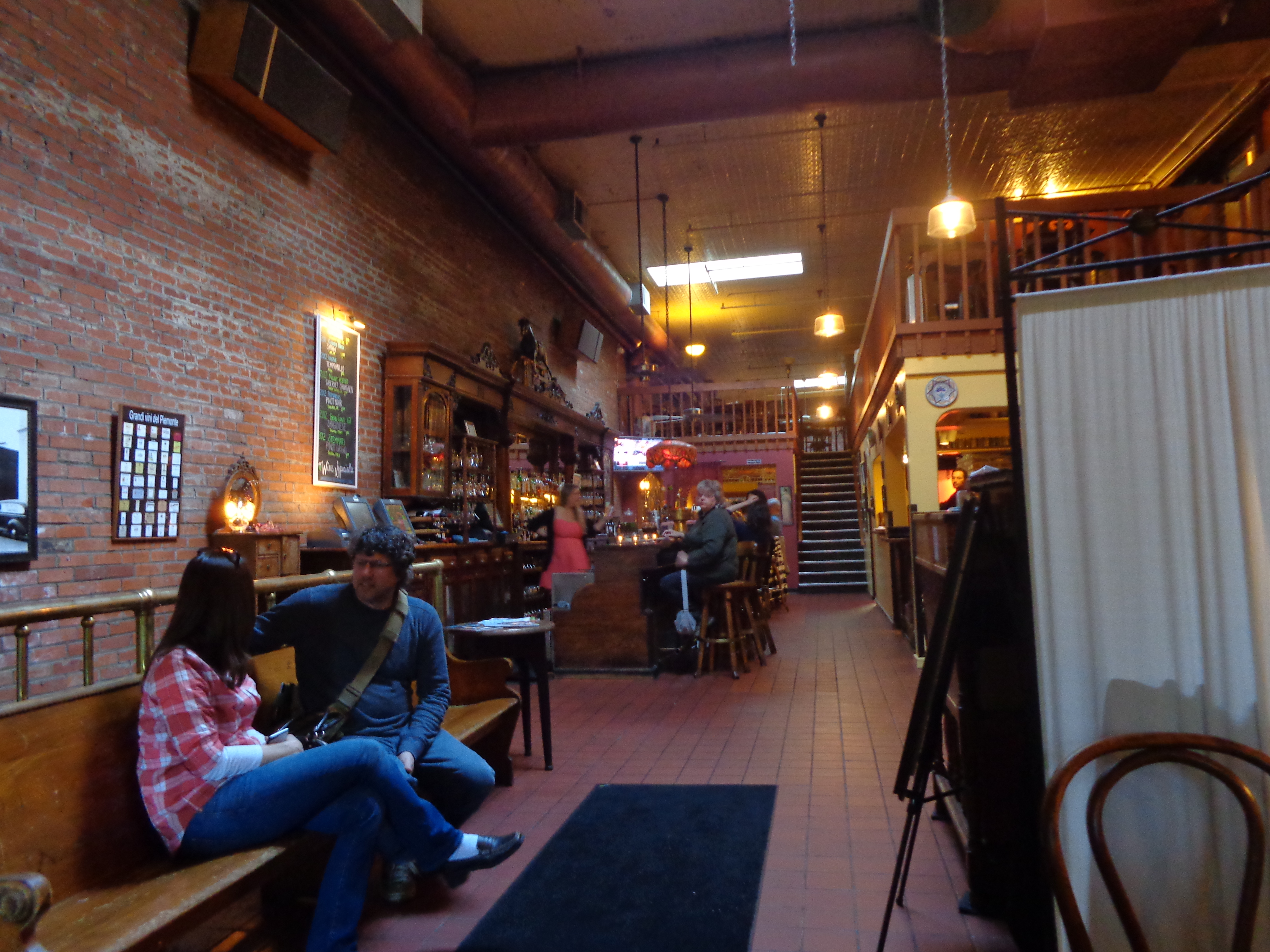
http://www.ambrosiarestaurant.com/
http://www.ambrosiarestaurant.com/events/2015/4/1/pop-up-jazz-club-kenny-reed-and-stone-cold-jazz
http://www.ambrosiarestaurant.com/dinner/
https://rosamondpress.com/2015/03/27/americas-first-victory-over-terrorism/
https://rosamondpress.com/2015/03/30/the-muses-of-liberty/
https://rosamondpress.com/2015/04/09/oakland-voted-the-most-exciting-city-in-america/
https://rosamondpress.com/2015/02/10/big-box-of-get-down/
https://rosamondpress.com/2014/04/17/belushis-animal-house-car/
James “Izzy” Whetstine, left, and drummer Kenny Reed take a break from filming a documentary on the making of ‘Animal House’ Friday. Whetstine played a janitor responsible for dealing with a dead horse in the movie.
http://www.cgsentinel.com/v2_news_articles.php?story_id=5879
Beauty is a characteristic of a person, animal, place, object, or idea that provides a perceptual experience of pleasure or satisfaction. Beauty is studied as part of aesthetics, sociology, social psychology, and culture. An “ideal beauty” is an entity which is admired, or possesses features widely attributed to beauty in a particular culture, for perfection.
The experience of “beauty” often involves an interpretation of some entity as being in balance and harmony with nature, which may lead to feelings of attraction and emotional well-being. Because this can be a subjective experience, it is often said that “beauty is in the eye of the beholder.”[1]
There is evidence that perceptions of beauty are evolutionarily determined, that things, aspects of people and landscapes considered beautiful are typically found in situations likely to give enhanced survival of the perceiving human’s genes
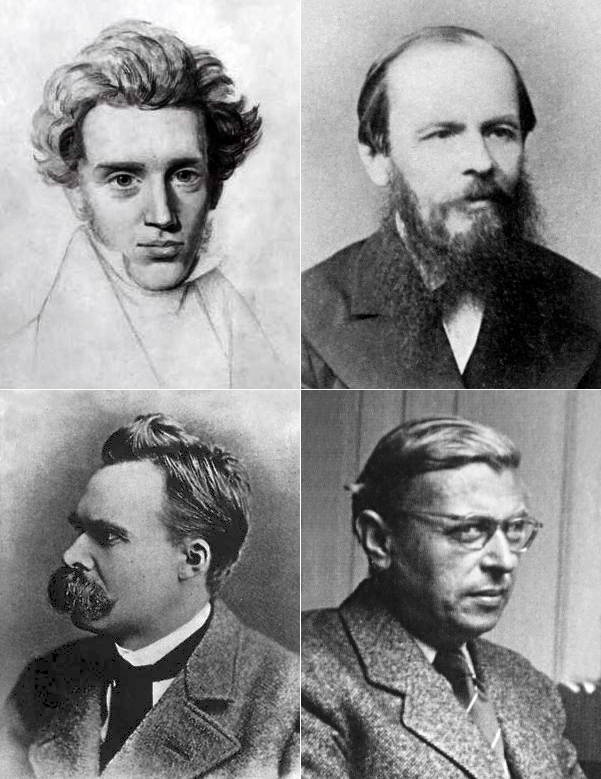
A central proposition of Existentialism is that existence precedes essence, which means that the most important consideration for individuals is that they are individuals—independently acting and responsible, conscious beings (“existence”)—rather than what labels, roles, stereotypes, definitions, or other preconceived categories the individuals fit (“essence”). The actual life of the individuals is what constitutes what could be called their “true essence” instead of there being an arbitrarily attributed essence others use to define them. Thus, human beings, through their own consciousness, create their own values and determine a meaning to their life.[21] Although it was Sartre who explicitly coined the phrase, similar notions can be found in the thought of existentialist philosophers such as Heidegger, and Kierkegaard:
The notion of the Absurd contains the idea that there is no meaning in the world beyond what meaning we give it. This meaninglessness also encompasses the amorality or “unfairness” of the world. This contrasts with the notion that “bad things don’t happen to good people”; to the world, metaphorically speaking, there is no such thing as a good person or a bad person; what happens happens, and it may just as well happen to a “good” person as to a “bad” person.[23]
Because of the world’s absurdity, at any point in time, anything can happen to anyone, and a tragic event could plummet someone into direct confrontation with the Absurd. The notion of the absurd has been prominent in literature throughout history. Many of the literary works of Søren Kierkegaard, Samuel Beckett, Franz Kafka, Fyodor Dostoyevsky, Eugène Ionesco, Luigi Pirandello,[24][25][26][27] Jean-Paul Sartre, and Albert Camus contain descriptions of people who encounter the absurdity of the world.
Many noted existentialist writers consider the theme of authentic existence important. Authentic existence involves the idea that one has to “create oneself” and then live in accordance with this self. What is meant by authenticity is that in acting, one should act as oneself, not as “one” acts or as “one’s genes” or any other essence requires. The authentic act is one that is in accordance with one’s freedom. Of course, as a condition of freedom is facticity, this includes one’s facticity, but not to the degree that this facticity can in any way determine one’s choices (in the sense that one could then blame one’s background for making the choice one made). The role of facticity in relation to authenticity involves letting one’s actual values come into play when one makes a choice (instead of, like Kierkegaard’s Aesthete, “choosing” randomly), so that one also takes responsibility for the act instead of choosing either-or without allowing the options to have different values.[33]
“Existential angst“, sometimes called dread, anxiety, or anguish, is a term that is common to many existentialist thinkers. It is generally held to be a negative feeling arising from the experience of human freedom and responsibility. The archetypal example is the experience one has when standing on a cliff where one not only fears falling off it, but also dreads the possibility of throwing oneself off. In this experience that “nothing is holding me back”, one senses the lack of anything that predetermines one to either throw oneself off or to stand still, and one experiences one’s own freedom.[23]
http://en.wikipedia.org/wiki/Existentialism
The Kasidah of Haji Abdu El-Yezdi is a long poem written by “Haji Abdu El-Yezdi,” who is widely considered an invention by the true author, Sir Richard Francis Burton. In a note to the reader, Burton claims to be the translator of the poem, to which he gives the English title “Lay of the Higher Law.” In notes following the poem, Burton claims to have received the manuscript from his friend Haji Abdu, a native of Darabghird in the Yezd Province of Persia. Describing Haji Abdu, Burton writes that he spoke an array of languages and notes that “his memory was well-stored; and he had every talent save that of using his talents.”
The Sufi writer Idries Shah, in his book The Sufis, states that The Kasidah was a distillation of Sufi thought, and that “there seems little doubt that Burton was trying to project Sufi teaching in the West… In Sufism he finds a system of application to misguided faiths ‘which will prove them all right, and all wrong; which will reconcile their differences; will unite past creeds; will account for the present and will anticipate the future with a continuous and uninterrupted development.’” (251-2)
http://sacred-texts.com/isl/kas/index.htm
I want not this, I want not that,
already sick of Me and Thee;
And if we’re both transform’d and changed,
what then becomes of Thee and Me?
Enough to think such things may be:
to say they are not or they are
Were folly: leave -them all to Fate,
nor wage on shadows useless war.
Do what thy manhood bids thee do,
from none but self expect applause;
He noblest lives and noblest dies
who makes and keeps his self-made laws.
All other Life is living Death,
a world where none but Phantoms dwell,
A breath, a wind, a sound, a voice,
a tinkling of the camel-bell.

 Rosamond Press
Leave a comment