“And I’m done with patriarchal abusive bullshit.”
This is a very telling comment by Alley Valkyrie who appears to be Belle Burch’s mentor.
My autobiography ‘Capturing Beauty’ was inspired by my letter to Superior Court Judge Richard M. Silver, where I complained about an outsider advertising the Lesbian novel ‘Love Match’ on my nine year old nieces webpage. Sandra Faulkner claimed she interviewed my famous sister just before she died, which I told the Judge I doubted, and if so, then those interviews are intellectual property that belongs to my nieces, Rosamond’s Heirs. Poof! The first Rosamond biographer is – out of there! Sandra failed to capture the soul of Rosamond.
Love Match is about an ugly tennis player going after a beauty queen, using a tennis injury and beauties nine year old to bed beauty in her fathers’s bed.
When I met with Belle Burch, I asked her to help me write CB, because I wanted a female touch. I wanted Belle to inspire me as I write – and paint her. She said her friends call her a “Grammar Nazi” and she would help me for a fee.
I showed Belle my posts where it is clear I champion the homeless, and have been with OCCUPY Eugene from the start. Belle ignored this. When I discovered she was very close to
advocates for the homeless, I felt like she had put me out of that community. Why?
Jon Presco
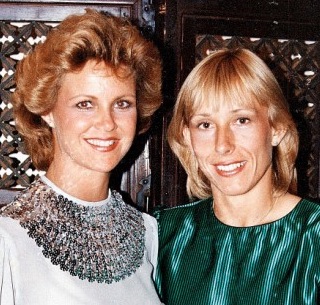

Former Texas beauty-queen Nelson tells–as written by sociologist Faulkner–of her eight-year affair with tennis great Martina Navratilova, as well as of the pair’s litigious breakup and eventual out-of-court settlement. Nelson (a “latter-day Doris Day,” according to Rita Mae Brown’s foreword), mother of two and married for 17 years, was introduced to the Czech superstar in 1982 by Nelson’s 11-year-old son, Eddie. Nelson and Navratilova met again in 1984, and the mutual attraction proved so great that Nelson consulted a psychiatrist. Even so, the tennis star moved in with the Nelson family while recovering from an injury. The details of what happened next aren’t made clear, but Nelson’s husband, increasingly aware of the pair’s relationship, asked Navratilova to leave–and Nelson went with her, as her lover, traveling companion, and “maid” (Nelson later told 20/20’s Barbara Walters that Navratilova paid her $90,000 a year for her services). The couple finally exchanged rings and vows in an empty church in Brisbane, Australia, and they later videotaped a “nonmarital cohabitation agreement” that became the focal point of the litigation when they split up. Since homosexuality is illegal in Texas, and a court cannot enforce a contract to perform an illegal act, all parties were on unsure ground during the legal battle. Nelson charged not only breach of contract but claimed that she was entitled to the same rights as any spouse: half of all earnings garnered during the marriage. Navratilova countered that she thought she was agreeing only to a 50-50 split of any joint business venture. The couple’s businesses and real estate were divided up, but Nelson offers absolutely no details of the final agreement other than to note that her desire to write this book was one of the sticking points. Numerous questions go begging in the emotion-laden, self- serving text–making this hardly the work by which to judge Navratilova, the pair’s relationship, or, for that matter, Nelson herself.
Review/Film Festival; An Artist and His Muse In Jacques Rivette Work
By VINCENT CANBY
Published: October 2, 1991
Email
Print
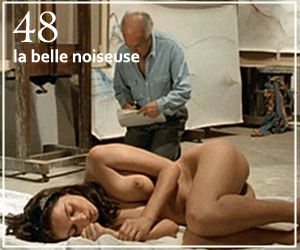
In the South of France near Montpellier, in a magnificent old chateau slightly smaller than the Metropolitan Museum of Art, Edouard Frenhofer, a once-celebrated painter, lives in uneasy bucolic stasis with his wife, Liz, his former model.
Edouard (Michel Piccoli) has not done any work in 10 years, monumentally blocked, it seems, by love or, at least, by contentment. He eats and drinks and putters around the chateau. Liz (Jane Birkin) devotes herself to Edouard and, as a hobby, stuffs birds, sometimes members of endangered species.
Their placid existence is shattered when Edouard suddenly decides to paint again. His inspiration: a young dark-eyed beauty named Marianne (Emmanuelle Beart), the companion of Nicolas (David Bursztein), a young painter on his way up in the contemporary art world
What happens in the next five days, and in the four hours’ running time of Jacques Rivette’s “Belle Noiseuse,” is intended to be nothing less than an examination of one of life’s great mysteries, the artist’s creative process.
Winner of the second prize at this year’s Cannes International Film Festival, “La Belle Noiseuse” is an incredibly beautiful, roomy sort of film whose views of art reflect the tradition of what might be called academic romanticism. As in “Camille Claudel,” about the storm-tossed love affair of Camille Claudel and Auguste Rodin, “La Belle Noiseuse” is convinced that no masterpiece can be created without human sacrifice.
The movie’s title comes from the painting on which Edouard was working at the time he more or less drifted into temporary retirement. It was inspired by a 17th-century courtesan, Catherine Lescault, nicknamed “La Belle Noiseuse,” which is translated in the subtitles as “The Beautiful Nut.” Whatever she is called, she is a woman who drives men mad.
“La Belle Noiseuse,

 Rosamond Press
Leave a comment