
 Last night as I watched ‘The Abolitionists’ on PBS, I got the answer I was looking for as to why the History of John and Jessie Benton is utterly ignored. Even this series did not pay attention of Fremont who co-founded the Abolitionist Republican Party, and was its first Presidential candidate who lost to Buchanan. Abraham Lincoln balked on freeing the slaves on several occasions. When I heard he suggested to black leaders they be free outside of the United States in order to do the white race a big favor, alas I had my answer as to why Lincoln destroyed Fremont’s career after he emancipated the slaves of Missouri, a order Lincoln reversed.
A new book tells us why. Lincoln made a special agreement with Britain to remove blacks from the U.S. and put them in South America, even Jamaica. What was in this plan for Britain? I suspect Lincoln was going to allow Britian to deport Irish Catholics to California in order to put an end to the civil unrest in Northern Island caused by William of Orange establishing plantations for foreigners after the Wittlesbach family lost their war with the Papacy at the Battle of White Mountain. From the Wittlesbachs came King George. These Irish Catholics would become U.S. Citizens in a territory dominated by the Catholic Church. Jessie Benton mentions a plan to bring Irish Catholics to America in an article that appeared in Sunshine magazine.
What is clear, Abraham Lincoln was a huge racist, he working covertly to free our Democracy of black people – if the Radical Republicans that put him in office – insist he emancipate the slaves. It looks like the Fremonts stood in his way, and were aware of his plan. This makes the election of President Barack Obama a truly historic event, greater than the history of Freedom that has been credited to the wrong man, who appears to have worked behind a black curtain thwarting the true Emancipation of Slaves, the ending slavery in a Democracy, adt eh granting of equal Civil Rights. The battle is not over.
One has to wonder if our educated President is aware of this evil history that now challenges the credentials of Lincoln as a Great Liberator, a title that should have been given to my kindred, John Fremont. In this light, the Liberal-Leftist agenda the right accuses Obama of returning to, is in truth the continuation of the Civil Rights Movement of the 60s.
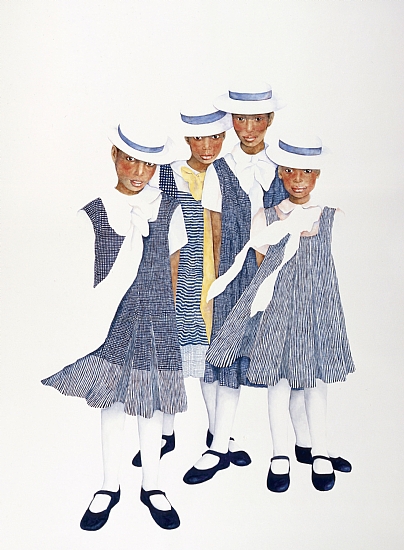
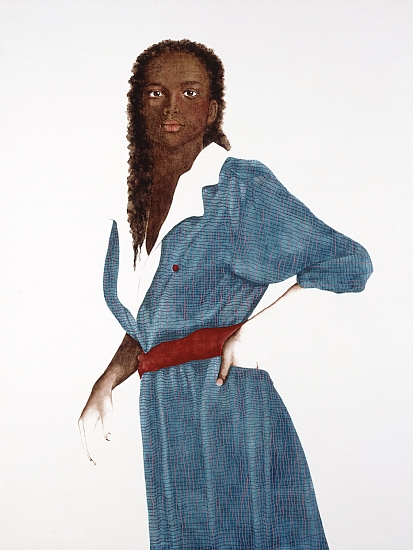
Above is a painting Christine Rosamond Benton did of our black maid, Lena, and her three sisters. Lena was a mother to the four Presco children after Rosemary had to go to work to support us. The other portrait is that of Jessie Benton, Garth’s eldest daughter by Harlee McBride. One now has to look at the alliance of blacks and hippies in the sixties, as the history that began to mend the racist divide that Lincoln installed in a covert manner.
The racist rants of my brother, Mark Presco, and the loss of my daughter to a racist redneck neo-Confederate Tea Party Radical, is now a part of a revised history that reveals – THE TRUTH – that one day my grandson, Tyler Hunt, will read, and thus know he was taken hostage by a man who loves to hate.
To kidnap these Africans from their home, work them as free labour, then send them out of the U.S. – is the greatest Parasitical Story – still to be told!
Jon Presco
Copyright 2013
Abraham Lincoln told freed slaves they should found a colony in Latin America, and even made contact secretly with the British about making land available in what was then British Honduras, now Belize, according to a new book.
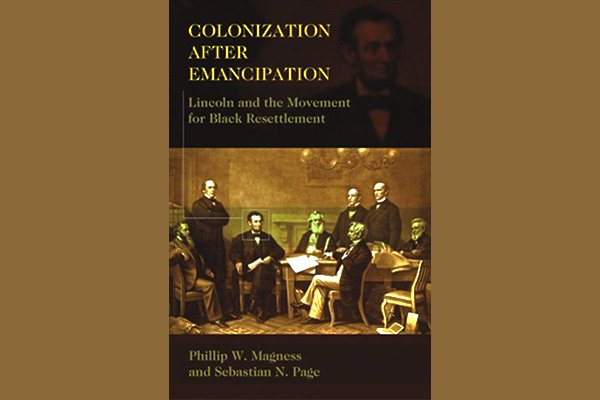
As America celebrates the 150th anniversary of Lincoln’s first inauguration this week, a new book by researchers at George Mason University in Fairfax, Virginia, makes the case that Lincoln was more committed to colonising black people than previously thought. The book, Colonization After Emancipation, is based in part on newly uncovered documents that authors Phillip Magness and Sebastian Page found at the British National Archives in Kew and in the US National Archives.
It claims, among other things, that in 1862 Lincoln urged a White House audience of “free blacks” to leave the US and settle in Central America. He told them: “For the sake of your race, you should sacrifice something of your present comfort for the purpose of being as grand in that respect as the white people.” He went on to say that those who envisioned a permanent life in the US were being “selfish” and he promoted Central America as an ideal location “especially because of the similarity of climate with your native land – thus being suited to your physical condition”.
Lincoln’s views about colonisation are well known to historians, even if they don’t make it into most schoolbooks. Lincoln even referred to colonisation in the preliminary Emancipation Proclamation, his September 1862 warning to the South that he would free all slaves in southern territory if the rebellion continued.
Unlike some others, Lincoln always promoted voluntary, rather than enforced, colonisation. But historians differ on whether or not he moved away from the concept after he issued the Emancipation Proclamation on 1 January 1863.
The new book suggests Lincoln continued to support colonisation, engaging in secret diplomacy with the British to establish a colony in British Honduras. Among the records found at Kew is an 1863 order from Lincoln granting a British agent permission to recruit volunteers for a colony.
“He didn’t let colonisation die off. He became very active in promoting it in the private sphere, through diplomatic channels,” Mr Magness said. He surmises that Lincoln grew weary of the idea which had become enmeshed in scandal and were criticised by many abolitionists.
Dr Magness found a notation from as late as 1864 that Lincoln asked the attorney general whether he could continue to receive counsel from James Mitchell, his colonisation commissioner, even after Congress had withdrawn funding for the office. However, Tom Schwartz, a research director at the Abraham Lincoln Presidential Library in Illinois, said that there is evidence that Lincoln’s views evolved away from colonisation in the final years of the civil war.
Lincoln gave several speeches referring to the rights black people had earned by enlisting in the Union Army, for instance. And his secretary John Hay wrote in July 1864 that Lincoln had “sloughed off” colonisation. “Most of the evidence points to the idea that Lincoln was looking at other ways” to resolve the transition from slavery, besides colonisation, at the end of his presidency, Dr Schwartz said.
Dr Magness said that nobody can claim definitive knowledge of Lincoln’s views, especially on a topic as complex as race relations. “He never had a chance to complete his vision. Lincoln’s racial views were evolving at the time of his death,” he said.
They found an order from Mr Lincoln in June 1863 authorising a British colonial agent, John Hodge, to recruit freed slaves to be sent to colonies in what are now the countries of Guyana and Belize.
“Hodge reported back to a British minister that Lincoln said it was his ‘honest desire’ that this emigration went ahead,” said Mr Page, a historian at Oxford University.
The plan came despite an earlier test shipment of about 450 freed slaves to Haiti resulting in disaster. The former slaves were struck by smallpox and starvation, and survivors had to be rescued.
Mr Lincoln also considered sending freed slaves to what is now Panama, to construct a canal — decades before work began on the modern canal there in 1904.
The colonisation plan collapsed by 1864. The British were fearful the confederate states of the American south may win the civil war, reverse emancipation, and regard British agents as thieves. Congress also voted to remove funding.
Yet as late as that autumn, a letter sent to the president by his attorney-general showed he was still actively exploring whether the policy could be implemented, Mr Page said.
“It says ‘further to your question, yes, I think you can still pursue this policy of colonisation even though the money has been taken away’,” he said.
Mr Lincoln was assassinated in April 1865.
Dr Magness said the book would change readers’ views of Mr Lincoln. Amid sharp political division, he is repeatedly championed by modern-day politicians, including Barack Obama, as a great unifier.
“Looking back from modern perspectives, we see colonisation as a very bigoted idea,” said Dr Magness, of the American University in Washington.
“So it’s a tough issue to integrate in to Lincoln’s story.
“It’s a tough racial issue, and it raises a lot of emotional issues. It doesn’t mesh well with the emancipation legacy, and it doesn’t mesh well with Lincoln’s image as an iconic figure.”
At the beginning of the war, Lincoln prohibited his generals from freeing slaves even in captured territories. On August 30, 1861, Major General John C. Frémont, the commander of the Union Army in St. Louis, proclaimed that all slaves owned by Confederates in Missouri were free. Lincoln opposed allowing military leaders take executive actions that were not authorized by the government, and realized that such actions could induce slaveowners in border states to oppose the Union or even start supporting the enemy. Lincoln demanded Frémont modify his order and free only slaves owned by Missourians actively working for the South. When Frémont refused, he was replaced by the conservative General Henry Wager Halleck.
Radical Republicans such as William P. Fessenden of Maine and Charles Sumner supported Frémont. Fessenden described Lincoln’s action as “a weak and unjustifiable concession to the Union men of the border states” and Sumner writing in a letter to Lincoln how sad it was “to have the power of a god and not use it godlike.”
The situation was repeated in May 1862, when General David Hunter began enlisting black soldiers in the occupied district under his control. Soon afterwards Hunter issued a statement that all slaves owned by Confederates in Georgia, Florida, and South Carolina were free. Despite the pleas of Treasury Secretary Salmon P. Chase, Lincoln ordered Hunter to disband the black 1st South Carolina Regiment and to retract his proclamation. At all times Lincoln insisted that he controlled the issue—only he had the war powers.
On August 22, 1862, just a few weeks before signing the Proclamation and after he had already discussed a draft of it with his cabinet in July, he wrote a letter in response to an editorial by Horace Greeley of the New York Tribune which had urged complete abolition. Lincoln differentiates between “my view of official duty”—that is, what he can do in his official capacity as President—and his personal views. Officially he must save the Union above all else; personally he wanted to free all the slaves:
I would save the Union. I would save it the shortest way under the Constitution. The sooner the national authority can be restored; the nearer the Union will be “the Union as it was.” If there be those who would not save the Union, unless they could at the same time save slavery, I do not agree with them. If there be those who would not save the Union unless they could at the same time destroy slavery, I do not agree with them. My paramount object in this struggle is to save the Union, and is not either to save or to destroy slavery. If I could save the Union without freeing any slave I would do it, and if I could save it by freeing all the slaves I would do it; and if I could save it by freeing some and leaving others alone I would also do that. What I do about slavery, and the colored race, I do because I believe it helps to save the Union; and what I forbear, I forbear because I do not believe it would help to save the Union. I shall do less whenever I shall believe what I am doing hurts the cause, and I shall do more whenever I shall believe doing more will help the cause. I shall try to correct errors when shown to be errors; and I shall adopt new views so fast as they shall appear to be true views. I have here stated my purpose according to my view of official duty; and I intend no modification of my oft-expressed personal wish that all men everywhere could be free.[17]
Just one month after writing this letter, Lincoln issued his first Emancipation Proclamation, which announced that at the beginning of 1863, he would use his war powers to free all slaves in states still in rebellion (as they came under Union control).
Also revealing was his letter[18] a year later to James C. Conkling of August 26, 1863, which included the following excerpt:
There was more than a year and a half of trial to suppress the rebellion before the proclamation issued, the last one hundred days of which passed under an explicit notice that it was coming, unless averted by those in revolt, returning to their allegiance. The war has certainly progressed as favorably for us, since the issue of proclamation as before. I know, as fully as one can know the opinions of others, that some of the commanders of our armies in the field who have given us our most important successes believe the emancipation policy and the use of the colored troops constitute the heaviest blow yet dealt to the Rebellion, and that at least one of these important successes could not have been achieved when it was but for the aid of black soldiers. Among the commanders holding these views are some who have never had any affinity with what is called abolitionism or with the Republican party policies but who held them purely as military opinions. I submit these opinions as being entitled to some weight against the objections often urged that emancipation and arming the blacks are unwise as military measures and were not adopted as such in good faith.
You say you will not fight to free negroes. Some of them seem willing to fight for you; but, no matter. Fight you, then exclusively to save the Union. I issued the proclamation on purpose to aid you in saving the Union. Whenever you shall have conquered all resistance to the Union, if I shall urge you to continue fighting, it will be an apt time, then, for you to declare you will not fight to free negroes.
I thought that in your struggle for the Union, to whatever extent the negroes should cease helping the enemy, to that extent it weakened the enemy in his resistance to you. Do you think differently? I thought that whatever negroes can be got to do as soldiers, leaves just so much less for white soldiers to do, in saving the Union. Does it appear otherwise to you? But negroes, like other people, act upon motives. Why should they do any thing for us, if we will do nothing for them? If they stake their lives for us, they must be prompted by the strongest motive—even the promise of freedom. And the promise being made, must be kept.
Lincoln addresses the issue of his consistency (or lack thereof) between his earlier position and his later position of emancipation in an 1864 letter to Albert G. Hodges.[19] In that letter, Lincoln states his ethical opposition to slavery, that he did not think he had the constitutional power to abolish it everywhere initially, and that emancipation became necessary for the preservation of the Union.
Disunion September 8, 2011, 9:30 pm 41 Comments
General Frémont’s ‘She-Merrimac’
By RICK BEARD
Disunion follows the Civil War as it unfolded.
.Tags:
Abraham Lincoln, Civil War, Jessie Benton Frémont
.
Sept. 10, 1861
Jessie Benton Frémont arrived in Washington late on a Tuesday evening, after a two-day train journey from St. Louis. Tired and no doubt a bit gritty — train travel was far from luxurious in the 1860s — she almost certainly looked forward to settling into a suite at the Willard’s Hotel, one suitable for the wife of the Union’s commanding general of the Department of the West. But the reason for her trip — to deliver to the president her husband’s letter defending his Aug. 30th proclamation emancipating slaves in Missouri — prevented immediate relaxation: Her message to the White House inquiring when she might meet with the president drew a surprising response: she was to come “Now, at once. A. Lincoln.”
With Judge Edward Coles, a well-known abolitionist and family friend from New York, in tow, Frémont set off for the nearby Executive Mansion. Years later Mrs. Frémont recalled that Lincoln greeted her in the Red Room; remaining standing, and failing to offer her a seat, the president accepted General Frémont’s letter, “smiled with an expression that was not agreeable,” and read it. Hoping to strengthen her husband’s case, Jessie quickly launched into an argument that striking such a blow against slavery would solidify Great Britain’s support for the Union cause.
Lincoln abruptly cut her off, noting in a “sneering tone” that “You are quite a female politician,” and, in a voice she found “repelling,” told her that “It was a war for a great national idea and … General Frémont should not have dragged the Negro into it.” Things went downhill from there.
Lincoln’s recollection of the meeting was no more positive. “She sought an audience with me and tasked me so violently with so many things, that I had to exercise all the awkward tact I have to avoid quarreling with her,” he told his secretary John Hay. “She more than once intimated that if Gen. Fremont should conclude to try conclusions with me he could set up for himself.” The meeting concluded, Lincoln related to Iowa Congressman Josiah Grinnell, when Mrs. Frémont departed “in anger flaunting her handkerchief before my face and saying, ‘Sir, the general will try titles with you. He is a man and I am his wife.’”
Those who knew Jessie Benton Frémont found nothing surprising in her confrontation with the president. No stranger to Washington, the daughter of five-term Missouri Senator Thomas Hart Benton had grown up in the capital, where her father introduced her to the leading politicians of the day and ensured that she received an education far more extensive than most women of her era.
But Ms. Frémont was more than just her father’s daughter. Married at 17, initially against her father’s wishes, to the already renowned explorer John C. Frémont, Jessie became his staunchest advocate. She shared his commitments both to the expansionist policies that her father so aggressively promoted (and that Frémont’s own explorations bolstered) and to the antislavery posture that in 1856 would make “The Pathfinder” the first presidential candidate for the newly formed Republican Party. By all accounts, Jessie was her husband’s closest adviser and confidant on all matters, so his decision to use her as an emissary to President Lincoln to explain his controversial proclamation was hardly surprising.
The day after her late night mission to the White House, Mrs. Frémont visited with her longtime friend, Francis Blair, the father of Lincoln’s postmaster general, Montgomery Blair. “Who would have expected you to do such a thing as this, to come here and find fault with the President?” Blair said when taking her to task. “Look what Frémont has done; made the president his enemy!” Upon hearing her description of the previous night’s meeting, Blair’s daughter Elizabeth compared her friend Jessie to Catherine the Great. Mrs. Frémont’s rejoinder — “Not Catherine, but Josephine” — led Elizabeth to comment that “You are too imperious for her.” Another longtime friend and admirer, the Californian minister Thomas Starr King, described Jessie Frémont as “a She-Merrimac, thoroughly sheathed, & carrying fire in the genuine Benton furnaces” with “guns enough to be formidable to a whole cabinet.”
Related
Disunion Highlights
Explore multimedia from the series and navigate through past posts, as well as photos and articles from the Times archive.
See the Highlights »
.In this instance, however, Mrs. Frémont’s “formidable” armaments were insufficient to the battle at hand. Lincoln, with an eye fixed on keeping Kentucky within the Union, was determined that Frémont withdraw his proclamation, lest it undermine the state’s fragile pro-Union constituency. “No doubt the thing was popular in some quarters, and would have been more so if it had been a general declaration of emancipation,” he wrote when defending his approach to Illinois Senator Orville Browning, his friend and political supporter. [B]ack me manfully on the grounds upon which you and other kind friends gave me the election,” he continued, “[and] we shall go through triumphantly.”
On Sept. 11, the day after his meeting with the general’s wife, Lincoln issued a public letter countermanding Frémont’s emancipation proclamation. In acknowledging “the preference on your [Frémont’s] part that I should make an open order for the modification, which I very cheerfully do,” the president “ordered that the said clause of said proclamation be modified, held, construed as to conform to and to not transcend the provisions on the same subject” addressed in the Confiscation Act of early August.
Despite her initial rebuff, Mrs. Frémont was not quite done defending her husband to the nation’s chief executive. Having learned during her quarrel with Francis Blair that his son Frank, a political power back in Missouri and an erstwhile supporter of General Frémont, had written a long letter to Lincoln criticizing the general’s management of his command, the still fearless Jessie wrote a letter to the president on Sept. 12th demanding that she see the correspondence. Once more exercising his “awkward tact,” Lincoln replied that “I do not feel authorized to furnish you with copies of letters in my possession without the consent of the writers.”
Her mission to Washington a failure, Jessie Frémont returned to her husband’s side in St. Louis. Although it took nearly two more months, his fate as the Union commander in the West was already sealed. On Nov. 3rd, a presidential courier delivered orders relieving Frémont of his command and appointing David Hunter in his stead.
Hunter would himself fall afoul of the Lincoln administration’s emerging yet still cautious policies toward slavery barely six months later. On May 9, 1862, Hunter, now in command of the Department of the South, issued General Order No. 11, declaring the slaves living in Georgia, Florida and South Carolina to be “forever free” — an order Lincoln quickly rescinded.

 Rosamond Press
Leave a comment