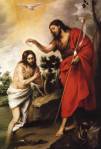

“Upon my return I will spare no one since you insist I provide proof Jesus is speaking through me.”
The Super-Apostles are devout Jews who have serious doubts Paul is an Apostle due to meeting a dead Jesus on the road to Damascus to murder more Nazarites – who converts him with a blinding light! Well, it looks like Paul’s conversion did not take, because he is furious with the Super-Apostles who he claims are spreading the teaching of a different Jesus. I suspect these Apostles have been Baptized by John the Baptist, for the reason Paul puts John’s followers in his Evil Bag of Tricks that accuses these Apostles of engaging in deviant sex. He then borrows words about Brotherly Love from a letter written by a true Saint, perhaps Saint Stephen, whom Saul-Paul had murdered.
What is key is Paul’s confession to King Agrippa and Berenice, that he tortured Jewish Saint and their family in order to get them to “blaspheme against their Lord”. How can Paul claim he did this, and say he was a Pharisee who knows the punishment for doing this to Jews. Queen Berenice would not have stood for it, would have spoken up and had this serial killer executed. Queen Berenice was a devout Nazarite, who stood up to the murderous soldiers Gessius Florus who hated the Jews as much as Paul did! Indeed, I can make a good case Paul and Florus are one and the same!
Florus was in league with bandits, he getting a share of the loot. Florus saw the temple system as a money making racket, and wanted in. He began stealing monies from the temple. Joseph Flavius says Florus was to blame for the Jews warring with Rome. He is dismissed as in 66 A.D. His fate unknown. So is the fate of Paul.
What is clear, is there appears to be a Christian church established in Corinth before Paul got there. This goes against the claim that Jesus appointed Paul (from the dead) an Apostle to spread his teaching to Gentiles. Are the Super-Apostles baptizing Gentiles with the Holy Spirit? Why didn’t the crafty Apostles bring up the truth Paul murder and tortured members of the original Church – who were Jews?
Due to the attack on the President of the United States by the Vatican and Super-Evangelicals such as Sarah Palin, I will make a case that our President need not consider the moral objection of the Catholic church of Paul, because it has its roots in anti-Semitism – and the wholesale torture and slaughter of Jewish women and children!
Jon Presco ‘The Nazarite’
Copyright 2012
Appearing on Fox News’ “On The Record With Great Van Susteren” last night, half term former Alaska Governor Sarah Palin attacked President Obama’s plan to mandate that religious employers must include contraception in their health insurance plans (video below).
Palin said: “This is an un-American act of our president. Anything that would so blatantly violate an amendment within the United States Constitution is un-American. We’re rising up on this one.”
When Jews in Caesarea resorted to violence, Florus escalated the conflict. by rebuffing the pleas of leading Jews to ignore protesters’ insults. Rather, in retaliation he ordered his soldiers to plunder the Upper Market in Jerusalem. Josephus claims that this led to the massacre of thousands of Jews including women & children. Those who were not slain by the soldiers’ raid were brought to Florus, who had them tortured & crucified even if they were of noble status. Berenice, sister of king Agrippa II, sought to intercede by pleading for mercy for Jerusalem’s Jews, but Florus did not show her any respect. Instead he called in Roman troops from Caesarea. Fearful that the Romans meant to seize the temple & the tower of Antonia, many Jews incited rebellion. Florus withdrew his forces. But by then the damage had been done. Even Agrippa’s plea to obey Florus until Nero could send a replacement could not slow the impetus to rebellion. Florus disappears from the historical stage in the ensuing political chaos. His fate went unrecorded.
“Where are the women? When I look at this panel I don’t see a single woman,” New York. Rep. Carolyn Maloney said.
It was a refrain taken up by a number of senators on Friday, each posing next to a picture of the male religious leaders testifying.
“Not one woman is seated at this table,” New Hampshire Sen. Jeanne Shaheen said.
“Just when I thought I couldn’t be any more dumbfounded by the debate around here, in terms of denying access to women’s health services, there was a hearing and all of the witnesses were male,” New York Sen. Kirsten Gillibrand said.
Paul the Apostle (c. AD 5 – c. AD 67; variously referred to as the “Apostle Paul” or “Saint Paul”),[3] also known as Saul of Tarsus,[4] is described in the Christian New Testament as one of the most influential early Christian missionaries, with the writings ascribed to him by the church forming a considerable portion of the New Testament. The influence on Christian thinking of the epistles ascribed to him has been significant,[5][6] due in part to his association as a prominent apostle of Christianity during the spreading of the Gospel through early Christian communities across the Roman Empire.
By way of example, look at the attitudes and actions of Saul of Tarsus. Prior to coming to a relationship with Jesus Christ, Paul describes himself this way: “I was formerly a blasphemer and a persecutor and a violent aggressor” (1 Tim. 1:13). Had Paul committed the unforgivable sin? No. But he had engaged in the practice of blasphemy. Against whom? Primarily against the disciples of Christ. He hated these people with a passion. He spoke against them whenever and wherever he could, and his statements and declarations were designed to inflict the maximum amount of injury upon them. “Being furiously enraged at them, I kept pursuing them even to foreign cities” (Acts 26:11). In fact, Paul told King Agrippa, “I tried to force them to blaspheme” (vs. 11). Why? Because if Paul could bring these men and women before the Jewish Council with a charge of blasphemy against God, the Law, or the Temple, the consequences against these harried Christians would be severe indeed. The apostle Paul admitted, “when they were being put to death I cast my vote against them” (vs. 10). Yes, Paul, by his own admission, was a blasphemer — his statements against others were designed to destroy them; to inflict the greatest injury possible.
It is difficult to get a balanced picture of the 13th Roman prefect of Judea, since Josephus focused blame for the Jewish revolt against Rome squarely on his misrule. A native of Asia Minor, Florus made a point of publicly displaying his contempt for Jewish principles & Jews of any rank. Like his predecessor (Lucceius Albinus) he gave freedom to bandits for a share of their spoils. He tolerated (or encouraged) insults of Jewish religion & used Roman cavalry & soldiers in displays of force against any group of Jews. When Jews in Caesarea resorted to violence, Florus escalated the conflict. by rebuffing the pleas of leading Jews to ignore protesters’ insults. Rather, in retaliation he ordered his soldiers to plunder the Upper Market in Jerusalem. Josephus claims that this led to the massacre of thousands of Jews including women & children. Those who were not slain by the soldiers’ raid were brought to Florus, who had them tortured & crucified even if they were of noble status. Berenice, sister of king Agrippa II, sought to intercede by pleading for mercy for Jerusalem’s Jews, but Florus did not show her any respect. Instead he called in Roman troops from Caesarea. Fearful that the Romans meant to seize the temple & the tower of Antonia, many Jews incited rebellion. Florus withdrew his forces. But by then the damage had been done. Even Agrippa’s plea to obey Florus until Nero could send a replacement could not slow the impetus to rebellion. Florus disappears from the historical stage in the ensuing political chaos. His fate went unrecorded.
have been defending ourselves to you? (v. 19).
http://www.christianinconnect.com/2Corinthians.htm
. I am amazed that you put up with those “super apostles”, when I, as an apostle, am not the least bit inferior to them. I may not be a trained professional orator who speaks eloquently such as they are. More important than the delivery, however, is the content of the message. And I certainly have knowledge of the truth of God and the gospel of Christ, which we made perfectly clear to you in every way, 2 Corinthians 11:5,6
Paul points out the non-mercenarian nature of his apostolic ministry among the Corinthians, 2 Corinthians 11:7-12
a. The “super apostles” find fault with how I conducted my ministry among you Corinthians. But did I commit a sin in humbling myself as an apostle to work as a tentmaker when I first came to you? (cf. Acts 18:1-4) I did so to preach the gospel of God free of charge to lift you up from sin and death. And while I was with you, I preached the gospel at no charge, accepting only the gifts and assistance from my fellow Christians in Macedonia. In this way I kept myself from being a financial burden to you. I will continue to do this, so my preaching of the gospel will not be hindered by the charge that I do so for my own profit at your expense, 2 Corinthians 11:7-9
b. As the truth of Christ is in me, no one in Achaia will stop this boasting of mine that I preached the gospel freely without charge. I will do so even though those “super apostles”, who are trained to speak so eloquently, charge that I take nothing because I am nothing but a lowly tentmaker who has nothing of value to say to you. The truth is, contrary to what some may think: I offer the gospel to you without charge because of my love for you, which God himself can vouch for, 2 Corinthians 11:10,11
c. I will continue to preach the gospel freely to cut the ground out from under those “super apostles”, who want to be considered equals with me and my co-workers. Since they want to be equal with me, then they also should offer their services free of charge rather than take your money, 2 Corinthians 11:12
6. Paul clarifies what his adversaries really are, 2 Corinthians 11:13-15
a. I, Paul, tell you that those who oppose me are false apostles and deceitful workmen, who masquerade as apostles of Christ, 2 Corinthians 11:13
b. They are such masqueraders because they are servants of Satan, their master, who disguises himself as a holy angel. Since they do not preach and believe the pure gospel of salvation by grace through faith alone in Christ, they will receive in the end what their actions deserve–damnation, 2 Corinthians 11:14,15
Because some among you Corinthians are trying to undermine this gospel by raising questions about my, Paul’s, credibility–with an oath I assure you that I changed my plans to spare you from my having to come to discipline you to straighten out your many problems. Thus I decided not to make another such painful visit that would have grieved you and me. Rather, I decided to delay my coming to you, so as to be able to rejoice in you as one who had to use the law in my previous letter to show you the depth of my love for you, 2 Corinthians 1:23-2:4
While Paul was in Ephesus, he began to receive reports from Corinth of schisms in the church (1 Corinthians 1:11). Divisions within the church were splitting it into factions. Other questions that Paul had to deal with included the settling of disputes in courts, lack of church discipline, sexual immorality, an over-emphasis on the gift of tongues, questions about the wearing of veils by women, inappropriate drinking and feasting at celebration of the Lord’s Supper. The climax of this letter is the famous chapter 13, where Paul emphasizes the importance of love, which he identified as the greatest of all spiritual gifts.
There is little doubt among scholars that Paul authored 1 Corinthians. However, some have argued that the letter, as well as 2 Corinthians, is actually a collection of multiple individual letters or fragments of letters. There has also been some debate among scholars whether certain passages in this letter, for example on the role of women, were actually the words of Paul, or were added on at a later time
Major Themes
Divisions Within The Church
Paul complained that there were four distinct factions within the Corinthian church, each claiming its own supposed leader: Paul, Apollos, Cephas, and “Christ.” Each faction appealed to its particular leader as being superior to the other church leaders (1:10-4:21). Some followed Paul, the founder of the Corinthian church. Others followed Apollos (Acts 18:24), known for his eloquent speaking. Some thought that Peter, whose Greek name was Cephas, was the best qualified to lead the church, since he had been with Jesus. Others said that they would only follow Christ, lead by the Holy Spirit, and no one else.
Theological divisions underlying the loyalties of the members of the Corinthian church to different personalities are not clearly defined. However, since Paul dwells at some length on the issue of the gift of tongues and the work of the Holy Spirit, it is likely that those who refused to accept any authority but “Christ” were those who insisted on being led only by the spirit rather than respecting church elders or other authorities. Those who appealed to Peter rather than Paul may have been Jewish Christians, since Peter was the representative of the Jerusalem Church and had publicly disagreed with Paul over the question of relations between Jews and Gentiles (Galatians 3). Apollos was known as a gifted speaker, although his teachings are uncertain. Paul himself may have been seen as the particular leader of Gentile Christians, as he often identified himself as the “apostle to the Gentiles.”
Apparently some Corinthians were denying the resurrection of Jesus (1 Cor. 15:12). Paul responds that if there was no resurrection, then Christ died for nothing; and “we are of all men most to be pitied” (1 Cor. 15:19), because the sacrifices made for Christ in this life would also be for nothing. “If there is a natural body,” he says, “there is also a spiritual body” (I Cor. 15:44). Paul argues that Jesus’ resurrection was merely the “first fruits” of a process in which all Christians will eventually participate. Christ’s resurrection was the basis for our own victory and hope.
Concerning Bernice’s Petition To Florus, To Spare The Jews, But In Vain; As Also How, After The Seditious Flame Was Quenched, It Was Kindled Again By Florus
1. About this very time king Agrippa was going to Alexandria, to congratulate Alexander upon his having obtained the government of Egypt from Nero; but as his sister Bernice was come to Jerusalem, and saw the wicked practices of the soldiers, she was sorely affected at it, and frequently sent the masters of her horse and her guards to Florus, and begged of him to leave off these slaughters; but he would not comply with her request, nor have any regard either to the multitude of those already slain, or to the nobility of her that interceded, but only to the advantage he should make by this plundering; nay, this violence of the soldiers brake out to such a degree of madness, that it spent itself on the queen herself; for they did not only torment and destroy those whom they had caught under her very eyes, but indeed had killed herself also, unless she had prevented them by flying to the palace, and had staid there all night with her guards, which she had about her for fear of an insult from the soldiers. Now she dwelt then at Jerusalem, in order to perform a vow (22) which she had made to God; for it is usual with those that had been either afflicted with a distemper, or with any other distresses, to make vows; and for thirty days before they are to offer their sacrifices, to abstain from wine, and to shave the hair of their head. Which things Bernice was now performing, and stood barefoot before Florus’s tribunal, and besought him [to spare the Jews]. Yet could she neither have any reverence paid to her, nor could she escape without some danger of being slain herself.
2. This happened upon the sixteenth day of the month Artemisius [Jyar]. Now, on the next day, the multitude, who were in a great agony, ran together to the Upper Market-place, and made the loudest lamentations for those that had perished; and the greatest part of the cries were such as reflected on Florus; at which the men of power were aftrighted, together with the high priests, and rent their garments, and fell down before each of them, and besought them to leave off, and not to provoke Florus to some incurable procedure, besides what they had already suffered. Accordingly, the multitude complied immediately, out of reverence to those that had desired it of them, and out of the hope they had that Florus would do them no more injuries.
3. So Florus was troubled that the disturbances were over, and endeavored to kindle that flame again, and sent for the high priests, with the other eminent persons, and said the only demonstration that the people would not make any other innovations should be this, that they must go out and meet the soldiers that were ascending from Cesarea, whence two cohorts were coming; and while these men were exhorting the multitude so to do, he sent beforehand, and gave directions to the centurions of the cohorts, that they should give notice to those that were under them not to return the Jews’ salutations; and that if they made any reply to his disadvantage, they should make use of their weapons. Now the high priests assembled the multitude in the temple, and desired them to go and meet the Romans, and to salute the cohorts very civilly, before their miserable case should become incurable. Now the seditious part would not comply with these persuasions; but the consideration of those that had been destroyed made them incline to those that were the boldest for action.
4. At this time it was that every priest, and every servant of God, brought out the holy vessels, and the ornamental garments wherein they used to minister in sacred things. The harpers also, and the singers of hymns, came out with their instruments of music, and fell down before the multitude, and begged of them that they would preserve those holy ornaments to them, and not provoke the Romans to carry off those sacred treasures. You might also see then the high priests themselves, with dust sprinkled in great plenty upon their heads, with bosoms deprived of any covering but what was rent; these besought every one of the eminent men by name, and the multitude in common, that they would not for a small offense betray their country to those that were desirous to have it laid waste; saying, “What benefit will it bring to the soldiers to have a salutation from the Jews? or what amendment of your affairs will it bring you, if you do not now go out to meet them? and that if they saluted them civilly, all handle would be cut off from Florus to begin a war; that they should thereby gain their country, and freedom from all further sufferings; and that, besides, it would be a sign of great want of command of themselves, if they should yield to a few seditious persons, while it was fitter for them who were so great a people to force the others to act soberly.”
5.
But for the seditious, they were afraid lest Florus should come again, and get possession of the temple, through Antonia; so they got immediately upon those cloisters of the temple that joined to Antonia, and cut them down. This cooled the avarice of Florus; for whereas he was eager to obtain the treasures of God [in the temple], and on that account was desirous of getting into Antonia, as soon as the cloisters were broken down, he left off his attempt; he then sent for the high priests and the sanhedrim, and told them that he was indeed himself going out of the city, but that he would leave them as large a garrison as they should desire. Hereupon they promised that they would make no innovations, in case he would leave them one band; but not that which had fought with the Jews, because the multitude bore ill-will against that band on account of what they had suffered from it; so he changed the band as they desired, and, with the rest of his forces, returned to Cesarea.
http://www.interhack.net/projects/library/wars-jews/
One notable instance of provocation occurred while the Jews were worshiping at their local synagogue and a Hellenist sacrificed several birds on top of an earthenware container at the entrance of the synagogue, an act that rendered the building ritually unclean. In response to this action, the Jews sent a group of men to petition Florus for redress. Despite accepting a payment of eight talents to hear the case, Florus refused to listen to the complaints and instead had the petitioners imprisoned.[2]
Florus further angered the Jewish population of his province by having seventeen talents removed from the treasury of the Temple in Jerusalem, claiming the money was for the Emperor. In response to this action, the city fell into unrest and some of the Jewish population began to openly mock Florus by passing a basket around to collect money as if Florus was poor.[3] Florus reacted to the unrest by sending soldiers into Jerusalem the next day to raid the city and arrest a number of the city leaders. The arrested individuals were whipped and crucified despite many of them being Roman citizens.[4]
After the outbreak of the Great Jewish Revolt, Florus was replaced as procurator by Marcus Antonius Julianus.[5]
Now I call upon God as my witness that I am telling the truth. The reason I didn’t return to Corinth was to spare you from a severe rebuke.
1. 2 Cor 10:6, 12-18; 11:4
Paul’s opponents in 2 Corinthians have infiltrated the church some time after its founding and are therefore intruders with no authority to be there. This is supported by the following evidence. In 2 Cor 10:6, Paul distinguishes the Corinthians, whose obedience will be complete, from his opponents, whose disobedience will be punished, suggesting that they are not a part of the original congregation. In 2 Cor 10:12-18, Paul disputes the intruders’ right to be in Corinth, since they are infringing on his territory; this implies that they arrived sometime after the founding of the church. Finally, in 2 Cor 11:4, Paul describes his opponents as those who came to the Corinthians and preached another Jesus than the Jesus that he and his associates preached; the implication is that they came after Paul’s eighteen months spent at Corinth during his second missionary journey.
2. 2 Cor 2:17; 3:1; 7:7-12; 11:19-21a; 12:13-18
It is probable that the “false apostles” are to some extent itinerant apostles who have brought with them letters of recommendations from other churches (2 Cor 3:1). They demand support from the Corinthians (and other churches) as their right, to which the Corinthians comply. Since he sarcastically remarks that he and his associates were too weak to exploit the Corinthians, it seems that Paul’s refusal to take funds is put down to the problem with his weakness: he so lacks this apostolic boldness, unlike the “false apostles,” that he cannot bring himself to exact material support from the church (2 Cor 7:7-12; 12:13-18). In fact, Paul believes that the “false apostles” have financially exploited the Corinthians (2 Cor 11:19-21); he characterizes them as peddling the word of God for profit (2 Cor 2:17).
3. 2 Cor 11:18, 21b-23
It seems that the false apostles are Jews who boast in their Jewishness, in contradistinction to the gentile believers at Corinth (2 Cor 11:18-22). This is evident from the fact that Paul reluctantly explains that he is as much a Hebrew, an Israelite and from the seed of Abraham as they are; the implication is that these men were taking pride in such self-designations. In addition, these intruders are claiming to be “servants of Christ.” What they meant by such a term is not clear, but obviously it is a claim to superiority.
4. 2 Cor 11:5; 11:13-15; 12:11
Paul refers to these intruders as “super-apostles” (2 Cor 11:5; 12:11), a term probably coined with a touch of irony by him, reflecting the high esteem with which they were held by some in the Corinthian church and probably their claim to be superior to Paul. In fact, in Paul’s view these men are “false apostles” (2 Cor 11:13-15).
5. 2 Cor 4:2; 11:3, 13
Whatever exactly they are putting forth as the “good news” Paul rejects as false (2 Cor 4:2; 11:3, 13); unfortunately, the details of their false teaching are not disclosed in the letter.
From what Paul says in his own defense in 2 Cor 12:11-12, it seems that the “false apostles” have a reputation for being able to perform signs and wonders; they deny the title of apostle to Paul because he allegedly has no similar record of miracle working. In addition, these men can boast of having received “visions and revelations.” That Paul feels compelled to relate his own revelatory experience, undisclosed for fourteen years, implies that he is being compared unfavorably in this respect (2 Cor 12:1-7; 5:13).
2. 2 Cor 12:21
Paul says that God “humbled me before you.” What he means is that he was humiliated in Corinth because he was unsuccessful in convincing the Corinthian believers to turn from their sins, which he lists as “impurity, sexual immorality and debauchery.” Paul left the city defeated and alienated from the church. He fears that the same scenario would be repeated if he goes for a third visit.
When he returned to Paul in Ephesus, Titus told Paul of the Corinthians’ willingness to be part of the project, whereupon Paul gave them instructions on how to organize their giving so that when he arrived the money would be waiting for him when he arrived (1 Cor 16:1-2).
http://www.abu.nb.ca/courses/ntintro/2cor.htm
Paul defends himself against the charge that he and his associates are commending themselves to the Corinthians. He says that the Corinthians themselves are their letter of recommendation. He then speaks about how God has made him and his associates competent to be ministers of the new covenant, the ministry of the Spirit that brings righteousness, not the ministry of the letter (Law) that condemns.
ii. 4:1-15
Paul continues his defense of his ministry and that of his associates by denying that they used deception and that they distort the word of God. He adds that the gospel that they preach is concealed to those who are perishing. Paul also compares an apostle in his role of preaching the gospel to a clay container and the gospel that he preaches to a treasure stored in that clay container. In order to make it clear that the power for their work as apostles is from God, Paul and his colleagues are made to appear as unimpressive as clay containers.
Finally, he warns the Corinthians that they must stand before the judgment seat of Christ and be judged for what they have done in the body.
Paul attempts to get the Corinthians to renew their efforts at collecting money for the churches in Judea. To this end, he compares them unfavorably to the Macedonian Christians, who gave freely out of their poverty. Apparently, the Corinthians put the project on hold because of some suspicion about Paul’s motives and role in this undertaking. Paul reassures them that the purpose of this collection is not to impoverish them but to share with the genuinely needy; he explains that Titus, whom they seem to trust, will be part of the delegation to deliver the collection. Paul reminds them of the principle that God loves a cheerful giver and will return generously to the one who gives generously.
2. 10:1-13:10
In this section, Paul turns his attention to the minority that still opposes him. The tone of the letter changes from conciliatory to confrontational.
a. 10:1-18
Paul defends himself against the charges that he is timid in person but bold when he writes to them and that he lives “according to the flesh.” He explains that unlike his opponents, he and his colleagues do not compare themselves, commend themselves or boast beyond limits.
b. 11:1-12:13
Paul unwillingly compares himself to his opponents, the “super-apostles,” in order to prove that he is not their inferior. He does so with great reservation because he believes that a criterion of apostolic ministry is “weakness,” which is incompatible with such self-assertion. He explains how God gave him a “thorn in the flesh” to prevent him from becoming conceited after having heard inexpressible things while caught up in the third heaven.
c. 12:14-13:10
Paul announces to the Corinthians that he is soon coming again to Corinth, and he defends himself against the charge that he exploits the Corinthian during his visits. Paul tells them that he does not want to find sin in the church when he comes and warns his remaining opponents that he will not spare them upon his third visit. He admonishes them to examine themselves to be sure that they are in the faith.
But before Paul can call the Corinthians to account, he must dispel any notion that he is the one on trial here. All this bragging that he has been doing could sound as if he were mounting a defense that the church, as judge and jury, was called to pass judgment on.

 Rosamond Press
Leave a comment